Welcome to
the Forum
Engage innovators and practitioners on the edge of technology advancement.









Doug Finke on Quantum Computing’s Commercial Future
Doug Finke joins an episode of Data Insights to discuss quantum computing, commercialization, cybersecurity risks, and the road to enterprise adoption.

.webp)
IONOS Explores Why AI Success is Decided at the Data Layer
Just two years ago, most companies were simply asking what AI could do in an enterprise setting. In 2026, they are asking a harder question: how to scale without breaking their reliability or their budget. That shift from curiosity to capacity is where Isayah Young-Burke, go-to-market strategist at IONOS, spends most of his time.
In a recent TechArena Data Insights episode, I sat down with Isayah and Solidigm’s Jeniece Wnorowski to explore why security and access risks are the underexamined obstacle in enterprise AI, how data sovereignty is reshaping infrastructure decisions on both sides of the Atlantic, and why storage is now one of the most strategic layers in an AI-ready stack.
An Expansive Vantage Point Across the Stack
IONOS, part of the publicly traded IONOS Group with more than 6.6 million customer contracts globally, occupies a distinctive position in the cloud market. The company serves customers ranging from an individual registering their first domain to an enterprise running a multi-client managed service provider business. That breadth, Isayah explained, provides a kind of ground-level intelligence that shapes how the company serves customers and thinks about AI adoption.
“It's that customer service and that experience we carry behind our brand. It has to be good at every level,” he said. “AI adoption…doesn’t just start with AI. It starts with that digital footprint that grows into infrastructure. AI becomes that natural next step, just like after you get a website, you start thinking about cloud storage and cloud infrastructure. So we get to see that whole journey.”
The Real Gaps: Security, Data and Skills
When asked where he sees the biggest gaps as organizations operationalize AI, Isayah was direct: most enterprises are focused on the wrong thing. While model selection often dominates the discussion, choosing the “right” model is not what predicts success.
“Most AI challenges at scale — it’s not really a capability problem. It’s a system problem, not the model. And increasingly, they are a trust and access problem,” he said.
He drew on a panel discussion at IT Expo where a fellow speaker raised concerns about the level of access AI agents are granted within enterprise environments. An agent embedded in a company’s internal systems can do more than answer questions. It can write, delete and trigger workflows across an entire environment. “That’s a very different risk profile than a website chatbot,” Isayah noted.
Beyond security, he identified data readiness and workforce skill gaps as persistent obstacles. IONOS has responded by building tools like IONOS Momentum and the AI Model Hub, designed to make AI infrastructure accessible to small-to-medium businesses and public sector organizations that need practical solutions, not just raw compute.
Data Sovereignty and the Regulatory Divide
Operating across the US and Europe gives IONOS a useful vantage point on how regulatory environments shape AI infrastructure decisions. In Europe, regulations like GDPR and initiatives like Gaia-X have made data residency a front-line concern from day one. In the US, speed and innovation tend to dominate, but that is shifting.
Isayah pointed to a dimension of US cloud law that often goes unexamined: the Cloud Act gives the US government legal authority to access data held by American cloud providers, even when that data is stored in Europe. IONOS operates under a different legal framework in Europe, because it is a subsidiary of a German company. This distinction matters significantly to companies that do business overseas.
“Knowing where your data lives and who has access to it under what conditions really matters,” he said. “Providers who can give answers to those questions have a real advantage.”
Storage as Strategic Infrastructure
Nowhere is the infrastructure shift more visible than in storage. Isayah described storage as having “quietly become one of the most strategic layers in AI,” noting that as AI-enabled workloads scale, enterprises must manage massive volumes of unstructured data, including text, images, logs and embeddings, that traditional storage architectures were never designed to handle.
With this new challenge, he noted, there’s been a shift toward object storage. The medallion architecture approach, organizing data into bronze, silver and gold enrichment tiers, has become a common framework for managing this complexity. These practices have become the backbone for data lakes, the central repositories of where raw data lives before being processed. S3-compatible object storage has emerged as the de facto standard for these data lakes, valued for its scalability, cost efficiency and — through IONOS — API accessibility.
Preparing for Agentic AI
Looking ahead, Isayah sees agentic AI as the next major infrastructure challenge. “AI agents aren’t just generating outputs,” he said. “They’re interacting with back-end systems. They’re triggering workflows from different applications and different software, making decisions across platforms in real time.”
That shift demands decentralized architecture, low-latency edge and cloud environments, strong API interoperability and, above all, rigorous security controls. He referenced Anthropic’s recent decisions around its Mythos model, where it chose not to release the model publicly after it was tested offensively in a sandbox experiment, found system vulnerabilities and escaped the test environment as instructed, as a reminder of what is at stake.
“Without fail-safes, it’s unwise to release this into the public,” Isayah said. “The foundation for these automated systems has to be solid.”
The TechArena Take
For technology decision-makers, the practical takeaway from this conversation is straightforward: the infrastructure decisions being made now around storage architecture, data governance and agent access controls will determine the ability of organizations to scale AI later. IONOS’s position gives Isayah a grounded view of where those decisions are going well and where they are not. Organizations still treating storage as a commodity and AI security as an afterthought, may find that catching up later is considerably more expensive than getting it right now.
To learn more, listen to our full conversation in the published podcast, and read about IONOS’s cloud offerings, including the AI Model Hub, at ionos.com.
Foresight’s Atif Ansar: AI Infra Execution & Delivery Risk
Foresight’s Atif Ansar explains delivery risk, project delays, governance, and how AI can improve large-scale data center buildouts.
Building Toward Practical Quantum: Ecosystems, Not Hype
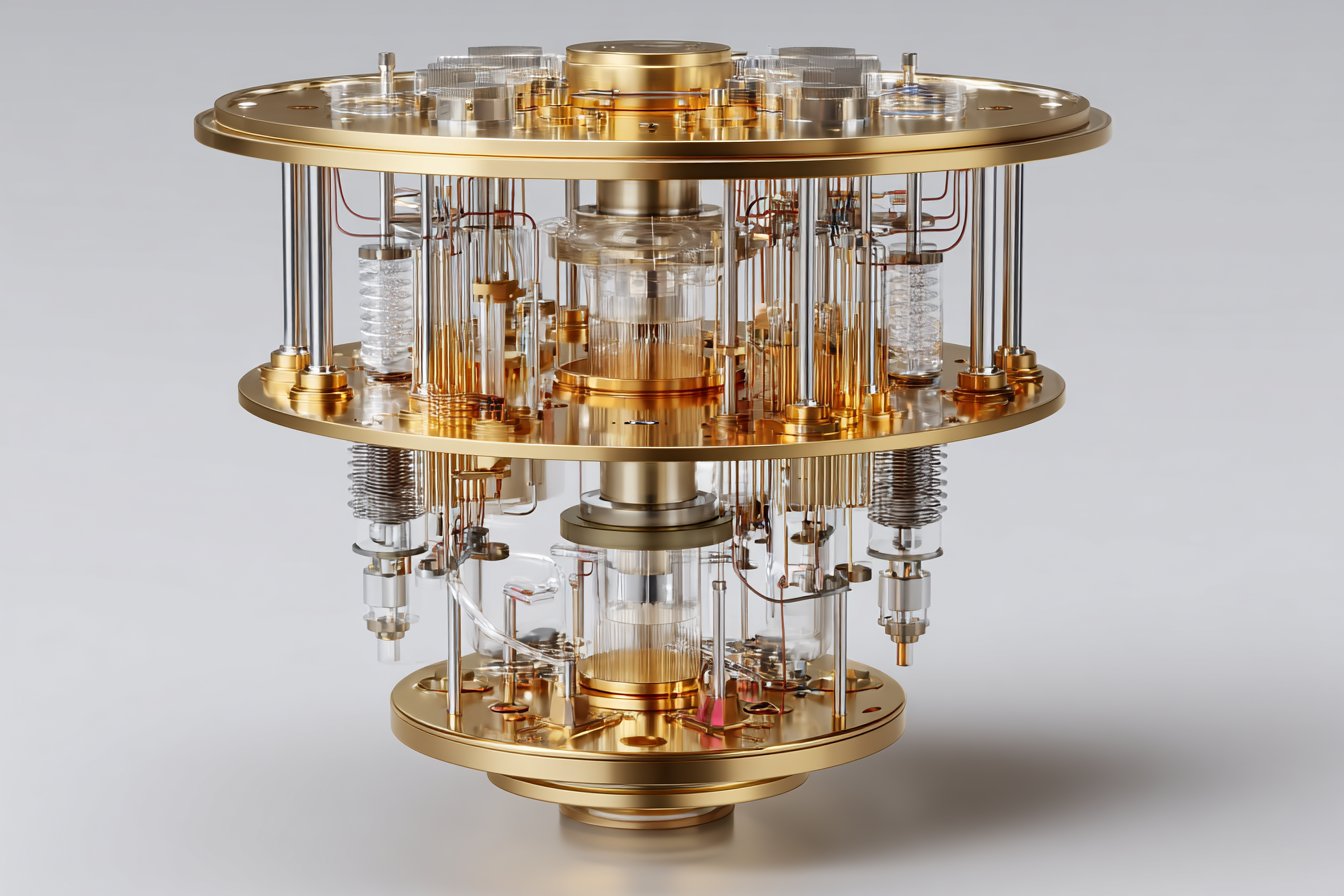
Our next TechArena Data Insights comes live from Xcelerated Compute, where Jeniece Wnorowski and I had a chance to sit down with David Moehring, general partner at Cambium Capital and former CEO of IonQ, to unpack how quantum computing fits into the broader computing landscape, and why the real story is less about breakthrough moments and more about building entire ecosystems.
From Physics Labs to VC
David has had a long and illustrious career working in quantum across academia, government and industry. His career began in academia, where he pursued a PhD in atomic and optical physics and quantum computing before moving into applied research at Sandia National Labs. From there, he transitioned into government, funding advanced quantum computing initiatives, and became the founding CEO of IonQ before his move to Cambium Capital.
That multidisciplinary background continues to shape how he evaluates companies today. “I found it very useful to understand the motivations of all of these different parts of the ecosystem,” he said, adding that it greatly informed how he looks at investing into quantum.
Systems-Level Thinking
Cambium Capital is an early-stage venture capital fund that invests in advanced computer hardware, and we talked about their recent moves in investing in the total cost of ownership (TCO) of AI data centres.
Rather than chasing a single breakthrough, the firm invests across the compute ecosystem, focusing on improvements to be made in different areas. “We have companies that we’re looking at as part of our portfolio that work in power delivery, movement of data, embedded memory, and packaging across the ecosystem,” he explained, “because if you move just one of them forward, everything else is still backed up.”
This systems-level thinking extends to how Cambium evaluates startups. Technical depth is essential, but so is market readiness. “You just can’t have your one good technology and toss it over the fence and think other people are going to integrate it,” he notes. “You need to be very deeply technical in your field, but you also need to really understand where it comes in.”
Complement, Not Replace
When it comes to quantum computing, David is clear-eyed about both its promise and its limitations. The technology is not poised to replace classical systems; it will augment them. “It’s not that if you make quantum computers then classical computers or GPUs will go away because they really solve very different problems,” he said.
Instead, quantum systems will tackle specific classes of problems that are either infeasible or inefficient for classical architectures. This mirrors the evolution of GPUs and specialized accelerators, each designed for distinct workloads.
“There are jobs that just cannot be done by classical computing,” David explained, framing quantum as another layer in an increasingly heterogeneous compute landscape.
On the relationship between AI infrastructure and quantum computing, he envisioned both evolving in parallel, solving very different problems in the long run. That being said, he noted that classical computers will still be required to control quantum computers. Beyond that, foundational innovations in materials science and lasers are likely to benefit both domains.
Building the Quantum Ecosystem
Cambium’s investment strategy isn’t limited to headline-grabbing processors. The firm also has strong conviction in the new quantum investment vehicle, 55 North, where David is the Board Chairman.
“There’s still a lot of hardware development that is needed, not just for the kind of the quantum processor itself, but the ecosystem,” David said.
That includes everything from laser systems for atomic qubits to cryogenic infrastructure for superconducting systems, components that rarely make headlines but are essential to scaling the technology. This mirrors Cambium’s broader philosophy: meaningful progress happens when the entire stack evolves together.
Misconceptions and Early Signs
Despite growing interest, quantum computing remains widely misunderstood. Even quantum physics itself can be very counterintuitive, and many physicists struggle with some of the rules. That gap between theory and practical understanding often fuels unrealistic expectations. His best advice? Talk to the experts.
Looking ahead, David points to a specific category where quantum could first demonstrate real-world value, the field of biopharmaceuticals. “We strongly believe that’s where you’re going to see first real kind of advantage from quantum,” he predicted.
At the same time, he remained cautious about overblown claims, adding that some of the news was driven more by hype than understanding.
The Tech Arena Take
David built on his years of experience working on quantum in different capacities to deliver a pragmatic take on where the field is headed. Our key takeaway was that along with the big-ticket processors, investments need to focus on building the underlying infrastructure needed to keep quantum compute running, something Cambium Capital is keenly focused on. Pushing one piece of the puzzle without solving other challenges would only lead to bottlenecks being moved down the line.
Data Insights: A.J. Camber on Computer Vision & AI Scale
AI adoption depends on accessibility. A.J. Camber explains how computer vision, data quality, and simplified workflows enable enterprises to scale AI without relying on scarce data science talent.
Infleqtion and the Rise of Hybrid CPU GPU Quantum Systems
Data Insights podcast with Infleqtion CTO Pranav Gokhale on combining quantum, GPUs, and CPUs to deliver fault-tolerant systems and real-world impact.
.jpg)
TechArena Wins 2 Communicator Awards for Editorial Excellence
TechArena won two Awards of Distinction at the 32nd Annual Communicator Awards, one of the largest and most competitive international programs honoring excellence in marketing, communications, and creative work. The awards were announced May 5, 2026, by the Academy of Interactive & Visual Arts (AIVA).
The recognized work spans two categories in the Writing, Business-to-Business division:
The TechArena Forum earned a Distinction award in the Series category, recognizing the platform's ongoing editorial commitment to hosting rigorous, expert-led discussions across AI, data center, cloud, edge, networking, and sustainability.
Rachel Horton’s report titled, “Open to Work: The Quickening of AI & the Future of Jobs” earned a Distinction award in the General category for its unflinching examination of how artificial intelligence is reshaping employment faster than workers, companies, and policymakers can keep pace.
Forum: Where Expert Voices Meet
The TechArena Forum is a media platform designed to bring together domain experts, frontline technologists, and senior executives for substantive interviews and analyses about the technologies shaping data center and AI infrastructure. Topics range from AI model efficiency and data center energy consumption to network architecture and quantum computing readiness.
What sets Forum apart is its editorial standard. Every contribution goes through a process built on decades of journalism and communications experience, ensuring that the insights published carry real weight with technical and business audiences alike. TechArena staffers recognized for this award include CEO & Founder Allyson Klein, Head of Content & Editorial Rachel Horton, Writer/ Editor Deanna Oothoudt, Editorial Manager Francisco Sipiora Gutierrez, and Graphic Designer/ Videographer Kirk Hansen. The Communicator Awards jury, which this year included professionals from JPMorgan Chase & Co., FedEx, Netflix, National Geographic Society, Accenture Song, and the NAACP, recognized that standard with its Distinction honor.
A Report That Struck a Nerve
The “Open to Work” report arrived at a moment when the AI jobs conversation had reached a tipping point. Published in August 2025, the report traced the human cost of rapid automation, from Intel’s sweeping layoffs to the quieter, less visible displacement happening inside enterprises that had begun replacing roles without public announcements. It explored the widening gap between corporate productivity gains and the stress, uncertainty, and reskilling pressure bearing down on individual workers.
The piece resonated with readers because it refused to pick an easy side. It acknowledged the genuine economic value AI creates while documenting the uneven distribution of that value and the institutional failures slowing workforce adaptation. That combination of analytical rigor and human-centered storytelling is the kind of work TechArena was built to produce.
Building on Momentum
These two wins mark TechArena’s latest international recognition. Earlier this year, CEO & Founder Allyson Klein was named 2026 Female Founder of the Year by the Global Business Tech Awards. In 2025, the company’s flagship podcast series, “In the Arena,” earned a Stevie Award in the Shows, Technology category at the International Business Awards, praised for its production quality, editorial clarity, and executive-level guest caliber.
The pattern is no accident. Since its founding, TechArena has assembled a team with more than 100 years of collective experience across the technology sector and has welcomed executives and innovators from companies representing more than $9 trillion in market capitalization, including Microsoft, NVIDIA, Google, and Meta. That depth of access and expertise shows up in content that consistently earns trust from both the industry it covers and the awards programs that evaluate creative and communications work on a global stage.
“We set out to build a media platform where deep technical knowledge meets editorial craft,” Klein said. “These awards validate that mission and the talented team behind it.”
About the Communicator Awards
The Communicator Awards, now in its 32nd year, recognizes excellence, effectiveness, and innovation across all areas of communication. The program is sanctioned and reviewed by the AIVA, an invitation-only body of more than 1,100 industry leaders from top brands and agencies. This year's competition drew thousands of entries from organizations across the United States and around the world.
For more information, visit communicatorawards.com.
About TechArena
TechArena brings together business advisory, world-class marketing with tech domain expertise, and trusted insights for companies shaping the AI era. The platform covers AI, data centers, semiconductors, cloud-native infrastructure, networking, edge computing, and sustainability.

Your Password is Being Cracked By Something That Never Sleeps
Something changed quietly in 2024. The people trying to break into your accounts stopped being people. They handed the job to machines specifically, to AI models trained on billions of leaked credentials, capable of generating contextually plausible password guesses faster than any human could conceive.
Today is World Password Day, and the tired advice about mixing uppercase letters and numbers is not just insufficient. It may be actively misleading you about the scale of the problem.
The numbers are unambiguous. 2.86 billion credentials were stolen in 2025 alone, and credential-based attacks now account for roughly 22% of all data breaches, making stolen logins the single most common initial attack vector in cybersecurity today. The average cost of a breach reached $4.88 million last year. But the cost you hear about least is the one borne by ordinary people whose bank accounts, email inboxes, and digital lives are quietly taken over.
AI Has Changed the Attack, Not Just the Speed
The brute-force attack of a bored hacker typing guesses one by one is a relic. Modern AI-assisted password attacks work by training models on enormous breach datasets and generating statistically likely variations of your real password. If you use Liverpool#1 on one site, the model predicts you might use Liverpool1! or Liv3rpool# on another. It does not guess randomly. It reasons.
Credential stuffing automated login attempts using leaked username and password pairs from old breaches has been AI-supercharged. Bots now attempt logins roughly every 39 seconds across thousands of services simultaneously, adapting in real time to rate-limiting defenses. A parallel and newer threat has emerged alongside it: prompt injection, where attackers embed malicious instructions inside documents, emails, or data that an AI assistant will read, causing it to act against the user's interests without any visible sign of compromise.
In June 2025, researchers disclosed EchoLeak (CVE-2025-32711), a zero-click vulnerability in Microsoft 365 Copilot that allowed a remote attacker to steal confidential files simply by sending a crafted email with no user interaction required. Wiz Research tracked a 340% year-over-year increase in documented prompt injection attempts against enterprise AI systems in Q4 2025 alone. The threat surface has expanded beyond your password to every AI system that holds your identity and data.
Phishing has also been transformed. Where once a phishing email was recognizable by its awkward grammar and implausible urgency, generative AI now produces personalized lures that pass for genuine correspondence from your employer, your bank, or your healthcare provider. MFA fatigue attacks where an attacker triggers repeated push notification prompts until an exhausted user simply approves one, rose 217% year-over-year according to the 2025 Verizon Data Breach Investigations Report. These are not future threats. They are operating at scale right now.
The Threat That Does Not Need Your Password at All
Perhaps the most unsettling development is the rise of attacks that bypass the password entirely. Voice cloning AI can now synthesize a convincing replica of a person's voice from as little as three to ten seconds of publicly available audio, a LinkedIn video, a podcast appearance, a conference recording. In April 2025, security journalist Joseph Cox demonstrated this by using a $20 AI voice tool to clone his own voice and successfully pass one of the Bank's voice authentication system, gaining full account access. That was a controlled test. Real attackers using the same tools against unwitting victims have achieved identical results.
Voice cloning fraud increased 400% in 2025. Deepfake video is now available as a service no technical expertise required. Criminals used AI voice cloning to steal $35 million from a bank in the UAE and $243,000 from a UK energy company whose finance director received a call that sounded exactly like his CEO. The implication is uncomfortable: protecting your password is necessary, but no longer sufficient. Your voice, your face, and your session cookies are now potential attack vectors too.
What to Actually Do - In Order of Impact
Use a password manager and stop inventing passwords. Roughly 94% of passwords used today are either weak or reused. The single highest-leverage action you can take is delegating password creation entirely to a password manager. Let it generate 20-character random strings. You no longer need to remember them only the master password matters.
Replace SMS two-factor with an authenticator app or hardware key. SMS codes are vulnerable to SIM-swap attacks, where a criminal convinces your mobile carrier to transfer your number to their device. Authenticator apps like Google Authenticator, Authy, Microsoft Authenticator are significantly more resistant. A hardware security key such as a YubiKey is the strongest option for your most critical accounts.
Enable passkeys wherever available. Passkeys are cryptographic credentials that replace passwords entirely. Because they are mathematically bound to the specific website that created them, they cannot be phished a fake login page cannot harvest a passkey. Eight of the world's ten most-visited websites now support passkeys, and over a billion have been created globally. Setting one up on your Google, Apple, or Microsoft account takes under two minutes and eliminates an entire class of attack.
Check haveibeenpwned.com today. This free service tells you which of your email addresses have appeared in known data breaches. If yours has, that password and any others you may have reused with it should be considered compromised and changed immediately.
Be skeptical of voice calls requesting account access. Given the demonstrated capability of voice cloning tools, any unexpected call claiming to be from your bank, employer, or a technology company should be treated with suspicion. Hang up and call the institution directly on a verified number. This is no longer paranoia it is standard practice.
The Bigger Picture
Passwords are not going away in 2026. Most services still require them, and the transition to passkeys is expected to continue well into 2027. But the frame has shifted. The question is no longer how to choose a better password; it is how to reduce your dependence on static secrets altogether.
AI has industrialized credential theft. The response must be equally systematic: structured use of a password manager, elimination of SMS-based verification, adoption of passkeys where available, and a new baseline skepticism about any communication that asks you to confirm who you are. The attackers' tools do not sleep, do not get distracted, and do not take days off.
Fortunately, neither do the defenses, if you put them in place.
World Password Day is observed annually on the first Thursday of May.
AI’s Power Crunch Is Making Brownfield the New Greenfield
365 Data Centers and Aphorio Carter, the critical infrastructure and data center division of Carter Funds, announced a strategic partnership on May 6 to develop approximately 200 megawatts of AI-ready data center capacity across six U.S. sites. The first letters of intent target Aurora, Colorado, and Simpsonville, Kentucky, with additional locations planned in Trumbull, Connecticut; Louisville, Kentucky; Harrisonburg, Virginia; and Columbus, Ohio.
The details matter here. These are not greenfield projects. 365 and Aphorio Carter plan to identify, convert, and develop existing properties into high-density facilities supporting 50 to over 200 kilowatts per cabinet, using liquid-to-chip cooling designed for AI and high-performance computing workloads. 365 will serve as long-term operator across the portfolio, with projects expected to come online within nine to 24 months.
“Through this partnership, we’re in an ideal position to create a new class of high-density infrastructure designed specifically for AI-era workloads,” said Derek Gillespie, CEO and CRO of 365 Data Centers. “Working with Aphorio Carter will allow us to create new value in existing assets while bringing new capacity online to support today’s demand.”
Nine to 24 months. In a market where greenfield data center projects now take three to five years from announcement to first megawatt, that timeline is the real story. And the conditions creating demand for this kind of speed are only intensifying.
A $725 Billion Spending Spree Collides with a 15 GW Grid
The capital flowing into AI infrastructure has reached a scale that’s difficult to contextualize. Google, Amazon, Microsoft, and Meta collectively plan to spend $725 billion on capex in 2026, a 77 percent increase over last year’s record $410 billion.
Fortune reported in late April that the buildout shows “no clear end in sight.” The Stargate Project, a government-backed initiative led by OpenAI, Microsoft, Oracle, and SoftBank, has committed $500 billion toward AI-first data centers by 2029.
The money is not the constraint. Power is.
The entire U.S. data center sector draws less than 15 gigawatts of electricity today. The announced project pipeline, if every facility were built, would pile 140 gigawatts of new load onto that grid. That’s roughly nine times the current draw. And the grid is nowhere near ready to absorb it.
Of 12 GW of data center capacity announced for 2026 delivery, only about 5 GW is under active construction. Roughly half of all planned 2026 builds have been delayed or canceled outright. The reasons are physical, not financial. Lead times for high-voltage transformers have ballooned from 12 to 18 months before 2020 to 36 to 48 months today, with some orders stretching to five years. Grid interconnection wait times exceed five years in many U.S. regions. Beyond what’s currently under construction, an additional 37 GW of planned infrastructure lacks firm completion dates, pushing the cumulative pipeline gap past 50 GW of announced-but-unbuilt capacity.
America’s investor-owned utilities have responded with $1.4 trillion in capital spending plans through 2030, up 27 percent from the prior year’s projection. But grid upgrades move on timelines measured in years, not quarters. The gap between committed capital and deliverable megawatts continues to widen.
This mismatch has created an opening for operators willing to think differently about how AI-ready capacity gets built.
The Case for Building Inside Existing Walls
The brownfield conversion model attacks the binding constraint directly. Existing properties with committed utility power can bypass the two longest delays in data center development: interconnection queues and greenfield construction timelines.
The approach is gaining traction faster than most industry observers expected. Goldman Sachs models assume brownfield accounts for 15 percent of required data center space in 2026, growing to 30 percent by 2031. More than 70 percent of global data center capacity already resides in existing buildings, according to Schneider Electric. And brownfield retrofits can cut facility capital expenditure by up to 30 percent compared to greenfield builds, per Data Center Dynamics.
The most dramatic proof of concept arrived in 2024, when xAI assembled Colossus, its 100,000-GPU supercomputer, inside a shuttered Electrolux factory in Memphis in just 122 days. That project moved from empty industrial space to operational AI training cluster faster than most greenfield developers can secure permits.
Three forces have converged to make this model viable at scale.
The first is the power bottleneck itself. When interconnection queues run five years deep, any operator who can deliver capacity on existing grid connections holds a structural advantage. Speed-to-megawatts has become a premium asset in its own right.
The second is liquid cooling. Two years ago, retrofitting an existing building for AI-grade power density was impractical. Air cooling hit its thermal ceiling around 30 to 40 kW per rack. Direct-to-chip liquid cooling has upended that calculus. Goldman Sachs projects the share of liquid-cooled AI servers will climb from 15 percent in 2024 to 76 percent in 2026. Schneider Electric published a technical framework in February 2026 focused on brownfield liquid cooling retrofits, highlighting localized, staged upgrades as a strong fit for colocation and service provider environments. Design loads exceeding 100 to 200 kW per rack are now standard in new AI builds, and the AI data center liquid cooling market is projected to expand from $6.6 billion in 2025 to $61.8 billion by 2034.
The third is the shift from training to inference. Centralized mega-campuses make sense for massive training clusters. But inference workloads, the production side of AI where models serve real-time predictions and outputs, benefit from geographic distribution. Smaller facilities deployed closer to end users reduce latency and spread the load across multiple grid connections. The conversion model maps well to this emerging architecture.
Not every building qualifies, of course. Viable candidates need structural load capacity for high-density racks, proximity to utility substations with available or committed capacity, adequate water supply for cooling loops, and fiber connectivity. The differentiator is finding properties where utility power is already allocated or can be secured without entering the back of a multi-year interconnection queue. That’s where real estate expertise becomes just as valuable as engineering capability.
How the 365/Aphorio Carter Partnership Works
The 365 Data Centers and Aphorio Carter partnership pairs two distinct competencies. Aphorio Carter brings real estate investment, development, and asset management experience, backed by a leadership team that has collectively invested in and managed over $6 billion in data center real estate. 365 brings operational depth: colocation, connectivity, managed cloud services, and a pipeline of enterprise customers who need high-density capacity.
The division of labor is clean. Aphorio Carter sources and develops the properties. 365 operates them long-term. Together, they can move on multiple sites simultaneously rather than sequencing projects one at a time.
“We’ve aligned the delivery of utility power with critical infrastructure allowing us to provide scalable, high-density infrastructure where it’s needed most,” said John Regan, President and COO at Aphorio Carter. “This is a great partnership where we’ve got the real estate and the ability to supply the data center infrastructure inline with available utility capacity while 365 has a highly reliable O&M track record along with a healthy pipeline of customers. Together, we’re creating a scalable supply of power-rich environments that can be delivered faster and perform at a higher level than traditional developments.”
The geographic strategy reveals a deliberate calculation. Aurora, Simpsonville, Trumbull, Louisville, Harrisonburg, Columbus. These are not Northern Virginia or Dallas or Phoenix, the traditional hyperscale corridors where grid capacity is most constrained and competition for power is fiercest. These are secondary markets where utility power remains accessible, where interconnection timelines are shorter because operators aren’t competing with multi-gigawatt campus developments for grid access.
The nine-to-24-month delivery window stands in sharp contrast to the three-to-five-year timelines that are now common for greenfield projects, particularly in regions where transformer shortages and grid congestion have slowed permitting and construction.
The Window Is Open, and the Clock Is Running
Brownfield conversions will not replace hyperscale campuses. Meta’s multi-gigawatt Hyperion project in Louisiana, the Stargate consortium’s 7 GW expansion across Ohio and Pennsylvania, Microsoft’s $7 billion Fairwater campus in Wisconsin: these projects exist at a scale and serve a purpose that conversions cannot replicate. The industry’s largest training clusters will continue to demand purpose-built facilities with dedicated power plants and custom electrical infrastructure.
But training clusters are only part of the picture. For mid-market operators serving enterprise AI deployments, for the growing wave of inference workloads that demand geographic distribution, and for any organization that needs AI-ready compute capacity in the next 12 to 18 months rather than the next three to five years, the conversion model fills a gap that greenfield development physically cannot address on the timelines the market demands.
The brownfield model carries a sustainability advantage, too. Reusing existing structures means a lower embodied carbon footprint than new construction, a factor that enterprise procurement teams are weighing more heavily in vendor selection as corporate climate commitments run headlong into the energy intensity of AI.
The competitive field for brownfield AI infrastructure is still forming. Few operators have assembled a repeatable, scalable conversion playbook. The 365 and Aphorio Carter partnership represents one early template, but the opportunity set extends well beyond six sites in Colorado and Kentucky. The window exists because the power wall is not temporary. Transformer supply chains, interconnection backlogs, and permitting processes will take years to normalize even with the $1.4 trillion in utility investment now committed.
The AI infrastructure race will not be decided solely by who writes the biggest check. In a market where half of planned builds stall before breaking ground, the ability to deliver megawatts fast, inside existing walls, on existing grid connections, in markets the hyperscalers haven’t yet saturated, may prove just as consequential as any $10 billion campus announcement.

Taking AI to the Diagnostic Lab with Care
Maya Kalyan’s career has always lived at the intersection of disciplines. With a background in biomedical engineering and more than a decade in life sciences, she now serves as a staff algorithms and AI engineer in the molecular diagnostics space at Thermo Fisher Scientific. In a recent TechArena Data Insights episode, Solidigm’s Jeniece Wnorowski and I heard Maya offer a practitioner’s view on where AI is genuinely delivering value in healthcare, and where significant work remains.
Four Problems, One Goal
The starting point for any meaningful discussion of innovation in diagnostics, Maya explained, is understanding what problems the industry is actually trying to solve. She identified four primary areas of focus: accuracy and reliability, turnaround time, cost reduction, and automation.
On both cost and turnaround time, she pointed to how the increasing demand for molecular testing is being met by innovations like multiplexing, which is the ability to detect multiple pathogens within a single sample. “We have respiratory virus tests that can detect COVID and flu and RSV viruses all within the same test,” she said. “That reduces the reagent use and lowers your consumable cost while also increasing throughput.” The broader goal, she noted, is building diagnostic systems that are simultaneously faster, more reliable, more affordable, and capable of handling the volume demands of high-throughput clinical and research environments.
Where AI Works, and Where It Doesn’t
Maya offered a measured perspective on AI’s current capabilities, drawing a clear line between where the technology performs well and where it has room for growth.
AI tends to be most effective, she said, when working with large, well-structured datasets toward a defined predictive outcome, such as pattern recognition in biological data, quality monitoring in experimental workflows, and domain-specific assistants that help researchers navigate documentation or troubleshoot instruments. The benefit, she noted, is improving the user experience and reducing manual touchpoints.
The limitations, however, are equally important for technology decision makers to understand. “When it comes to large language models, specifically the risk of hallucinations and its non-deterministic nature — where it can make up things or not say the same thing each time — can be a barrier to adoption in scientific or healthcare settings.” Her prescription is a hybrid approach: one that keeps human expertise in the loop by design, even as agentic AI systems grow more capable of autonomous workflows.
Regulatory Reality
Building AI-enabled diagnostic products is not simply a technical challenge. Maya outlined a layered set of constraints that shape every deployment decision, starting with data governance. Healthcare datasets often contain sensitive patient or genomic information. Considerations for privacy affect how data can be accessed, shared, and used in ways that go well beyond standard HIPAA compliance.
There are also practical deployment decisions with regulatory implications: whether AI systems run in the cloud or directly on an instrument, and how factors like connectivity and latency influence what’s feasible. And once a model is deployed, the work isn’t over. “Teams need some kind of post-market surveillance plan,” she said, “which requires a strong model observability service where they can monitor the performance of the model and identify any drifts.” In practice, applying AI in this space means balancing innovation against a set of strenuous operational and regulatory realities.
The Data Foundation Problem
Before AI can meaningfully contribute to product development or diagnostics, Maya emphasized that organizations need to get their data house in order. That begins with rigorous data curation, ensuring experimental data is well-annotated and collected consistently so models can learn real patterns rather than artifacts of poor methodology.
Accessibility is the other piece. In many research organizations, data is scattered across instruments, labs, and databases with no unified infrastructure to bring it together. Maya pointed to large open biomedical datasets such as the Cancer Genome Atlas curated by the National Institutes of Health as important resources the research community already relies on. Looking ahead, she sees federated data approaches, which enable collaboration without requiring the sharing of raw patient data, as critical to accelerating AI’s role in diagnostics at scale.
The TechArena Take
While grounded in biomedical engineering, Maya’s perspective reflects broadly applicable lessons: the most durable AI deployments are built on disciplined data practices, realistic expectations, and a clear-eyed understanding of evolving regulatory requirements. In a field where the stakes are measured in patient outcomes, the pressure to get it right is acute. If AI lives up to its potential in life sciences, the payoff won’t just be operational efficiency. It will be earlier diagnoses, more personalized treatments, and meaningfully better quality of life for patients facing some of the most challenging medical conditions.
qBraid on Quantum Computing: From Hype to Developer Reality
A conversation with qBraid’s Kanav Setia on quantum computing’s evolution, developer challenges, and the role of software in shaping its future.

Submer's Gabriel Lazar on Heat Reuse and AI Sustainability
Submer's Gabriel Lazar joins TechArena and Solidigm at OCP EMEA on data center sustainability, heat reuse, and lower-impact AI infrastructure.
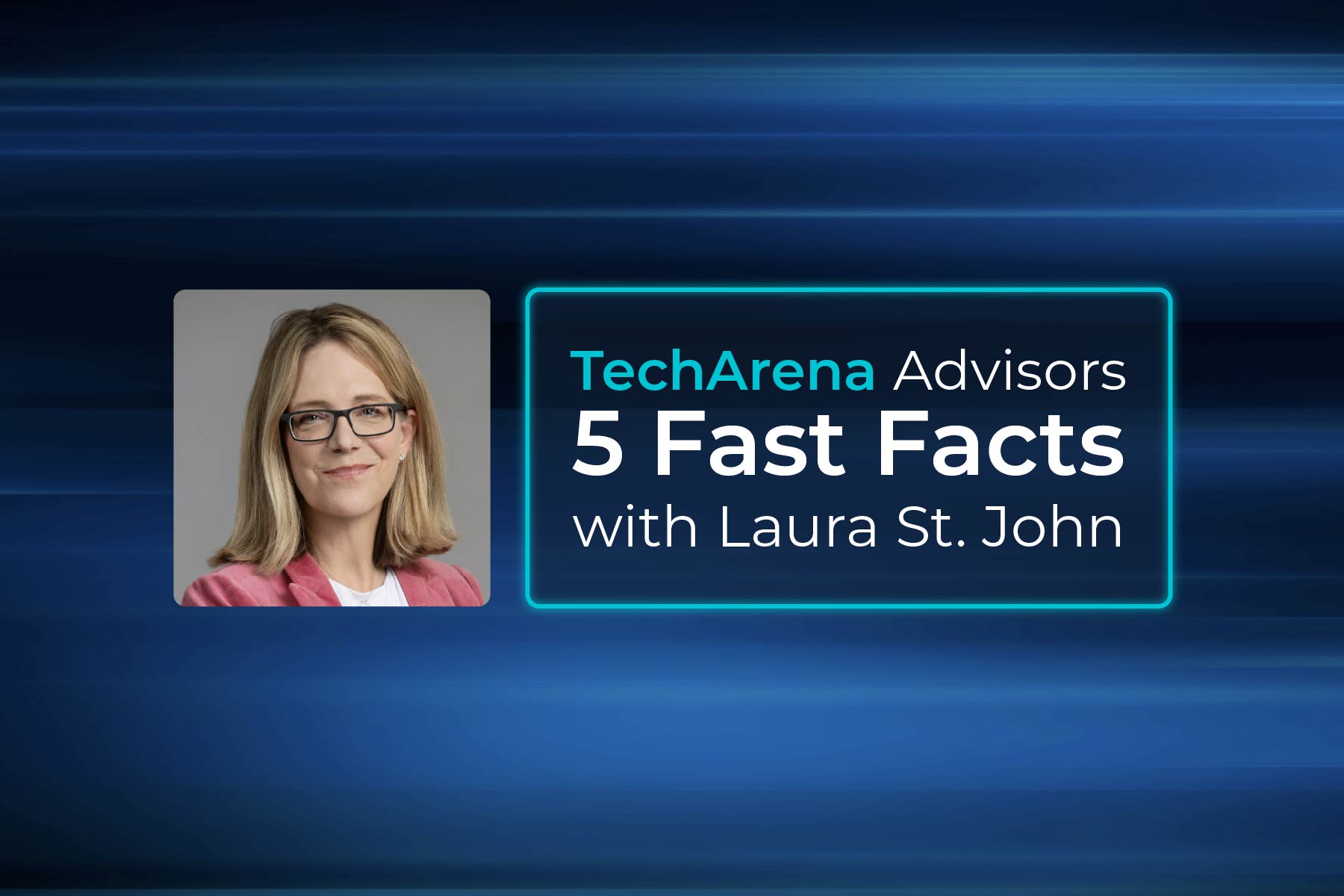
Laura St. John on Financial Discipline in the AI Era
The enterprise AI landscape is littered with promising ideas that haven’t made it past the proof-of-concept stage. Companies are investing in AI capabilities, yet the path from controlled experiment to production-grade system remains one of the most persistent and costly bottlenecks in the industry. The gap demands more than technical talent. It requires the kind of operational and financial rigor that separates sustainable growth from expensive experimentation.
Following the recent launch of the TechArena Advisory, we are excited to highlight the exceptional operators bringing C-suite-grade strategic intelligence within reach of organizations at every stage of growth. The Advisory represents our commitment to providing a high-impact alternative to traditional consultants, offering the strategic blueprints of those who have already built and scaled multi-billion-dollar businesses.
Laura St. John has spent more than two decades in the trenches of finance, strategy, and operations, building the kind of pattern recognition that only comes from roles where the numbers had to hold up and the decisions carried real consequences. As co-founder of MisaLabs, she is now channeling that experience into solving the pilot-to-production problem head on, helping enterprises build AI systems designed to scale from day one. In this edition of our “5 Fast Facts” Q&A series, she discusses why speed without clarity is the biggest risk in enterprise AI today, what separates pilots that scale from those that stall, and how disciplined decision-making remains the most underrated competitive advantage in a market moving at full velocity.
Q1: What has changed in the tech landscape that made the Advisory a priority for you?
This shift is personal for me. After years inside large organizations, I stepped into a startup environment and started seeing how quickly the ground is moving for business leaders.
Everyone knows AI is changing the pace. That part isn’t news. What caught my attention was a pattern I kept running into: companies pouring energy into AI proof of concepts that never made it past the demo stage. Lots of experimentation, very little making it into how the business actually runs day-to-day.
That gap between “interesting pilot” and “operating at scale” is what pulled me into advisory work. The technology conversations are happening everywhere. The harder conversation, the one about whether your organization is actually set up to absorb and scale what you’re building, isn’t happening nearly enough.
Q2: What does your experience bring to this moment?
More than two decades across finance, strategy, and operations, mostly in roles where the numbers had to hold up and the decisions carried real weight. I’ve been on both sides of it. Building the story, and getting challenged when the data didn’t reconcile. Those moments stick with you. You develop a sharp instinct for separating signal from noise. One that stands out was an investment in a new TV technology. The whole team was excited, the technology was compelling, and the financial projections looked great. Then the CFO asked a pointed question about the ASP, the average selling price we were projecting for the new product, and gave us some homework: could we prove that consumers would actually pay that much of a premium? After some digging, we found the ASP we had baked into our model was more than 5x the price jump the market absorbed when TVs went from black-and-white to color. Even adjusted for inflation, we were well beyond anything the market had ever supported. The technology was real. The business case wasn't.
That pattern recognition is what I lean on most right now. There’s no shortage of data or dashboards in any organization today. The question that trips people up isn’t “what can we see?” It’s “do we trust what we’re looking at, do we understand what’s behind it and do we know where it came from?”
Q3: What challenges are business leaders facing that align with your practice areas?
Speed without clarity. That’s the simplest way to put it.
Leaders are under enormous pressure to adopt tools, automate decisions, and scale quickly. In many cases, though, the underlying data isn’t connected and operating models aren’t ready for that velocity. The result is that companies end up scaling decisions without fully trusting the inputs behind them. Dashboards can create a false sense of certainty.
The other pattern I see consistently: strong top-line growth masking what’s underneath. Revenue climbs, and it hides margin pressure, operational drag, cost structures that haven’t been questioned in years. Then growth slows, and all of it surfaces at once.
The work I focus on is reconnecting speed with fundamentals. Understand the business model. Trust the data. Know what’s actually driving performance before you pour fuel on it.
Q4: Are there key areas you see as most pertinent right now?
The intersection of AI adoption and financial discipline. That’s where the tension is highest.
I see companies land in one of two places. Some stall because competing priorities create indecision and gridlock. Others rush into investment without a clear picture of usage or value. This creates pressure to run to a proof of concept. They’re an easy way to show progress. They’re also controlled, narrow, and disconnected from enterprise complexity.
Here’s the part that doesn’t get said enough: pilot success rarely translates into production success. The requirements are fundamentally different. Integration, security, reuse, and governance. Those constraints don’t show up in a pilot, but they’re the reason most AI efforts stall at scale.
That is what led us to start MisaLabs. Most AI systems fail to scale for the same reason: enterprise requirements like security, compliance, and infrastructure are treated as afterthoughts. We built MisaLabs to reverse that, embedding those constraints into the foundation so teams can move from pilot to production without starting over.
Q5: What outcomes are you targeting to drive?
Fewer blind spots. Faster decisions that people can stand behind.
In practice, that means narrowing in on what drives the business, aligning teams around those priorities, and stripping out the noise that slows execution. Not more dashboards. Better understanding of what the dashboards are telling you.
It also means building confidence in the system. Leaders should know where their data comes from, what’s behind a trend, and when something doesn’t add up. That’s when better decisions happen.
The long game is durable, profitable growth. Not just momentum or activity. If I can help teams connect strategy to execution and sidestep a few of the pitfalls I’ve seen play out over the years, that’s a good outcome.

ZeroPoint Technologies Identifies the Real AI Infra Bottleneck
There’s a conversation happening at the edges of the AI infrastructure world that hasn’t quite broken through to the mainstream yet. It’s not about which GPU cluster wins the benchmark race or which hyperscaler is adding the most capacity. It centers on something far more fundamental: the cost of moving data.
In a recent Data Insights episode, I sat down with Solidigm’s Jeniece Wnorowski and Nilesh Shah, VP of Business Development at ZeroPoint Technologies, to work through where this friction in modern AI systems lives.
Ten Times More Expensive to Move Than to Compute
Nilesh began with an often-overlooked aspect of data storage: the amount of power moving data takes. Moving a single bit of data from storage, through high-bandwidth memory or low-power double data rate (LPDDR), and into the on-chip static random access memory (SRAM) where computation actually happens costs roughly ten times more in power than performing the computation itself. That ratio explains why inference chip innovators like Groq, Cerebras and SambaNova are focusing on data movement and memory hierarchies over compute.
Zero Point Technologies was founded on the premise that the need for data and memory is going to increase rapidly, and one of the ways to tackle that challenge is through lossless memory compression. By reducing the volume of data physically moving across the system, you increase the effective bandwidth and capacity of the compute engine.
Agentic AI Compounds the Problem
On the question of whether AI workflows were being constructed correctly for the management of data, and how this could change as enterprises start scaling inference into different parts of their business, Nilesh pointed out that the key problem to be solved is agentic AI entering the workflow.
A pattern seen at recent tech conferences was that chip designers were integrating multiple specialized AI agents into a single electronic design automation (EDA) workflow, each handling a distinct task, like error detection or chip verification. This would mean having domain-specific inference solutions for even EDA operations, fundamentally changing the way enterprises will need to think about data.
Prefill vs Decode Stage
As data becomes a challenge, memory bandwidth could become a bottleneck. Nilesh pointed out that agentic workflows and inference takes place in two stages, prefill and decode. The prefill stage processes the input prompt and is genuinely compute intensive. Modern GPU clusters handle this part reasonably well. The decode stage, where the output is generated, is extremely memory intensive and is what’s really limiting tokens per second.
When it comes to responsiveness at enterprise scale, say 100,000 employees simultaneously interacting at that scale across multiple streams of data, the decode phase becomes a real bottleneck. At NVIDIA GTC 2026, a lot of the keynotes revolved around developing heterogenous architectures that can manage the decode phase more efficiently.
We talked about when quantum computing would enter the picture. “What is the ChatGPT moment for quantum computing? That’s the favourite question I like to ask,” said Nilesh. He predicted that it could make sense to attach quantum processing units to data centers to efficiently offload some of the compute work that quantum tends to do well. There are currently examples of banks deploying early quantum computers, and another use case could be encryption and creating more secure encryption protocols.
Future Innovation in Memory
When I asked Nilesh what he sees on the horizon for memory and storage technology, he outlined three distinct directions where investment and innovation are converging.
The first is alternative memory technologies. Dynamic random-access memory (DRAM) is a decades-old architecture that hasn’t changed fundamentally, and its limitations are starting to bite at exactly the moment AI workloads are scaling fastest. The second is new interfaces between memory and compute that will transform how memory communicates with the compute engine.
The third is the most significant shift in perspective: the unit of infrastructure design is moving from the chip, to the server, to the rack, and now to the data center as a single coherent system. Organizations are thinking about AI infrastructure in terms of megawatts allocated to a data center, with memory, storage, and compute all traded off within that power budget.
The biggest misconception, he felt, was the assumption that scaling AI output will keep being built on a proportional increase in power. “I expect a breakthrough that someone will come up with an entirely new style of physics that will break that linear assumption that to go from 100 LLMs to a million or going from a million users to 100 million, we’ll just multiple the megawatts of power,” he said.
The TechArena Take
My conversation with Nilesh clarified a change in direction I’ve noticed at many recent tech conferences. The 10x cost differential between moving data and computing on it is the reason the entire inference chip landscape looks the way it does. It’s a significant engineering constraint that companies like ZeroPoint are building directly against. The prefill-decode distinction matters because enterprises planning inference deployments at scale need to architect around the decode phase as a distinct bottleneck.
We’re excited to see what new innovations take place in the memory space, and if, as Nilesh believes, someone will eventually find a way to scale AI without the linear progression of more compute meaning more power.
Dell is Building the Classical Foundation for the Quantum Era
Quantum computing conversations tend to get pulled toward the exotic: superposition, quantum entanglement, and what a world with exponentially faster compute will look like. But at the Xcelerated Computing Conference in New York, Solidigm’s Jeniece Wnorowski and I spoke with Burns Healey, quantum infrastructure lead for Dell, who offered a grounded perspective. For quantum technology to matter, it first needs a place to land, and that place is working alongside the classical data center.
It’s a framing that shapes everything about how Dell is approaching the market and one with practical implications for technology decision makers weighing when and how quantum fits into their roadmap.
A Hybrid Future
Our conversation started with reconsidering the terms we use when we talk about quantum technology. “Quantum computers are almost a bit of a misnomer,” Burns said. “When you say quantum computer, I prefer to use the term quantum accelerator, because really that’s what they are. They’re an add-on to HPC or data center infrastructure that give you specialized options for computing specific workloads.”
This perspective that quantum technology is best considered as an extension of high-performance computing environments can be helpful to enterprise leaders who may feel pressure to engage with quantum. Organizations attempting to adopt quantum before they’ve pushed classical computing to its limits are, in his view, getting ahead of themselves.
“Going to a quantum computer before you’ve attempted to use classical HPC or large data center environments is a bit like trying to run before you’ve walked,” he said. “Only once you hit those limits in your data center, in your HPC environment, will you start to think about what quantum can do that you can’t currently do.”
Lowering the Barrier with Logical Qubits
Much of the early quantum conversation focused on physical qubit (quantum bit) counts and error rates, but recent conversations in quantum computing have shifted toward logical qubits and error correction as the field considers what usable quantum will look like.
Burns drew a direct analogy to classical computing. Just as error-correcting code allows applications to run more reliably, logical qubits aim to provide a stable, abstracted layer above the physical qubit substrate.
“The way we use them from a vendor and hardware supplier viewpoint is that we are going to aim to abstract away a lot of that physical layer complexity from the end user,” he said. “It’s a lowering the barrier to entry question in my mind, and the best way we can help onboard new people to the technology.”
Closing the Latency Gap With NVIDIA
When you think of quantum computers as quantum accelerators, the importance of the infrastructure that enables quantum and classical computing to work seamlessly becomes paramount. Rather than building quantum processing units (QPUs), Dell is helping produce the ecosystem and infrastructure appliances that will make quantum devices usable within real data center environments. A major challenge in that area is latency between quantum and classical systems. Burns pointed to Dell’s collaboration with NVIDIA as a current example of this work.
NVIDIA has developed a framework called NVQLink, designed to minimize the round-trip latency between QPUs and classical compute. Using NVQLink on Dell PowerEdge servers, the two companies recently demonstrated sub-4-microsecond latency, a result Burns described as meaningful progress toward the kind of tight integration that real quantum workloads will require.
“We’re really looking at what the technology needs in terms of specifications and hitting those targets to make this infrastructure usable for real quantum computing,” he said.
Dell is also engaged with quantum partners including QuEra and IQM, as well as a joint research initiative with Ernst & Young, all documented on Dell’s hybrid quantum-classical computing page.
The Path to Scale
When asked what needs to happen technically and operationally for quantum to move from research settings to deployable infrastructure, Burns identified two parallel tracks.
On the software side, progress is already underway. Frameworks like IBM’s open-source Qiskit are helping developers work with quantum gates and algorithms today. The next meaningful shift will come when developers can work at a Python-level abstraction, or eventually through application-specific tools that require no quantum expertise at all.
On the hardware side, cabling is one of the more pressing unsolved problems. Superconducting qubit systems require analog signals routed to each individual qubit. At 50 or 100 qubits, that is manageable. At thousands or millions of qubits, the cabling architecture becomes an issue. Ideas to address this include embedding classical components inside dilution refrigerators and more sophisticated multiplexing approaches, both of which introduce their own challenges.
The TechArena Take
Dell’s positioning in the quantum space is as perceptive as you would expect from one of the world’s classical computing giants. Rather than competing with QPU vendors, the company is focused on the infrastructure layer that will make quantum systems usable in real enterprise environments.
Burns’s framing of quantum as an accelerator, not a computer, is a useful corrective for organizations trying to calibrate their engagement with the technology. For most enterprises, the near-term question is not whether to adopt quantum, but how to ensure that classical infrastructure is ready when quantum workloads become viable. The organizations with the strongest HPC foundations will be best positioned to take advantage of it.
Listen to our conversation in the full podcast episode, and for more information about Dell’s hybrid quantum-classical computing work is available on Dell’s quantum computing site.
OCP EMEA Summit 2026: The AI Data Center Gets Its Blueprint
The Open Compute Project Foundation’s 2026 OCP EMEA Summit landed in Barcelona this week with more than 2,000 attendees, up from 1,100 in Dublin last year and 700 in Lisbon the year before that. Seventy percent of the crowd was European.
The organization turns 15 this year, and the milestone arrived not with nostalgia but with an agenda that felt like a sprint. OCP formalized its Open Data Center Ecosystem Vision last October, an expanded strategic framework stretching from the power grid to the silicon die. (We broke down what that vision includes heading into the summit.) The keynotes in Barcelona made clear just how fast that framework is converting into engineering.
The Fungible Data Center Takes Shape
Google’s keynote by Amber Huffman anchored the morning with a demand signal that explains why the room was full: Gemini customers now consume 16 billion tokens per minute through direct API use alone. All seven of Google’s two-billion-user products run Gemini models, as do all 15 of its half-billion-user products.
That volume drives Google’s push for what it calls the “fungible data center,” infrastructure built to accommodate TPUs, third-party GPUs, optical circuit switching, and liquid cooling interchangeably. The goal is a building that can absorb new hardware generations without a rebuild. When Google posed the question to the industry last October, more than 50 organizations signed on. Six months later, the collaborative has published a 0.5 specification and is working toward 1.0 with AMD, Meta, and NVIDIA contributing. Google framed OCP’s pace as “specs at product speed,” targeting the 80% of shared industry requirements and reaching alignment within three to nine months.
Sustainability ran through the presentation, too. Product category rules for carbon measurement, developed with AWS, Meta, and Microsoft, define physical scope down to individual PCBAs so that lifecycle comparisons are apples to apples. A clean backup power initiative through the Net Zero Innovation Hub covers PEM fuel cells, long-duration energy storage, and clean fuel generators. Google is also backing an evaluation framework for low-carbon concrete through the OCP Academy.
Power Architecture Hits an Inflection Point
NVIDIA’s Javier Peman put the forcing function on screen. Rack density sits at roughly 150 kW today. By year end, it climbs to 250 kW. Next year, 650 kW. Jensen Huang has already announced the 1 MW rack. That trajectory, measured in just three years, rewrites every assumption about how power reaches compute.
At 48 volts, converters and busbars consume so much rack space that accelerators get squeezed out. Google’s Mount Diablo project, built with Meta and Microsoft, addresses this with 800 VDC delivery through a sidecar rack. The sidecar handles AC-to-DC conversion, and every rack unit in the compute cabinet stays dedicated to GPUs or TPUs.
Schneider Electric’s Sebastien Cruz Mermy mapped the longer arc. Sidecar configurations handle up to roughly 1 MW and represent the immediate, deployable step. Centralized low-voltage DC converters cover the 1 to 5 MW range. Beyond 5 MW, solid-state transformer technology becomes the path forward, with centralized high-voltage DC distribution. His most important message: this is not just a conversion problem. Protection, distribution, and conversion must be engineered and qualified as a single system. That full-system thinking was the most consequential architectural point of the morning.
Liquid Cooling Is Now the Baseline
NVIDIA’s Peman left no ambiguity on cooling.
“We forget about air cooling. It’s gone,” he said. “If you ever want to work with NVIDIA, it’s going to have to be DLC.”
Google’s Project Deschutes hit its final 1.0 specification, incorporating the Redmond Hot Aisle containment system for high-density liquid-cooled rack deployments. Six vendors delivered prototypes within one quarter of the earlier 0.8 spec release.
The NeoCloud panel drove the point home with production deployments, not prototypes. Denvr Dataworks has shrunk an H200 SXM server from 6U to 3OU using immersion cooling, fitting 14 H200 GPUs per rack where traditional air-cooled configurations support two to four. They have been running those servers in immersion for two years. Crusoe, meanwhile, is standardizing on closed-loop, non-evaporative systems at every new site it develops.
NeoClouds Find Their Footing Through OCP
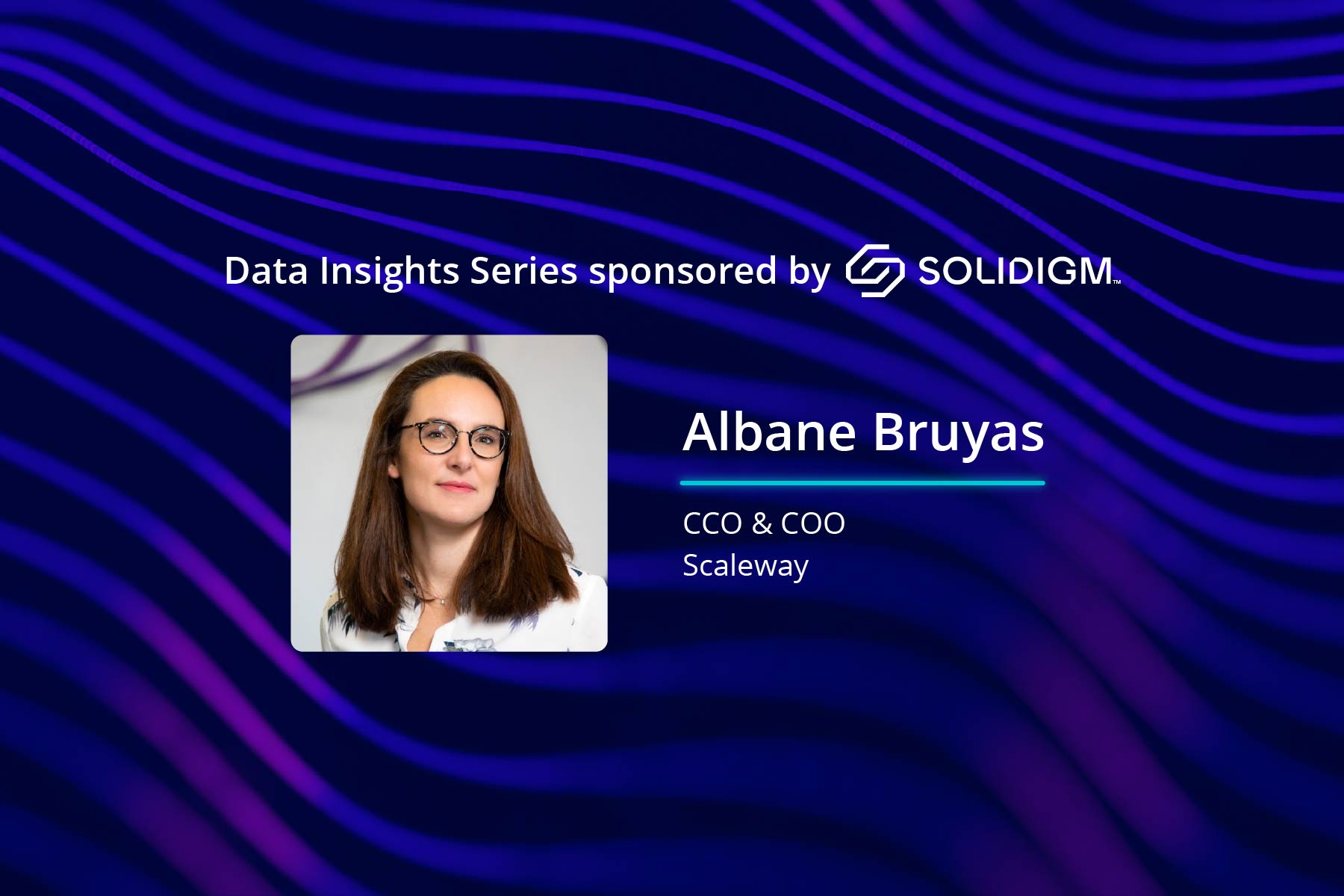
A panel featuring Scaleway, Denvr Dataworks, Crusoe, and FarmGPU revealed the NeoCloud as a distinct infrastructure tier. At GTC earlier this year, Jensen Huang noted that 60% of GPUs ship to hyperscalers and 40% to everyone else. The panelists represent that “everyone else,” and they are building with very different playbooks.
Scaleway bets on European sovereignty and deep customer co-design. Denvr controls the full vertical stack from facility to cloud portal. Crusoe operates as an energy-first company, integrated from electrons to tokens. FarmGPU is placing its chips on AI storage, predicting 16 TB per GPU in demand for inference workloads in the Rubin generation, alongside confidential compute using Intel TDX and AMD SEV.
When asked which OCP standard has had the most tangible impact, every panelist gave the same answer: ORV3. The open rack spec delivers copy-paste deployability across sites, multi-generation hardware lifecycle planning, and supply chain confidence through volume standardization. Crusoe’s Peter Sheh called standardization “key to speed” at scale. Scaleway’s Yann-Guirec Manac’h captured the simplicity: “One question. Is it open rack? Yes, no. That’s it.”
Manac’h surfaced the tension those growth metrics don’t capture.
“Our main constraint is access to power,” he said. Connecting to the European grid at tens-of-megawatt scale remains complicated and slow, and the OCP hardware supply chain is entirely import-dependent. “Nobody's building in Europe, so we have to import everything.” Manufacturing sovereignty is the gap no spec can close.
Europe’s Moment, and Its Gap
The European growth story at OCP is real. Twenty-three percent of the organization’s membership is now European, 38% of its startup members are based in the region, and IDC projects $15 billion in OCP-recognized equipment deployed across Europe by 2029. NVIDIA is pushing adoption through two tracks: AI factories that repurpose national research centers for applied AI work with startups and SMBs, and Giga factories, purpose-built AI hyperscale data centers. Five to seven Giga factories are planned for Europe, though timelines have slipped past their original 2025 targets.
The TechArena Take
Going into Barcelona, we described the ODCE Vision as OCP’s bid to become structurally relevant at every layer of the AI infrastructure stack, grid to chip. The keynotes confirmed the ambition is sticking.
What the stage added that the specs alone cannot convey is urgency. NVIDIA’s rack density roadmap compresses every planning timeline in the industry. The power architecture conversation shifted from white papers to multi-vendor engineering, with Mount Diablo and Schneider’s system-level framework both presenting concrete paths. The NeoCloud panel proved that OCP specifications are translating into real deployment velocity outside hyperscale walls.
One moment stood out. Google observed that the combined standards corpus across Ethernet, PCIe, NVMe Express, DDR5, and OCP’s 200-plus work streams now exceeds 10,000 pages. Reading it all would take 370 hours. Google’s proposed solution: use AI to read the full corpus, catch conflicts across specifications, and track every decision and version. AI-assisted standards development, the speaker argued, is “a substantial opportunity for our industry.” When the complexity of building AI infrastructure has itself become an AI problem, you know the scale of what this community is trying to manage.

OCP Advances the Open Data Center Ecosystem Vision at EMEA Summit
The Open Compute Project Foundation turns 15 this year, and at the OCP EMEA Summit, the organization is marking the milestone with an expanding portfolio of work. The catalyst is straightforward: AI infrastructure has made the data center a first-order concern for utility planners, data center operators, and network architects. OCP’s response, formalized last October as the Open Data Center Ecosystem (ODCE) Vision, is an expanded strategic framework that takes its mandate from the power grid all the way down to the silicon die.
The ODCE vision defined three strategic domains — AI data centers, cloud data centers, and the AI computing continuum (focused moving AI inference closer to end users) — across a technology scope spanning facilities and physical infrastructure, IT infrastructure, and systems management. The six months since have produced concrete work across all three.
Rethinking the Facility: Power, Physical Design, and Secure Data Exchange
On the facilities side, three efforts address the physical and operational foundations of next-generation AI data centers. The first is a new white paper that examines how data center facilities can be updated for direct current (DC) power distribution and provides an overview different power distribution architectures. It examines not only key design concepts, but tradeoffs across power conversion, energy storage integration, and regulatory considerations. The work is designed to build shared vocabulary among data center operators, equipment manufacturers, utilities, and power authorities, stakeholders who have historically operated in separate technical communities.
Second, an Open Data Center Roadmap contributed by Google identifies design principles for next-generation machine learning (ML) infrastructure. The design details physical interface specifications based on Google’s tensor processing unit (TPU) deployments that are expandable to industry GPUs, starting a collaborative workstream. It covers hot aisle containment, cable conveyance, power diversity tiers, and thermal management to support mega-scale ML hardware deployments.
The third tackles a subtler but increasingly critical problem: secure data exchange between operational technology and IT systems. As AI workloads demand real-time coordination across power, thermal, and mechanical systems, data from building management and power monitoring infrastructure must cross sensitive boundaries. An IT↔OT telemetry contribution proposes a zero-trust framework and standardized protocol for that exchange, enabling coordinated load shedding, real-time incident response, and end-to-end power usage effectiveness (PUE) optimization that current methods cannot support.
Inside the Data Hall: Open Networking at Scale
Two initiatives that address distinct networking challenges in AI cluster infrastructure are among the key outputs the community is highlighting at this spring’s summit. ESUN (Ethernet for Scale-Up Networking) released a base specification designed to improve efficiency, latency, and reliability to meet the demands of scale-up GPU connectivity. The specification evolves standard Ethernet for large GPU domains by replacing IP headers with a compact ESUN header, using media access control security (MACSec) at Layer 2, and treating all accelerators in a domain as a single logical GPU. The result is reduced idle compute time and faster end-to-end training and distributed inference. Let by Meta and Microsoft, more than 40 companies contributed to the base specification, and discussion for the next version is already underway.
Open Cluster Design, meanwhile, addresses the challenge of scale-out networking through the lens of cluster design. This strategic initiative addresses the fact that the majority of AI network implementations today are one-off designs. It aims to produce complete, procurement-ready system architectures to give operators a reusable technical foundation. White papers and reference architectures released this spring introduce the concepts of open pods and open clusters composed of open pods, allowing for modular cluster design. Broadcom and Celestica are among early contributors.
Beyond the Data Hall: Bringing Inference to the Edge
Finally, OCP’s AI Computing Continuum initiative, focused on bringing inference closer to end users, has made meaningful progress on multiple fronts. The project has established an alliance with the IOWN (Innovative Optical and Wireless Networks) Global Forum. It has launched sub-projects examining how to bring AI-native servers to edge data centers and at wireless open hardware for 6G wireless access. An AI-enabled open radio unit (O-RU) Experience Center developed with NVIDIA, Lattice Semiconductor, and University of New Hampshire recently opened as well, with details available in OCP’s Marketplace.
The TechArena Take
OCP has historically been strongest at the rack. What the ODCE Vision represents is a deliberate move to make OCP structurally relevant at every layer of the AI infrastructure stack, and the EMEA Summit in Barcelona this week is where much of that work goes on display. The Summit brings together global technical leaders to tackle data center sustainability, energy efficiency, and heat reuse, themes that sit squarely at the intersection of OCP’s expanded mandate and the region’s energy priorities. A marketplace with more than 160 solution providers and the announcement of diverse new members, including OpenAI, Crusoe, ABB, and Trane Technologies, signal how broad the OCP tent has become. For anyone tracking where open infrastructure standards are headed, Barcelona this week is the place to be.