Physical AI in Production: Datara AI’s Data-Loop Edge Playbook
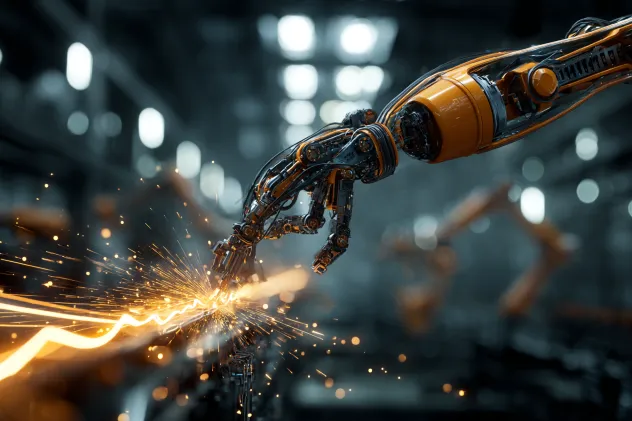
The next wave of AI won’t live in a data center—it will weld seams, pick bins, and navigate factories alongside people. Physical AI brings intelligence into machines that perceive, decide, and act at the edge, closing the loop between perception and action.
Real-world factories introduce drift, glare, vibration, dust, and unpredictable human behavior—conditions that most models never see in simulation.
For IT and cloud architects, this is a stack problem with hard requirements: real-time inference under adverse conditions, data pipelines that span OT and IT, and operational discipline that turns pilot demos into consistent, reliable uptime. The gap between ‘works in simulation’ and ‘works every day on the line’ remains the main blocker to scale.
But it’s also a workforce problem. Robots reduce injury risk in hazardous tasks, but displacement effects are real and localized. The question isn’t “robots: yes or no?” but “how do we deploy them responsibly with both operational rigor and a workforce plan?”
Why the Market is Ready
Three curves are converging: cheaper edge compute and sensors, strong perception models, and maturing MLOps for robotics. The International Federation of Robotics reports 542,000 industrial robots installed in 2024—the fourth consecutive year above 500k—with global demand doubling over the past decade. Industrial AI spending is projected to grow from $44 billion in 2024 to $154 billion by 2030.
Standards are accelerating deployment. ROS 2/DDS, OPC Unified Architecture, and OCP’s rack-level guidance are pushing interoperability across sensors, controllers, and training infrastructure. The blockers are shifting from feasibility to integration discipline and change management - not ‘Can we automate?’ but ‘Can we maintain reliability when conditions vary beyond 5–10% of training data?’
Industry-grade platforms now stitch together simulation, data pipelines, and robotics foundation models. NVIDIA’s Omniverse plus Isaac tools let teams generate synthetic data, train policies in digital twins, and validate behaviors before touching a live cell—shrinking iteration from months to days. The missing piece is capturing the tribal knowledge of veteran technicians and encoding it into recovery behaviors robots can execute.
The Architecture That’s Working
I spoke with Durgesh Srivastava, CTO of DataraAI, at the recent OCP Global Summit about what separates production systems from pilot theater. His outlook is pragmatic: target full automation for bounded task families, match human quality, and build graceful fallbacks when reality goes off-script.
DataraAI provides a data engine for physical AI—a data-as-a-service platform that transforms factory experience into machine intelligence. It captures how technicians act, how robots fail, and how edge conditions drift, creating the data foundation real-world robotics has always lacked.
The company emphasizes three pillars:
1. Egocentric Multi-Modal Data Capture – Robots learn from the same viewpoint they act in. DataraAI’s robot-mounted and wearable sensors record RGB-D vision, IMU, tactile, and audio data from real operations. This captures the nuanced cues—force patterns, drift, micro-failures—that static cameras miss.
2. AI-Driven Annotation – DataraAI’s engine automatically labels rare and high-impact events—fires, spills, breakdowns, human-robot handoffs—turning chaos into structured data. It consistently captures scenarios that traditional CV pipelines fail to label or detect.
3. Continuous Learning Loop – New anomalies are fed back into the data engine. Each cycle makes models more resilient and accurate in the field. Every exception becomes new training data, creating a self-improving loop tied directly to real operations.
Early industrial pilots using this loop showed a 53% accuracy lift and 67% better edge-case handling—clear evidence that real-world data closes the performance gap.
The winning pattern is consistent: push perception and control onto the robot, treat the cloud as training and update infrastructure, and run a disciplined data loop that captures real-world anomalies. In harsh conditions—glare, occlusion, spark bursts—edge models must keep the task running. Inference runs locally on the robot, keeping factory data on-site, reducing latency, and enabling real-time adaptation to drift and anomalies. The back end aggregates field data and pushes lightweight updates routinely. That loop turns demos into dependable production.
High-fidelity simulation generates diverse synthetic data and lets teams rehearse rare events safely. Foundation models provide generalizable priors; reinforcement learning in sim refines task skills before transfer to the real world. Edge inference runs locally; telemetry goes upstream for labeling and augmentation; new policies return during maintenance windows. Daily updates are feasible when you structure the pipeline—this reduces drift and grows edge-case coverage.
The Workforce Reality
Case studies show robots cut musculoskeletal risk and reduce exposure to hazardous tasks like forging and welding. Collaborative-robot safety standards (ISO 10218, ISO/TS 15066) and OSHA guidance formalize safe human-robot interaction.
But displacement effects are real. MIT research found that each additional industrial robot per thousand workers reduced employment and wages in affected commuting zones—a meaningful impact not fully offset by productivity gains. The IMF estimates about 40 percent of jobs worldwide are exposed to AI impact; roughly half may see productivity augmentation, while the rest face reduced labor demand without intervention.
The macro takeaway: adoption will rise, safety can improve, and some roles will shift. For architects presenting to leadership or works councils, the deployment plan must address both.
TechArena Take
Physical AI is crossing from pilot theater to production credibility.
The durable advantage comes from operational muscle: how quickly you spin the loop from floor data to better policies and back to the line, while moving people from hazardous repetitive work to higher-value tasks with clear retraining paths. Start with one cell, one exception, and a fallback procedure. Prove you can turn tribal knowledge into machine-executable behaviors and safety risks into measurable improvements. Then scale the loop. That’s the compounding edge in physical AI.
The next wave of AI won’t live in a data center—it will weld seams, pick bins, and navigate factories alongside people. Physical AI brings intelligence into machines that perceive, decide, and act at the edge, closing the loop between perception and action.
Real-world factories introduce drift, glare, vibration, dust, and unpredictable human behavior—conditions that most models never see in simulation.
For IT and cloud architects, this is a stack problem with hard requirements: real-time inference under adverse conditions, data pipelines that span OT and IT, and operational discipline that turns pilot demos into consistent, reliable uptime. The gap between ‘works in simulation’ and ‘works every day on the line’ remains the main blocker to scale.
But it’s also a workforce problem. Robots reduce injury risk in hazardous tasks, but displacement effects are real and localized. The question isn’t “robots: yes or no?” but “how do we deploy them responsibly with both operational rigor and a workforce plan?”
Why the Market is Ready
Three curves are converging: cheaper edge compute and sensors, strong perception models, and maturing MLOps for robotics. The International Federation of Robotics reports 542,000 industrial robots installed in 2024—the fourth consecutive year above 500k—with global demand doubling over the past decade. Industrial AI spending is projected to grow from $44 billion in 2024 to $154 billion by 2030.
Standards are accelerating deployment. ROS 2/DDS, OPC Unified Architecture, and OCP’s rack-level guidance are pushing interoperability across sensors, controllers, and training infrastructure. The blockers are shifting from feasibility to integration discipline and change management - not ‘Can we automate?’ but ‘Can we maintain reliability when conditions vary beyond 5–10% of training data?’
Industry-grade platforms now stitch together simulation, data pipelines, and robotics foundation models. NVIDIA’s Omniverse plus Isaac tools let teams generate synthetic data, train policies in digital twins, and validate behaviors before touching a live cell—shrinking iteration from months to days. The missing piece is capturing the tribal knowledge of veteran technicians and encoding it into recovery behaviors robots can execute.
The Architecture That’s Working
I spoke with Durgesh Srivastava, CTO of DataraAI, at the recent OCP Global Summit about what separates production systems from pilot theater. His outlook is pragmatic: target full automation for bounded task families, match human quality, and build graceful fallbacks when reality goes off-script.
DataraAI provides a data engine for physical AI—a data-as-a-service platform that transforms factory experience into machine intelligence. It captures how technicians act, how robots fail, and how edge conditions drift, creating the data foundation real-world robotics has always lacked.
The company emphasizes three pillars:
1. Egocentric Multi-Modal Data Capture – Robots learn from the same viewpoint they act in. DataraAI’s robot-mounted and wearable sensors record RGB-D vision, IMU, tactile, and audio data from real operations. This captures the nuanced cues—force patterns, drift, micro-failures—that static cameras miss.
2. AI-Driven Annotation – DataraAI’s engine automatically labels rare and high-impact events—fires, spills, breakdowns, human-robot handoffs—turning chaos into structured data. It consistently captures scenarios that traditional CV pipelines fail to label or detect.
3. Continuous Learning Loop – New anomalies are fed back into the data engine. Each cycle makes models more resilient and accurate in the field. Every exception becomes new training data, creating a self-improving loop tied directly to real operations.
Early industrial pilots using this loop showed a 53% accuracy lift and 67% better edge-case handling—clear evidence that real-world data closes the performance gap.
The winning pattern is consistent: push perception and control onto the robot, treat the cloud as training and update infrastructure, and run a disciplined data loop that captures real-world anomalies. In harsh conditions—glare, occlusion, spark bursts—edge models must keep the task running. Inference runs locally on the robot, keeping factory data on-site, reducing latency, and enabling real-time adaptation to drift and anomalies. The back end aggregates field data and pushes lightweight updates routinely. That loop turns demos into dependable production.
High-fidelity simulation generates diverse synthetic data and lets teams rehearse rare events safely. Foundation models provide generalizable priors; reinforcement learning in sim refines task skills before transfer to the real world. Edge inference runs locally; telemetry goes upstream for labeling and augmentation; new policies return during maintenance windows. Daily updates are feasible when you structure the pipeline—this reduces drift and grows edge-case coverage.
The Workforce Reality
Case studies show robots cut musculoskeletal risk and reduce exposure to hazardous tasks like forging and welding. Collaborative-robot safety standards (ISO 10218, ISO/TS 15066) and OSHA guidance formalize safe human-robot interaction.
But displacement effects are real. MIT research found that each additional industrial robot per thousand workers reduced employment and wages in affected commuting zones—a meaningful impact not fully offset by productivity gains. The IMF estimates about 40 percent of jobs worldwide are exposed to AI impact; roughly half may see productivity augmentation, while the rest face reduced labor demand without intervention.
The macro takeaway: adoption will rise, safety can improve, and some roles will shift. For architects presenting to leadership or works councils, the deployment plan must address both.
TechArena Take
Physical AI is crossing from pilot theater to production credibility.
The durable advantage comes from operational muscle: how quickly you spin the loop from floor data to better policies and back to the line, while moving people from hazardous repetitive work to higher-value tasks with clear retraining paths. Start with one cell, one exception, and a fallback procedure. Prove you can turn tribal knowledge into machine-executable behaviors and safety risks into measurable improvements. Then scale the loop. That’s the compounding edge in physical AI.