
Welcome to
the Forum
Engage innovators and practitioners on the edge of technology advancement.







Rafay’s Haseeb Budhani on Building the Future of AI Infrastructure
Haseeb Budhani, Co-Founder of Rafay, shares how his team is helping enterprises scale AI infrastructure across the globe, and why he believes we’re still in the early innings of adoption.

.webp)
CoolIT: 5 Fast Facts on Compute Efficiency
Leading up to the 2025 OCP Global Summit, I sat down with Ben Sutton, product marketing manager at CoolIT Systems, to discuss how direct liquid cooling (DLC) is changing the way companies scale AI and HPC.
We covered where adoption stands across hyperscale, colo, and enterprise, the practical tradeoffs with immersion, and the design choices that drive performance and reliability.
For readers new to CoolIT, the company is a 24-year pioneer in scalable DLC for high-density compute, with technology cooling 5M+ GPUs and CPUs globally. Partnering with leading processor and server makers, CoolIT’s modular DLC solutions boost rack density, performance, and power efficiency for AI, HPC, and enterprise data centers.
Check out our conversation:
Q1: CoolIT customers have reported PUE improvements from 1.30 to 1.02 when implementing DLC solutions. Can you explain how liquid cooling creates this dramatic efficiency improvement, and what specific architectural advantages enable such significant PUE reductions compared to traditional air cooling?
A: Cooling the latest processors has become a serious challenge. With air cooling, that means bigger heat sinks, faster airflow, and colder air temperatures. That leads to three problems. First, density decreases because each server takes up more rack space. Second, fans draw more and more power to move the required air. Third, HVAC systems must run harder and longer to reduce the data center’s ambient air temperature.
DLC takes a different approach. It targets only the components that dissipate the most heat, mainly the processors, and leaves peripheral components to the ambient air. By focusing on the source of the heat, liquid cooling cuts energy use in both fans and facility cooling.
The reason it works so effectively is simple physics. Liquids absorb heat far more efficiently than air. Air is an insulator. Water, for example, can store about 4,000 times more heat in a given volume. This is what drives the dramatic improvement in energy efficiency and PUE when liquid cooling is deployed.
When we scale this up to a system level, the benefits compound. A single coolant distribution unit (CDU) with two pumps can eliminate the need for a massive volume of airflow, drastically reducing the power consumption required for cooling. These benefits increase further when liquid cooling is extended to peripheral components such as DIMMs (memory) and OSFP (Octal Small Form Factor Pluggable) modules. Together, these can deliver a PUE as low as 1.02, which is an ideal outcome for modern data centers.
Q2: With AI and HPC workloads driving rack densities toward 300 kW per rack, where are we with adoption of liquid cooling across customer segments?
A: AI has brought liquid cooling into the mainstream. HPC was an early adopter, but now AI workloads are pushing densities and thermal loads beyond the limits of air cooling. NVIDIA’s latest platforms, like Blackwell and Blackwell Ultra, require liquid cooling to handle their high power draw and heat dissipation. That has made liquid cooling a necessity for cutting-edge compute environments globally.
End customers are approaching this in different ways. Hyperscaler cloud service providers have the knowledge, engineering experience and ownership stake to move fast. Due to their scale, hyperscalers’ energy efficiency gains will have the greatest effect. Colocation providers are following closely—many lease space to hyperscalers and need to match their cooling capabilities.
Enterprise data centers are lagging in the adoption of liquid cooling. This is because of the lower-power nature of their applications and also because they can often tap into cloud-based AI rather than in-house infrastructure. However, looking ahead, we see that, by 2028, general-purpose data center CPUs are expected to reach 500—600 W TDP. That level of heat will demand high-performance liquid cooling just as AI GPUs do today. This parallel trend means DLC will no longer be limited to AI accelerators. General compute will require it, too, making thermal strategy a central design factor for the next generation of data center infrastructure.
Q3: What are the tradeoffs between liquid cooling approaches across direct cooling and immersion cooling?
A: On paper, the physics behind immersion looks very promising, but in practice, there are hurdles.
Data centers today are set up for air cooling. DLC provides the opportunity for a hybrid approach, targeting the highest-TDP components in each server. You can keep using standard rack-based infrastructure, so both new builds and retrofits are straightforward. Because the liquid is fully contained inside the DLC system, server maintenance is simple.
Immersion, on the other hand, can cool all components, but it demands specialized tanks and infrastructure. Maintenance becomes more complex because a server must be lifted out of the fluid and drained before work can begin. Servers also need to be certified for immersion, and manufacturers often need to adjust designs to avoid chemical reactions or degradation when components contact the fluid.
At the system level, cost and ease of installation are the deciding factors. Immersion requires large volumes of expensive dielectric fluids, custom-certified servers, and new tank infrastructure, often in horizontal configurations. That adds significant cost for the owner. DLC is simpler to design and install, is more cost-effective, and does not require redesigned data center infrastructure.
Single-phase DLC is already mature and is being adopted at scale. Immersion cooling is earlier in its adoption cycle and still faces technical and operational challenges before it can be broadly deployed.
Q4: You mention that customers typically see at least a 10% reduction in energy bills and over 50% decrease in capital expenditure with CoolIT solutions. How do these efficiency gains compound across different aspects of data center operations, and what’s driving the CAPEX reduction beyond just the cooling infrastructure?
A: Cooling can account for 30% to 40% of total energy use in a conventionally air-cooled data center. By moving to liquid cooling, operators see immediate reductions in operational costs because they can cut back on mechanical cooling. In practice, this translates to at least a 10% drop in energy bills, and often more, depending on workload intensity and local climate. Those savings compound over time and support operators in meeting energy efficiency and sustainability targets while increasing compute.
Capital expenditure is also reduced, and not just on cooling hardware. Air cooling consumes space, both within the rack and across the facility. As heat loads rise, air-cooled servers require larger heat sinks, more airflow and lower inlet temperatures. This drives up the size and cost of the entire data center footprint. Liquid cooling removes this constraint by supporting much higher rack density.
With single-phase DLC, operators can run up to five times more power per rack—50 to 100 kW compared to 15 to 30 kW with air cooling. That allows them to scale compute capacity dramatically within the same physical footprint. For new builds, it reduces land and construction costs. For existing sites, it lets operators expand capacity without expanding the facility.
When you combine energy efficiency with space efficiency, the benefits multiply. Lower power bills reduce OPEX, while higher density reduces CAPEX tied to construction, land and power distribution infrastructure. Together, these effects make liquid cooling one of the most effective levers available to control both operating and capital costs in the era of AI-scale compute.
Q5: CoolIT’s Split-Flow coldplate technology directs the coolest liquid to the hottest processor areas first. How does this design innovation improve thermal efficiency compared to conventional liquid cooling approaches, and what impact does this have on component performance and reliability at scale?
A: CoolIT has long been known for our strong product offering, particularly around coldplates that feature our IP. With the ever-growing demands for TDP, heat flux and also lower maximum junction temperatures, coldplate performance is critical to the performance of the whole system. Innovative designs, such as ours, offer lower thermal resistance and lower pressure drop. This enables the adoption of not only today’s processors but also tomorrow’s. They also provide reliable temperature uniformity across the processor, allowing it to operate more efficiently under higher loads. Plus, the lifetime of the processor is increased when the silicon is operating within ideal temperature ranges.
We continue to collaborate with our customers for production programs, but also for R&D, as it is seen as a critical function of what we do, and therefore, it garners continued investment.
From AI Infra: AI Strategy, Security, & Human Impact with Daniel Wu
Direct from AI Infra 2025, AI Expert & Author Daniel Wu shares how organizations build trustworthy systems—bridging academia and industry with governance and security for lasting impact.
Robert Bielby on 40 Years of Tech Innovation
We sat down with TechArena Voice of Innovation Robert Bielby to better understand his journey in tech and in life. With nearly four decades of experience spanning hardware engineering, product strategy, and corporate leadership, Robert has witnessed firsthand the cycles of hype, innovation, and reinvention that define our industry.
In this conversation, he shares not only the lessons of a long career, but also candid perspectives on AI, automotive technology, and what it takes to stay relevant in a fast-moving world.
Q1) Can you tell us a bit about your journey in tech?
A1: I’ve held a wide range of roles during my nearly 40-year career in tech. From a young age, I was fascinated with electronics—always taking things apart to see how they worked (though not always able to put them back together). By the time I was a teenager, I’d become the neighborhood TV repairperson, making house calls for demanding neighbors who rarely paid but never hesitated to critique the “too green” or “too red” colors on their screens.
Before my formal career as a hardware engineer and system architect for digital magnetic instrumentation recorders, I worked as an electronic repairperson and technician. After eight years as a hardware designer and architect, my trajectory shifted. Over time, I took on roles in product definition, system architecture, product and corporate marketing, strategy, and P&L leadership for semiconductor companies across memory, ASICs, programmable logic, and AI. My early grounding in hands-on repair and design has served me throughout my career.
Q2) Looking back at your career path, what’s been the most unexpected turn that ended up shaping who you are today?
A2: The turning point was moving from hardware design to product definition—a role that reported to marketing. For a long time, I resented what felt like going over to the “dark side” compared to designing hardware that made motors spin and lights flash.
Eventually, I came to appreciate that marketing and product definition were just as critical as hardware. Building a sustainable business requires not only great products but also the ability to define, position, and sell them. I realized it was important to reinvent myself continually to stay relevant in tech’s fast-moving landscape. Andy Grove’s book Only the Paranoid Survive became, and remains, a mantra for me.
Q3) How do you define “innovation” in today’s rapidly evolving tech landscape?
A3: Innovation often looks like an alternative solution that wasn’t previously viable. Advances in technology and investment change what’s possible. A good example is FPGAs. Academic papers outlined their potential long before the first devices existed, but they only became viable when Moore’s Law drove down transistor costs. Suddenly, FPGAs became a real alternative to ASICs, and their applications grew dramatically.
AI has followed a similar path. Once considered an academic curiosity because of extreme compute and transistor requirements, AI is now mainstream because advances in performance, integration, and cost reductions made it practical.
Q4) What’s one emerging technology or trend that you believe is flying under the radar but will have significant impact in the next 2-3 years?
A4: Quantum computing doesn’t have the same broad public awareness as AI, but its impact will be profound. The greatest concern is security. Experts warn of “harvest now, decrypt later” attacks—where today’s encrypted data is stored until quantum computers are powerful enough to break it.
Addressing post-quantum cryptography quickly, with an emphasis on crypto agility, is essential. The implications for global infrastructure and transactions can’t be overstated.
Q5) When you’re evaluating new ideas or technologies, what's your framework for separating genuine innovation from hype?
A5: I look at innovations through a financial and risk lens. Key questions include:
1. What problem is this solving?
2. How pervasive is the problem?
3. What applications will it impact?
4. What current solution will it displace?
5. Are the benefits significant enough to drive adoption?
6. What are the risks, and is there a credible plan to mitigate them?
Anyone seeking funding should be ready to answer those questions along with financial projections.
Q6) What's the biggest misconception you encounter about innovation in the tech industry?
A6: Cool innovations that have lots of hype rarely translate into the level of success that was originally projected. Both technical and market viability are essential components of success.
During a technology bubble, a lot of “funny money” is invested in companies focused on the hotly hyped innovations by investors because of FOMO (Fear of Missing Out). The bigger the hype, the greater the amount invested. The Gartner Technology Hype Cycle does a great job of tracking the lifecycle of innovations over time. Many of the innovations once projected to be game changing with $Bs invested regularly fall completely off the chart due to a plethora of unforeseen reasons. In short, there’s rarely something that proves to be a sure bet. More innovations fail than succeed. Those that do succeed typically underperform compared to the original expectations.
Q7) How do you see the relationship between AI advancement and human creativity evolving? Are they competitors or collaborators?
A7: I view AI as a tool, much like Excel. It can dramatically accelerate creativity, but it doesn’t replace it. Because AI is trained on existing datasets, it isn’t inherently creative—it recombines what already exists.
There’s a thin line, as seen in the music industry. Vanilla Ice’s “Ice Ice Baby” cost $4 million in a settlement because of its similarity to “Under Pressure.” That wasn’t creativity, it was copying. AI sits in that same gray area. Ultimately, though, AI will be a collaborator, not a competitor.
Q8) If you could solve one major challenge facing the tech industry today, what would it be and why?
A8: The runaway demand for power and cooling driven by AI computation. We’re at the point where utilities consider bringing decommissioned nuclear plants back online just to support data center growth. That should be a wake-up call.
The ecological consequences of unchecked energy demand could be irreversible. The industry must prioritize architectural changes in data centers to reduce power consumption and cooling needs.
Q9) What's a book, podcast, or idea that fundamentally changed how you think about technology or business?
A9: Empires of Light: Edison, Tesla, Westinghouse, and the Race to Electrify the World by Jill Jonnes.
The book chronicles the electrification of America from public fear to technical and ethical debates. What struck me most was Edison’s shift in morals. For years, he opposed using electricity for capital punishment, calling it a misuse. But after losing market share to Westinghouse, Edison reversed course, campaigning aggressively to associate AC power with death—even staging animal electrocutions to sway public opinion.
It’s a fascinating reminder of how business pressures can override ethics, and how technology, business, and morality are intertwined. Today, we take electricity for granted, but it transformed the world in just a few decades.
Q10) When you’re facing a particularly complex problem, what’s your go-to method for finding clarity?
A10: I walk away. Letting a problem marinate almost always leads to the solution. Sometimes the answer comes quickly; once it took two months and arrived out of nowhere while I was riding my bike. Stepping back works better than grinding endlessly.
Q11) Outside of technology, what hobby or interest gives you the most inspiration for your professional work?
A11: In my case, technology is my hobby. I maintain a well-outfitted lab where I design and test high-end audio equipment, particularly analog systems. I enjoy exploring different topologies because simple designs often prove more difficult—yet yield the best sound.
The internet has made schematics and design discussions widely accessible, which keeps me constantly learning and reverse-engineering ideas.
Staying focused on the art of design continues to provide me with inspiration for my professional work, which requires that I stay on top of technology and trends and do so at a very deep and detailed level. To a large extent, the beauty of hardware design is that it keeps you honest: it either works or it doesn’t, it either sounds good or it doesn’t. When it’s done right, music through high-end gear gives you goosebumps—the closest thing I know to magic. That pursuit of clarity and elegance fuels my professional work as much as my personal passion.
Q12) What excites you most about being part of the TechArena community, and what do you hope our audience takes away from your insights?
A12: Working with the TechArena staff has been nothing short of an absolute pleasure. Allyson has done a phenomenal job of building a platform from the ground-up with a great staff that has achieved an incredibly wide market reach and awareness. The opportunity to be associated with such a platform and recognized as an industry voice of automotive is both an honor and a privilege.
What I am looking to achieve in every blog post is to impart an understanding of the technology directions within the automotive industry in a way that is understandable and accessible. I enjoy teaching. The current level of innovation currently ongoing in the automotive world is mind blowing, and the general layperson on the street probably has little to no idea as to the level of technology that exists in their car and where it is headed.
Tracking this space and helping to educate on this topic is both a privilege and highly rewarding. In truth, it’s my perspective that most of the auto industry doesn’t know where it’s all headed, but what is clear is that standing still or continuing to do more of the same will be an auto company’s eventual demise.
Mark Grodzinsky on Building Ecosystems That Last
I sat down with Mark Grodzinsky, one of TechArena’s newest voices of innovation, to discover more about his journey and what drives him. A product and market leader who spent his career at the intersection of semiconductors, wireless, SaaS, and AI, Mark has held roles from early startups to Fortune 500 leadership, building ecosystems that turned Wi-Fi, IoT, and cloud innovations into global platforms. Check out the conversation.
1. Can you tell us a bit about your journey in tech?
I started my post-business school career at Mobilian, a wireless startup working on early Wi-Fi and Bluetooth technologies that was later acquired into Intel. This was an experience that set the tone for my journey as a pioneer in emerging technologies. From the beginning, I’ve been drawn to opportunities where the challenge wasn’t just building a product, but creating an ecosystem around it so innovation could scale.
That pattern has repeated throughout my career—from helping establish global Wi-Fi and WiGig standards, to leading startups acquired into Fortune 500s, to shaping categories in semiconductors and networking. At Ruckus, I helped transform a hardware business into SaaS and built an IoT unit from the ground up. Most recently, I’ve been focused on applying AI to reshape network observability in data centers, bringing clarity and value to an increasingly complex digital world.
The common thread is a passion for innovating at inflection points, telling the story in a way that resonates, and building the markets and partnerships that make technology matter.
2. Looking back at your career path, what’s been the most unexpected turn that ended up shaping who you are today?
The biggest surprises came from chance encounters. Coming out of MIT with electrical engineering degrees, I expected to work as an engineer, but a lunch with a fraternity alumnus led me to Motorola’s semiconductor rotation program. That gave me a front-row seat to how chips are actually built and sparked my curiosity about how technology moves from lab to market — which pushed me toward business school.
Another stroke of serendipity came during my MBA. I took a summer internship at a small Austin startup, Silicon Labs, because I wanted to be near my girlfriend at the time. I worked on a project evaluating whether to enter the nascent Bluetooth market. We ultimately passed, but in those early days of wireless, even being in the conversation made me a “wireless expert.” Just as importantly, that internship introduced me to a lifelong mentor who’d guided me throughout my career.That relationship was as pivotal as the technical experience itself.
That girlfriend-inspired internship, an invaluable mentor, and “accidental” expertise in wireless ended up setting me on a 30-year path as a pioneer in Wi-Fi, IoT, SaaS, and now AI. It taught me that careers aren’t always well planned and linear — sometimes, being open to unexpected turns is what leads to the most meaningful journeys.
3. When you’re evaluating new ideas or technologies, what’s your framework for separating genuine innovation from hype?
I start with a simple question: what real value does this create for customers or the market? Too often, emerging concepts are wrapped in buzzwords that sound impressive but don’t deliver meaningful outcomes. I try to separate the hype from the substance by asking: does this innovation measurably improve a customer’s business, experience, or efficiency compared to yesterday?
That value can take many forms — financial return, competitive differentiation, a new way of working, or even a shift in how an industry thinks about a problem. But there has to be something tangible that makes customers’ lives better. White papers and technical jargon don’t qualify on their own. For me, genuine innovation is defined not by the novelty of the technology itself, but by the impact it has in the real world.
4. What's the biggest misconception you encounter about innovation in the tech industry?
That the best idea automatically wins. Success usually depends on a lot more than just the brilliance of the concept.
Turning innovation into real impact requires the right product–market fit, timing, and sometimes even luck. It depends on whether the ecosystem is ready to support it, whether competitors and collaborators align, and whether the economics make sense — from the cost to develop, to the cost to scale, to the potential disruption for established players.
Truly transformative ideas do occasionally break through any obstacle, but most successful innovations aren’t just about the idea itself. They emerge from the convergence of market need, timing, product alignment, ecosystem readiness, and cost. For me, that makes innovation even more fascinating: it’s not just about invention, it’s about orchestration.
5. What's a book, podcast, or idea that fundamentally changed how you think about technology or business?
The Black Swan: The Impact of the Highly Improbable by Nassim Nicholas Taleb. The core idea is that the most important events are also the least predictable — and instead of trying to forecast them, the best strategy is to build robustness and be ready to seize opportunity when they arrive.
The timing of that book’s release in 2007 was remarkable. That same year, the iPhone debuted, fundamentally reshaping how the world thought about computing. At the time, I was at Wilocity, a startup pioneering 60 GHz wireless technology. We had written our business plan through a traditional computing lens, but within six months, we had to completely rewrite it because the world had shifted overnight.
That experience taught me firsthand what Taleb described: industries are often reshaped by Black Swan events, and even those closest to the innovation don’t always grasp its ultimate impact. From Wi-Fi to the Internet, from mobile phones to cloud computing, and now AI, the biggest changes are often the ones we least expect. That’s why I believe the most exciting work is building resilient systems and strategies that not only withstand disruption, but thrive because of it.
6. When you're facing a particularly complex problem, what’s your go-to method for finding clarity?
When I’m facing a complex problem, my instinct is to break it down into its simplest components. It’s something I even teach my kids when they get stuck on math word problems: strip away the extra words and ask, what is this sentence actually telling us? Once you separate what’s essential from what’s noise, the underlying issues are usually far more straightforward than they first appear.
I apply the same approach in business. By isolating the core questions and tackling them one by one, complexity becomes manageable. And once those smaller pieces are clarified, you can stitch them back together into a solution that addresses the whole problem with a clearer sense of purpose.
7. Outside of technology, what hobby or interest gives you the most inspiration for your professional work?
Outside of technology, two passions have shaped how I think about leadership and teamwork: soccer and music. I played competitive soccer through college and beyond, and I also trained as a classical percussionist, performing in orchestras for many years. Both disciplines demand relentless individual practice and mastery, but also the humility to integrate seamlessly into a larger whole.
In soccer, no matter how skilled you are individually, success depends on whether the team plays as a cohesive unit. In an orchestra, the same holds true — your part must be precise, but it must also harmonize with every other instrument. Both pursuits have taught me the balance between striving for personal excellence and ensuring that excellence contributes to collective success. For me, greatness isn’t defined by the soloist or the star striker, but by how well the group performs together. That philosophy has guided the way I lead teams in business: pushing for the highest standards individually, while never losing sight of the collective responsibility to deliver as one.
8. What excites you most about joining the TechArena community, and what do you hope our audience will take away from your insights?
What excites me most about joining the TechArena community is being around people who are doing cool new things — or taking existing things and finding cool new ways to do them. I’m a lifelong learner, and what draws me to emerging markets is exactly that sense of discovery. Stumbling onto Wi-Fi early in my career met two of my most important professional and emotional needs: it was new, and it was cool. I’ll never forget plugging a Wi-Fi card into my laptop and suddenly being online — mind blown.
That’s the energy I get from TechArena. I’ve always thrived more in a room full of people innovating together at a whiteboard than sitting alone with a problem. This community feels like that room — buzzing with ideas, energy, and collaboration.
What I hope the audience takes away from my insights is not just my experiences in wireless, IoT, SaaS, or AI, but the bigger pattern: how to spot inflection points, how to build markets around technology, how to tell their stories, and how to create ecosystems that last. And hopefully, I can also share a few “that’s so cool” moments along the way.
9. If you could have dinner with any innovator from history, who would it be and what would you ask them?
Ludwig van Beethoven — the greatest musical composer who ever lived. I would ask him how important his physical hearing was to his ability to compose. My hypothesis is that Beethoven always “heard” the music in his mind — the phrases, harmonies, and orchestrations — whether he could physically hear them or not.
It’s remarkable that many of his greatest works were written after he had lost much of his hearing. Perhaps he relied on that sensory input early in his career to shape his sound, but later, his imagination took over and he was essentially transcribing the symphonies that already existed in his head. I’d love to understand how he bridged the gap between the physical act of hearing and the creative act of composing, because it speaks to the essence of innovation: envisioning something that doesn’t yet exist and bringing it into the world.
I’ve always been inspired by creators — composers, architects, inventors — those who imagine and build. Many can perform, but it’s a different skill to create something new from nothing. That act of creation is what I admire most.
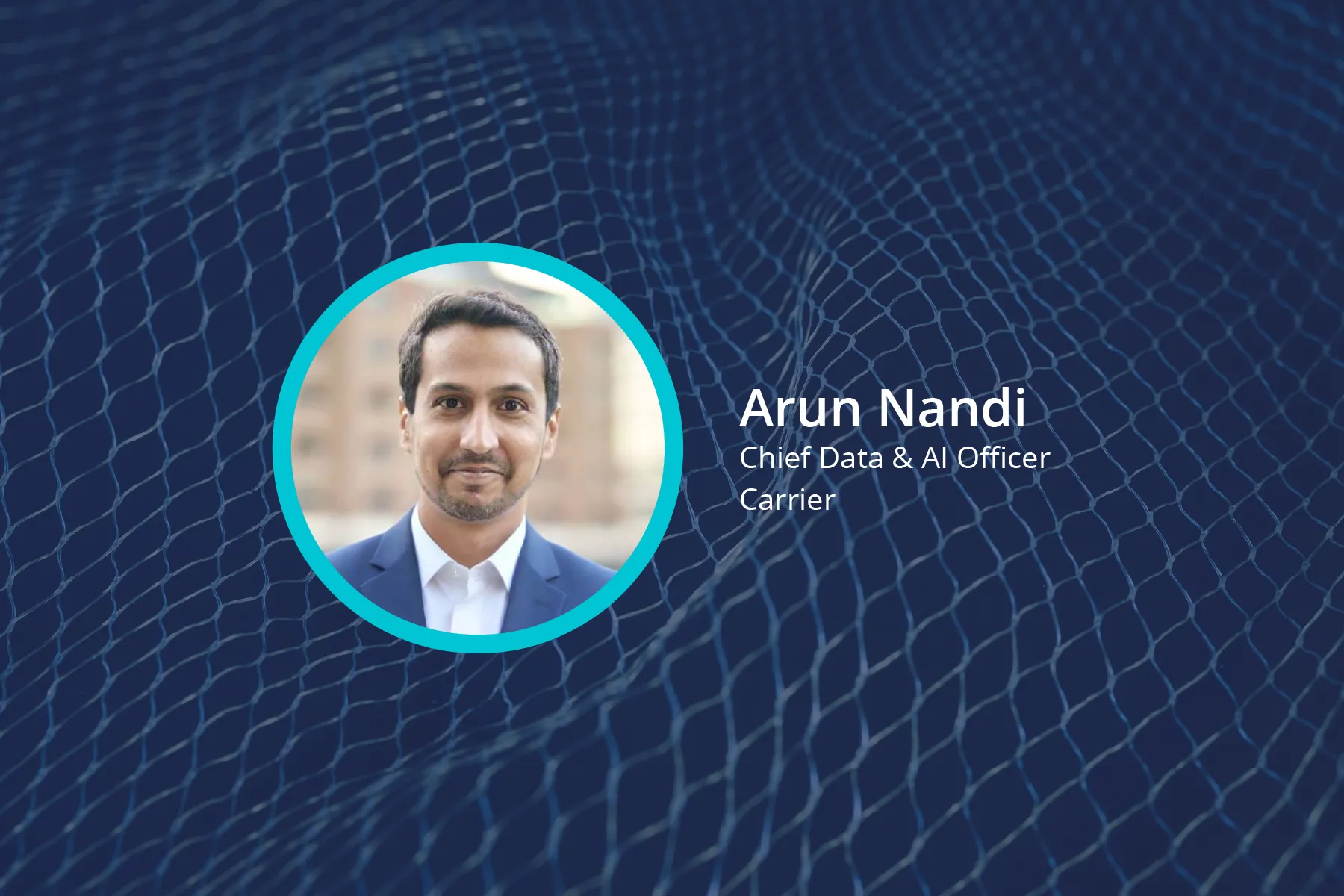
Carrier’s Arun Nandi on Early AI Adoption and the Infra Edge
Recorded at AI Infra Summit 2025 in Santa Clara: Carrier Chief Data & AI Officer Arun Nandi on infra as AI’s backbone, how early adopters win on ROI and speed, and what changed in the last 12–24 months.
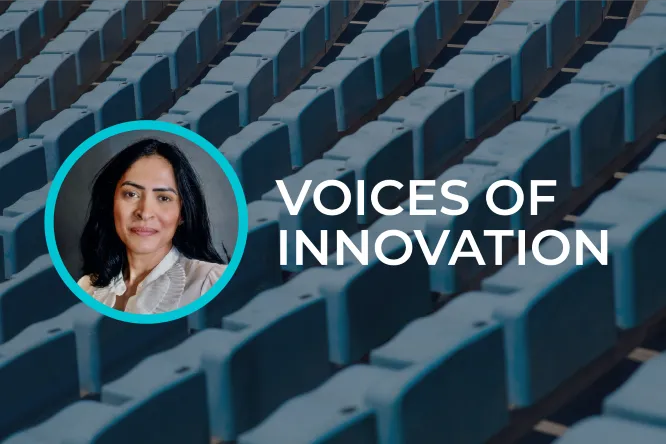
Microsoft’s Tannu Jiwnani on Responsible Innovation & Cybersecurity
Meet Tannu Jiwnani—one of TechArena's newest voices of innovation. Tannu is a a cybersecurity and identity leader who believes the future of innovation is responsible, secure, and inclusive.
We sat down with her to chat about security-by-design, blending AI with human oversight and creativity, why closing the talent and diversity gap is critical, and so much more. Check it out:
Q1) Can you tell us a bit about your journey in tech?
A: I began my career after graduate school in Florida, first as a business analyst and then as a data analyst focused on anti–money laundering. That experience was my introduction to fraud detection and prevention. My passion for problem-solving led me to pursue a master’s degree in Information Systems and Operations Management, which became the foundation of my career. Over the years, I have specialized in cybersecurity and identity protection, leading high-impact initiatives such as incident response to major cyber attacks and modernizing identity systems that safeguard millions of users. Beyond the technical work, I have made it a priority to mentor women and underrepresented groups, because I believe visibility creates possibility and I want others to see that they belong in cybersecurity too.
Q2) Looking back at your career path, what’s been the most unexpected turn that ended up shaping who you are today?

A: I never set out to build a career in cybersecurity. I was always an engineer at heart, and later a business school graduate focused on process, operations, and efficiency. For a long time, I thought my path would stay in those lanes. The most unexpected turn came when I landed in cybersecurity without prior experience or even much exposure. I still remember sitting in my first few meetings, listening to discussions full of technical jargon that didn’t make sense to me at the time. Instead of feeling defeated, I realized that this challenge was an opportunity to start from scratch and embrace the joy of learning on the job.
That experience taught me something profound about myself: I could thrive in unfamiliar territory if I was willing to be curious, ask questions, and stay persistent. It reshaped my confidence, showing me that expertise is built through resilience and openness, not by knowing everything on day one. It also made me appreciate the broader impact of cybersecurity, how the systems we protect touch millions of lives. Looking back, that unexpected leap into a field I never planned for became the defining moment that shaped my career, my leadership style, and my passion for making cybersecurity more inclusive for others who may not see themselves in it yet.
Q3) How do you define “innovation” in today’s rapidly evolving tech landscape? Has your definition changed over the years?
A: For me, innovation is no longer just about creating something new. In today’s landscape, it is about creating something that is both impactful and responsible. When I began my career, I often thought of innovation in terms of speed, disruption, or the next big breakthrough. Over the years, I have seen that true innovation lies in solving meaningful problems, making technology more secure, and ensuring it is accessible to the people who need it most.
In cybersecurity, innovation is not only about staying ahead of cyber attacks, but also about designing systems that people can trust and use safely. My definition has shifted from a focus on novelty to a focus on sustainability, accountability, and long-term value. Innovation today is about building solutions that stand the test of time and make a positive difference across industries and communities.
Q4) How do you see the relationship between AI advancement and human creativity evolving? Are they competitors or collaborators?
A: Right now, the relationship between AI advancement and human creativity is a bit of a mixed bag that we are all still exploring. There is clearly a learning curve as we figure out how to use AI responsibly and effectively, and that means being mindful of both its strengths and its limitations. AI can accelerate what we do and open up new possibilities, but it also requires human oversight to ensure that outcomes are ethical, accurate, and truly innovative. I believe the future will not be about choosing between AI and human creativity, but about learning how to blend the two in ways that amplify our potential while keeping accountability at the center.
Q5) If you could solve one major challenge facing the tech industry today, what would it be and why?
A: If I could solve one major challenge in the tech industry today, it would be closing the talent and diversity gap. Despite all the progress we have made, there are still too many barriers that keep women, people from underserved communities, and nontraditional backgrounds from thriving in tech. We talk a lot about innovation and security, but without diverse perspectives at the table, we miss out on creative solutions and introduce blind spots into our systems.
Addressing this challenge is not just about hiring, it is about building inclusive pipelines, mentorship networks, and workplace cultures where people can grow and feel they belong. If we can solve this, the entire industry becomes stronger, more resilient, and better equipped to create technology that works for everyone.
Q6) What's a book, podcast, or idea that fundamentally changed how you think about technology or business?
A: Professionally, one idea that fundamentally changed how I think about technology is that security is not just a feature, it is a foundation. Early in my career, I saw security as something that came after innovation, a layer to protect what was already built. Over time, I realized that the most resilient and impactful technologies are designed with security embedded from the very beginning. That shift has shaped how I approach every project, from identity protection to incident response. It also reframed how I think about business: security is not just about defense; it is about trust. When people trust the systems they use, adoption grows, opportunities expand, and innovation can truly thrive.
More recently, Atomic Habits by James Clear has been surprisingly practical for me. I know it is often talked about as a “hyped” book, but in moments when I am stretched thin, its focus on small, consistent actions helps me re-center and stay on track. It has been a reminder that progress often comes from building sustainable habits rather than relying on bursts of motivation, and that mindset has been invaluable in both my personal growth and professional resilience.
Q7) Outside of technology, what hobby or interest gives you the most inspiration for your professional work?
A: Outside of technology, planting and working out give me some of my greatest inspiration. Planting reminds me that growth requires patience, care, and the right conditions—lessons that influence how I think about nurturing teams and long-term strategies in cybersecurity. Working out gives me resilience and discipline. It reinforces the importance of consistency, pushing through challenges, and showing up even when it is difficult. Together, these hobbies keep me grounded, balanced, and focused; while also strengthening the mindset I bring into high-pressure situations at work.
Q8) What excites you most about joining the TechArena community, and what do you hope our audience will take away from your insights?
A: What excites me most about joining the TechArena community is the opportunity to connect with people who are just as passionate about technology as they are about its impact on the world. Communities like this create space for dialogue, collaboration, and fresh perspectives, which is where true innovation thrives. I am particularly excited to share insights from my journey in cybersecurity and identity protection, while also learning from others who bring different experiences and expertise.
Q9) If you could have dinner with any innovator from history, who would it be and what would you ask them?
A: If I could have dinner with any innovator from history, it would be Katherine Johnson. I first learned about her through the film Hidden Figures, and her story left a lasting impression on me. She not only shaped one of the most important moments in history by helping put humans on the moon, but she did so while breaking barriers of gender and race in a time when her presence in those rooms was questioned. I would ask her how she found the confidence to keep speaking up when she was often the only one of her kind at the table, and how she balanced the weight of that responsibility with the joy of doing groundbreaking work. Her courage, brilliance, and persistence continue to inspire me, especially as I think about what it means to show up fully in spaces where you may not always feel you belong.

Compass & Schneider Launch Prefab Pod for AI Data Centers
During Yotta 2025, I had a chance to sit down with Joe Reele, vice president – solution architects at Schneider Electric, to chat about the company’s new Prefabricated Modular EcoStruxure™ Pod Data Center, built in partnership with Compass Datacenters.
Designed to simplify the notoriously complex white space build-out process by delivering a factory-tested, ready-to-install pod that integrates power, cooling, and IT networking into a single modular unit.
“This is about delivering resilience, sustainability, and speed in a world where clients can’t afford to wait,” Joe said. “Prefabrication is the next step in that journey—and it’s only the beginning.”
Why Prefabrication Now
Joe pointed to three pressures shaping customer expectations: speed, simplicity, and consistency.
“The market really drove us this way,” he said. “Clients need facilities that are delivered faster, at lower cost, and with no risk—while ensuring performance is predictable and repeatable. Meeting those demands is what led us to rethink how white space is designed and deployed.”
The goal isn’t just speed, but repeatability at scale. As he noted, “Low cost only matters until you have a major incident. And when clients have hundreds of data centers, the last thing they want is 100 different one-off designs.”
Flexibility on a Standard Platform
The pod is delivered as a standardized base unit, but with options baked in for cooling architectures, cabling, and power distribution. That balance between uniformity and flexibility was deliberate.
“It’s like the Ford F-150,” Joe said. “They have one chassis, but 35 different models—from basic to luxury. We’ve baked adaptability into the base design, so when a client comes with a request, the answer becomes much easier.”
Sustainability Lens
Sustainability factored into the design process as much as speed. Schneider Electric and Compass have emphasized reducing embedded carbon in packaging and shipping, as well as eliminating waste in installation.
“When we say we are serious about sustainability, we mean that from how we make and produce our product, to what earth minerals we’re using, to how much energy it takes to build it,” Joe said. “Over the years, we’ve taken more and more carbon out of packaging, shipping, and manufacturing. Each piece may seem small, but together they add up.”
He also acknowledged the challenge customers face in balancing growth with net-zero commitments: “Our clients’ growth is going through the roof, but they also have aggressive net-zero goals. Prefabrication helps them scale while keeping sustainability in focus.”
Partnership Dynamics
Compass and Schneider have collaborated for years, and Joe pointed to that history as a key factor in making prefabrication viable.
“You can’t do this kind of work without trust,” he said. “The Compass team gave us the opportunity to earn that trust, and that’s been essential. Both companies check egos at the door and focus on solving problems together. That’s how you move from concept to reality.”
Looking Ahead
Joe believes prefabrication will become the industry standard for white space fit-outs, but he also sees a larger shift on the horizon: software-driven integration.
“The next step is software—the digital thread,” he said. “When power, cooling, and IT are stitched together on one network, data centers can move toward autonomous operations. And when that happens, data centers won’t just consume power—they’ll help stabilize the grid. Mark my words: the data center will become the great grid stabilizer of the world.”
TechArena Take
Prefabricated white space isn’t new—making it a first-class, configurable product is the shift worth watching. From an operator’s perspective, the appeal is schedule determinism, repeatability, and risk reduction, with sustainability layered in. The open questions we’ll track:
How well density envelopes and serviceability hold up in production
Whether lifecycle carbon reductions materialize versus conventional builds
How quickly the “digital thread” vision linking IT and OT becomes real
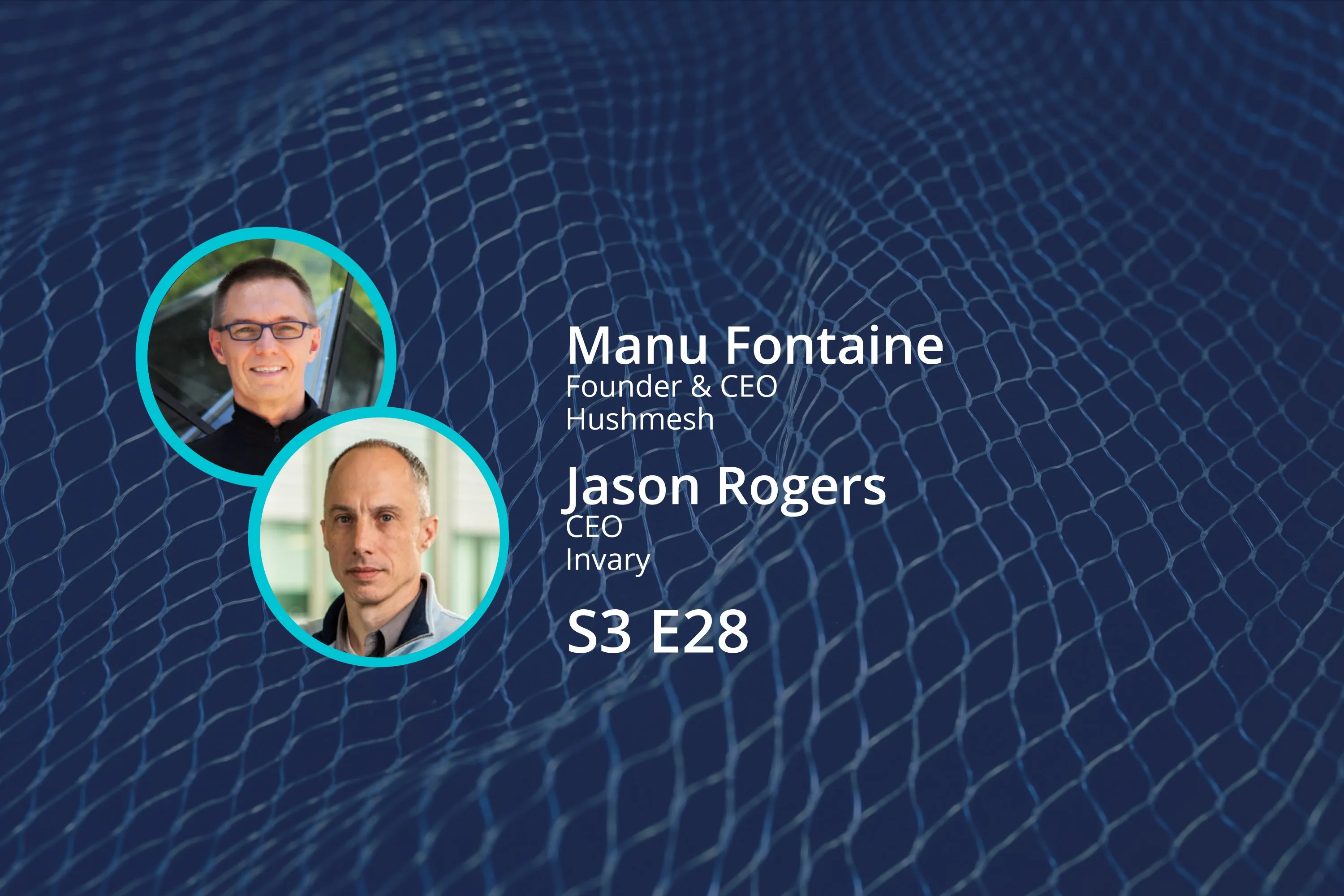
Inside Confidential Computing with Hushmesh & Invary
Allyson Klein hosts Manu Fontaine (Hushmesh) and Jason Rogers (Invary) to unpack TEEs, attestation, and how confidential computing is moving from pilots to real deployments across data center and edge.
Announcing TechArena’s 2025–2026 Voices of Innovation Fellows
At TechArena, we believe innovation doesn’t happen in isolation—it happens when bold ideas find the right platform and the right audience. This was a foundation of the establishment of the platform in 2022 and a guiding force in establishing our Voices of Innovation program. Today, we’re excited to introduce the 2025–2026 Voices of Innovation Fellowship cohort, a group of tech leaders shaping the future of AI era computing.
The Voices of Innovation Fellowship is a TechArena-sponsored program that amplifies practitioner perspectives across the most critical areas of computing. In a time when the industry is driving innovation at unprecedented pace, too many brilliant practitioners still struggle to have their insights heard. Our Fellowship exists to close that gap.
Meet the 2025–2026 Voices of Innovation Fellows
This year’s fellows represent a diverse range of expertise and leadership across technology and infrastructure:
Srija Reddy Allam, Fortinet

Srija Reddy Allam is a cloud security architect at Fortinet, where she partners with global customers to design, architect, and deploy Fortinet’s full suite of security solutions in public cloud environments. In this role, she engages directly with enterprises across industries, guiding them on securing critical workloads, applications, and data as they scale and modernize in the cloud. Her work spans the Fortinet portfolio, ensuring customers adopt solutions that align with both their business goals and regulatory requirements.
Matty Bakkeren, Momenthesis

Matty Bakkeren is a senior technology executive with a rare blend of deep technical expertise and strategic sales & marketing leadership, honed through years of managing high-stakes B2B partnerships at Intel with global leaders like Red Hat and Accenture across EMEA. As founder of Momenthesis, he helps accelerate datacenter transformation by scaling growth, driving innovation, and aligning technical solutions with business needs. His collaborative approach and ability to simplify complexity make him a valued advisor in technology and business.
Robert Bielby, Automotive Expert

Robert Bielby is a semiconductor and automotive tech leader with four decades of experience across hardware design, system architecture, product marketing, and P&L. He’s helped define markets in memory, ASICs, FPGAs, and AI, bridging lab innovation to scaled business. A hands-on educator, he champions practical, power-aware design and demystifies auto tech.
Tejas Chopra, Netflix
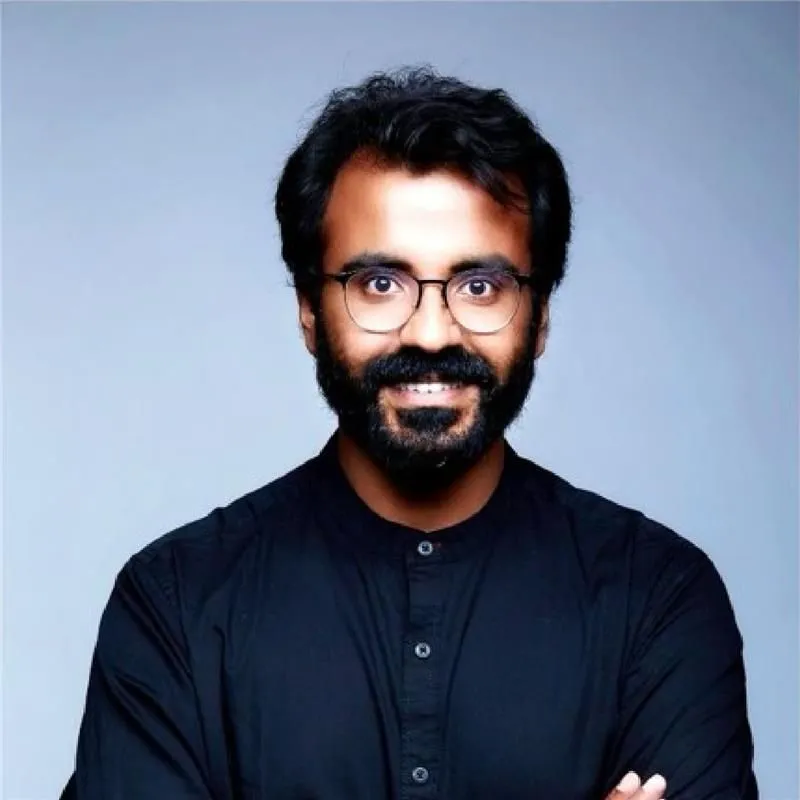
Tejas Chopra is an advocate of sustainable computing—AI and Cloud—and an active speaker on the topics of AI, Cloud Computing, Distributed Storage Systems and Engineering Culture. At Netflix, his role centers on advancing the company’s machine learning platform infrastructure. As a means to give back to the community, Tejas co-founded GoEB1 with a mission to build thought leadership for immigrants. It has now evolved into EnsolAI, a self-serve subscription platform for finding relevant opportunities to build brand and impact.
Lynn Comp, Intel

Lynn Comp is a global strategy, marketing, and product management executive with deep experience in the technology industry. She has a passion for creating and delivering solutions that address customer needs and unlock new business value and leverages this passion in driving broad customer adoption of Intel architecture solutions for the data center. She is also a board member at NeuReality, a startup that develops AI solutions, bringing her expertise in cloud, enterprise IT, software, 5G, product marketing, ecosystem development, and strategy.
Sean Grimaldi, Cybersecurity Expert
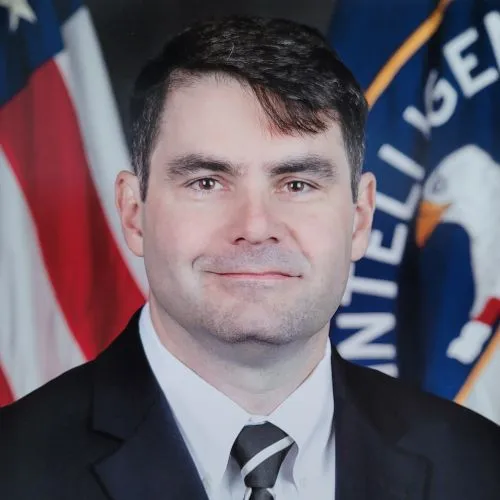
Sean Grimaldi is a seasoned digital engineering leader and innovator with a proven track record of driving technological advancements and strategic growth. Holding active clearances, Sean brings extensive experience in cloud computing, cybersecurity, and emerging technologies. He has held leadership roles at Anduril Industries, VectorZero.ai (as Co-Founder and CTO), the CIA, and Microsoft, consistently delivering impactful results.
Mark Grodzinsky, Network and Edge Expert

Mark Grodzinsky is a product and market leader who has spent his career at the intersection of semiconductors, wireless, SaaS, and AI. From early startup roles to Fortune 500 leadership, he has built ecosystems that turned Wi-Fi, IoT, and cloud innovations into global platforms. Most recently, he led an AI-first shift in network observability. He is passionate about bridging deep technology with real-world adoption to drive the next wave of innovation.
Tannu Jiwnani, Threat Detection Expert

Tannu Jiwnani is a principal security program manager at Microsoft and a global leader in cybersecurity. She drives innovation in identity security, leads high-impact incident response, mentors women worldwide, and serves on advisory boards. Through her leadership and advocacy, she is shaping a safer, more inclusive future in technology.
Banani Mohapatra, Walmart

Banani Mohapatra is a seasoned AI/ML leader with 13+ years of experience at the intersection of data science, product management, and enterprise innovation. As a senior data science leader at Walmart, she builds scalable AI/ML systems powering e-commerce personalization for millions of customers, delivering measurable business impact through AI-driven product lifecycle solutions. She has published applied AI research with IEEE in areas such as Generative AI, Agentic AI, causal inference, and experimentation platforms, and is a frequent speaker at global AI summits on responsible and enterprise-scale AI adoption.
Anusha Nerella, Financial Services Expert

Anusha Nerella is a senior principal software engineer and a seasoned leader in AI/ML, DevOps, big data, and automation. She has advanced trading platforms and enterprise systems at Barclays, Citibank, and USPTO, while driving AI-powered innovation. A mentor and researcher, she champions knowledge sharing and inspires the next generation of tech leaders.
Gina Rosenthal, Cloud Computing Expert

Gina Rosenthal is the founder of Digital Sunshine Solutions and a senior product marketing leader with deep expertise in cloud, virtualization, and data security. She has driven product launches, brand growth, and multi-million–dollar impact at VMware and beyond. A Pragmatic Institute Ambassador and Tech Field Day Delegate, she shares insights on AI, cloud, and edge across global platforms.
Niv Sundaram, Robotics, AI and Data Center Expert

Niv Sundaram is the chief strategy officer at Machani Robotics. Prior to this role, Niv spent 15 years at Intel in engineering and leadership positions spanning datacenter, AI, cloud infrastructure, content-protection & video conferencing solutions, contributing to $15B+ in annual server and client revenue. Now focused on the intersection of advanced AI orchestration and human-centered experiences, she applies her deep technical expertise to develop AI systems that understand and respond to human needs with genuine intelligence and emotional awareness. Niv is based in Oregon and holds a Ph.D. in Electrical Engineering from the University of Wisconsin-Madison, two issued patents, and several peer-reviewed publications. A strong advocate for women in tech, she also creates comics about women in technology to inspire the next generation @saywhatcomics.
Ryan Tabrah, Data Center and AI Expert
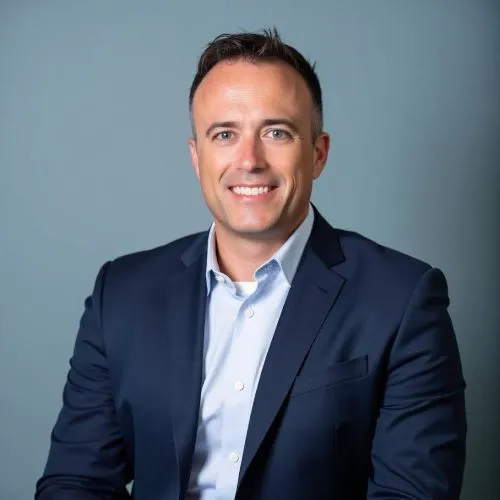
Ryan Tabrah is founder and CEO of SkillsForge AI, building adaptive learning technology that helps people and companies upskill faster and stay competitive in the AI era. He is former VP and general manager for Xeon and Compute Products at Intel, where he led a multi-billion-dollar portfolio of high-performance, energy-efficient solutions. With more than two decades of experience across AI, cloud, and data infrastructure, Ryan combines technical depth with business strategy while championing sustainability and diversity in tech.
Vivek Venkatesan, Data Engineering & AI Expert
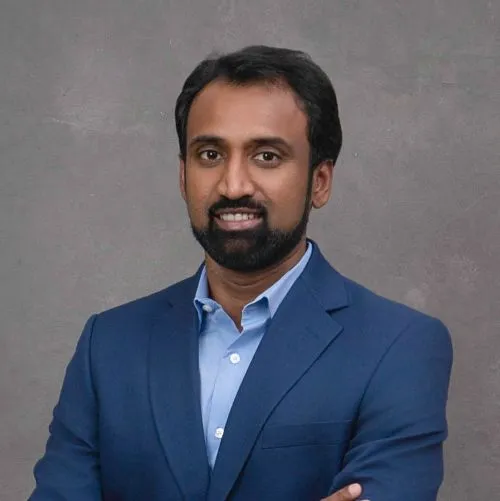
Vivek Venkatesan is a lead data engineer at Vanguard and a senior member of IEEE with 15+ years of experience in data engineering, cloud architecture, and applied AI. He has delivered solutions ranging from a COVID-19 workforce safety platform to cost-saving enterprise data architectures, and contributes as a mentor, speaker, and author in the global data and AI community.
Bhavnish Walia, Amazon
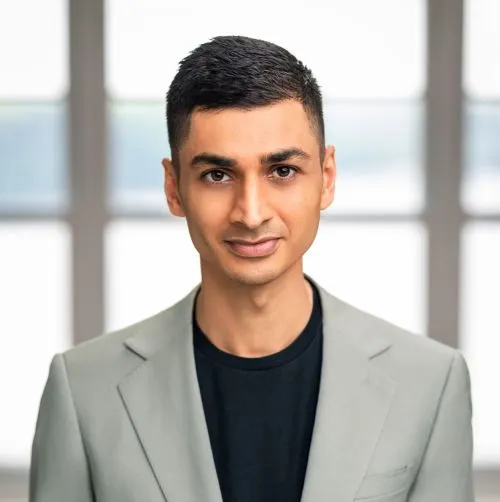
Bhavnish Walia is a senior risk manager, AI/ML at Amazon in New York, where he leads global initiatives in risk management, responsible AI governance, compliance automation, and fraud detection. With over 13 years of experience spanning e-commerce, fintech, and banking, he has built frameworks for LLM risk governance, deployed Generative and Agentic AI for enterprise innovation, and automated anti-money laundering workflows that have delivered millions in annual savings.
Why It Matters
The Fellowship embodies TechArena’s brand promise: to deliver original takes from across the tech landscape on the pulse of tech innovation and deliver insights from those who are defining tech’s future. Their publications ensure that insights reach the audiences who can act on them—industry decision-makers, innovators, and the broader tech community.
Throughout 2025–2026, readers can expect thought-provoking articles, Q&As, and features from this group of innovators.
We’re thrilled to welcome this year’s cohort and can’t wait to share their stories. We’ll begin next week with introductory posts from each Voice.

AI Benchmarking Hits New Heights with MLPerf Inference 5.1 Release
AI inference benchmarking leveled up today with the release of MLPerf Inference 5.1 results from MLCommons. This latest release not only set another round of records in participation and benchmark performance; it expanded the number of benchmarks to meet the evolving demands of AI applications, as reasoning models, speech recognition, and ultra-low latency inference become increasingly important for enterprise AI deployments.
Here’s the TechArena breakdown of what matters most.
Performance Breakthroughs Continue
First thing’s first: those looking for performance improvements across existing benchmarks will find plenty to analyze in the latest round of data. The Llama 2 70B benchmark—the most popular workload for the second consecutive round—shows median performance improvements of 2.3x since the 4.0 release, which was only about 18 months ago, with the best results showing 5x gains.
What’s driving these dramatic improvements? Larger system scales are becoming more common, as is the adoption of FP4 (4-bit floating point) numerical precision. Even accounting for larger systems, however, results comparing the Llama 2 70B benchmark over time still show improvement at the per-accelerator level.
Three New Benchmarks Reflect AI’s Expanding Reach
Beyond ongoing benchmarks, MLPerf Inference 5.1 introduces three benchmarks that capture AI’s performance beyond large language model (LLMs) with reasoning, speech recognition, and efficient text processing.
DeepSeek-R1 marks the first reasoning model in MLPerf Inference history, a 671-billion parameter mixture-of-experts system that breaks down complex problems into step-by-step solutions. This model generates output sequences averaging 4,000 tokens (including “thinking” tokens) while tackling advanced mathematics, complex code generation, and multilingual reasoning challenges. The benchmark combines samples from five demanding datasets and requires systems to deliver the first token within 2 seconds while maintaining 80-millisecond-per-token speeds, constraints that reflect real-world deployment requirements for agentic AI systems.
Whisper Large V3 brings automatic speech recognition into the MLPerf ecosystem with a transformer-based encoder-decoder model featuring high accuracy and multilingual capabilities across a wide range of tasks. The inclusion reflects growing enterprise demand for high-quality transcription services across customer service automation, meeting transcription, and voice-driven interfaces. With 14 vendors submitting results across 37 systems, the benchmark captures a wide range of hardware and software support.
Llama 3.1 8B replaces the aging GPT-J benchmark with a contemporary smaller large language model (LLM) designed for tasks such as text summarization. With a 128,000-token context length compared to GPT-J’s 2,048 tokens, this benchmark reflects modern LLM applications that must process and summarize lengthy documents, supporting both data center and edge deployments with different latency constraints for various use cases.
Interactive Scenarios: The Low-Latency Imperative
In response to community requests, MLPerf Inference 5.1 expands “interactive” scenarios—benchmarks with tighter latency constraints that reflect the demands of agentic AI and real-time applications. These scenarios now cover multiple LLM benchmarks. The interactive constraints push systems to deliver over 1,600 words per minute, enabling immediate feedback for chatbots, question-answering systems, and other applications where user experience depends on responsiveness.
Hardware Innovation on Full Display
Finally, the hardware landscape represented in MLPerf Inference 5.1 showcases an industry in rapid transition. Five newly available accelerators made their benchmark debuts: AMD Instinct MI355X, Intel Arc Pro B60, NVIDIA GB300, NVIDIA RTX 4000 Ada, and NVIDIA RTX Pro 6000 Blackwell Server Edition.
The TechArena Take
MLPerf Inference 5.1 arrives at a moment when AI procurement decisions carry unprecedented strategic weight. The benchmark results provide critical data points for enterprises evaluating everything from edge inference appliances to hyperscale data center deployments.
As MLCommons reaches the 90,000 total results milestone across all MLPerf benchmarks, the organization continues to demonstrate that transparent, reproducible benchmarking can keep pace with an industry moving at breakneck speed. MLPerf Inference 5.1 represents not just a snapshot of current AI capabilities, but a preview of the performance standards that will define the next generation of AI infrastructure.

Schneider Electric Powers Ahead in Sustainability
Ahead of Yotta 2025, we connected with Anna Timme, VP of Sustainability at Schneider Electric, to explore how the company continues to lead the charge in climate action and circular design.
Named TIME’s Most Sustainable Company two years in a row, Schneider is showing that sustainability is more than a responsibility—it’s a growth strategy. Timme offers a firsthand look at the milestones, challenges, and innovations that keep Schneider ahead of the curve.
Q1: Schneider Electric has been named TIME’s Most Sustainable Company two years running. What do you think sets you apart from other companies in achieving this level of industry leadership, and how do you continue to stay ahead in sustainability?
A1: For the past two decades, sustainability has been at the core of everything we do at Schneider Electric, embedding it into our purpose, culture, and business. This represents more than just a responsibility.
At Schneider, sustainability is a key driver of business success. We’ve been monitoring our environmental and societal impact since 2005: two decades of experience. We have firsthand knowledge of how these efforts lead to innovation. They lead to new revenue streams, improved operational efficiency, risk management, and stakeholder trust. It also elevates employee satisfaction—all of which are critical for long-term success.
For example, we adopted and maintain a circular economy approach, designing products to use longer, use better, use again. This reduces the need for raw materials, minimizing waste and yielding cost savings.
Our Environmental Data Program gives customers unprecedented clarity into the impact of our products, helping them meet regulations and adopt circular practices themselves.
We recognize that our positive impact goes hand-in-glove with strong financial performance. As the world’s most sustainable company (by Time Magazine and Corporate Knights), we believe that what makes Schneider stand out today and tomorrow is that we are an Impact company where we do well to do good, making sure that our entire ecosystem is brought along this journey toward a more sustainable and inclusive future.
In 2021, we launched the Schneider Sustainability Impact (SSI) 2021–2025 roadmap, focused on climate, resources, equal opportunities, trust, generations, and local communities. Our SSI drives impact and action across our operations, partners, and customers! Our clients and customers have played a crucial role in our success in this spec—we couldn’t do it without them.
Ultimately, sustainability is good business. As CEO Olivier Blum says, “What is good for the planet is good for the wallet.” Through electrification and digitalization, we’re building a better future for all—where environmental, societal, and financial benefits go hand in hand.
Q2: Your Q2 2025 sustainability report shows some impressive milestones—like surpassing one million people trained in energy management and reaching 734 million tonnes of CO₂ emissions saved for customers. What does hitting these ambitious targets mean for your long-term sustainability strategy?
A2: It’s indeed a proud moment for us, and a reminder of what’s possible when purpose meets action. Looking forward, these results reinforce our commitment to keep raising the bar. Our long-term strategy is to continue scaling solutions that electrify, digitize, and decarbonize energy consumption while expanding access to sustainable energy worldwide. Every milestone we reach motivates us to go further, faster—because the challenges ahead require ambition matched with measurable action.
Achieving these milestones is a robust validation of our long-term sustainability strategy. Training over one million people in energy management and helping our customers avoid 734 million tonnes of CO₂ emissions are impressive figures. They reflect the real-world impact of our commitment to climate action and inclusive progress.
They also demonstrate that our approach—combining innovation, education, and collaboration—is working. By equipping individuals with the skills to manage energy more efficiently, we’re building a global movement toward smarter, more sustainable practices. And by deploying technologies that reduce emissions at scale, we’re helping industries transition to low-carbon operations.
Looking ahead, these achievements reinforce three strategic priorities:
1. Scaling impact through digital and electric solutions—especially in critical sectors like data centers, where efficiency and resilience are paramount.
2. Driving responsible innovation—developing technologies that are not only high-performing but also energy-efficient and circular by design.
3. Mobilizing ecosystems—engaging partners, customers, and employees to accelerate collective progress toward net-zero goals.
These milestones are not an endpoint—they’re a springboard. They inspire us to go further, faster, and to continue embedding sustainability at the heart of everything we do.
Q3: Your Zero Carbon Project has helped reduce supplier emissions by 48%—that’s a huge achievement. What advice would you give to other companies looking to tackle their supply chain carbon footprint?
A3: The Zero Carbon Project is a cornerstone of our SBTi Corporate Net Zero-aligned strategy. I am excited and proud of the fact that we are on track to slash 50% of the operational emissions of our top 1,000 suppliers by the end of this year! To achieve this, we are “drinking our own wine,” using a Schneider Electric’s supply chain decarbonization service that we offer to our customers across industries.
Better yet, it doesn’t have to be a single company initiative! Industry-specific supply chain consortia are a fantastic way to pool resources and accelerate impact. In this vein, Schneider Electric services are the engine behind the Energize program for the Pharmaceutical & Healthcare sector and the Catalyze program for the semiconductor industry. The iMasons Climate Accord has begun work on developing a potential program for digital infrastructure—join us there to earn more!
Getting back to the question, I have two pieces of advice:
1. Don’t get distracted by the desire for perfect data from suppliers. Not taking reduction actions because you have data gaps is like refusing to eat well and exercise to lose weight just because you don’t have a scale at home. Start enabling suppliers to prioritize operational efficiency and shift to carbon free energy sources now. In parallel, help them build the capability to measure and report.
2. Treat this is a journey—the entire effort is a necessary ingredient for your Net Zero ambition. The more mature our suppliers are, the stronger their contribution will be! So the focus needs to be on how you can support them on the journey.
Q4: Data center owners are increasingly looking to tackle their scope 3 footprint, which is often larger than their operational emissions, especially for those who are procuring carbon-free energy. What is Schneider doing to help address this?
A4: When we look at a hyperscaler’s scope 3 footprint, it’s almost entirely upstream (embodied carbon) from materials like cement and steel, and from equipment such as mechanical, electrical, IT, storage, and networking systems.
At Schneider, we’re thinking about more than performance in isolation. Our broad portfolio, deep ecosystem partnerships, and ambitious decarbonization goals allow us to take a wide-angle lens, aiming for longevity and reduced environmental impact of all solutions.
Each new product starts with the previous generation’s Environmental Product Disclosure (EPD), a standardized, third party–verified document quantifying all lifecycle impacts. From there, we define environmental design goals and achieve them by using less materials, using lower impact materials, designing for circularity (longevity, serviceability, etc.), and increasing efficiency.
This is in turn is supercharged by Schneider Electric’s:
• SBTi-aligned decarbonization goals: Net Zero ready in our operations and -25% end-to-end by 2030,
• supply chain decarbonization program (discussed previously), and
• broader efforts to support critical mass in grid decarbonization.
Many of our customers have bold 2030 scope 3 targets. Thanks to this broad approach, we can co-develop tailored plans to draw down embodied carbon of our business with them on defined timelines.
Q5: As our industry builds ever faster, and data centers become much more power dense to support AI workloads, what can data center design engineers and operators do to both find the power they need as quickly as possible, and stay on track with their sustainability goals?
A5: The power demands of our industry are indeed daunting. The International Energy Agency (IEA) projects that data center energy usage will double by 2030. The process of applying for new loads with utilities and grid operators was a matter of course only a couple of years ago and is now a source of serious uncertainty and risk as data center operators look to site new projects.
The good news is that there are major intersections between solutions for power availability and those for sustainability. First, it’s helpful to remember that solar, wind, and storage are not just the cheapest new sources of power you can build in just about every market around the world, but also the quickest to deploy. Policy support for these technologies will not only help advance us toward a Net Zero future; it will also help ensure that we have plentiful power for our growing industry, and that energy costs are kept under control. At Schneider, we are helping our customers secure renewable power around the world through our Renewable Energy and Climate Advisory Services.
Data center companies are also investing aggressively in onsite power solutions to either provide bridge power until utility power is available, or as permanent prime power to obviate the need to find grid capacity. Currently, methane/natural gas turbines and engines appropriate for data center loads are experiencing extended lead times, often of five years or more. Many players in the industry are investing in newer technologies both to pursue lower emissions, and to continue to build, including fuel cells, co-located wind, solar, and storage, and modular nuclear reactors. Schneider is working with our customers to design and deploy microgrids across the globe, integrating a variety of distributed energy resources, and managing both onsite loads and interaction with the grid through our industry leading controls.

.webp)
Inside Arm’s Drive to Advance AI’s Data Center Transformation
As AI fuels a $7 trillion-dollar infrastructure boom, Arm’s Mohamed Awad reveals how efficiency, custom silicon, and ecosystem-first design are reshaping hyperscalers and powering the gigawatt era.
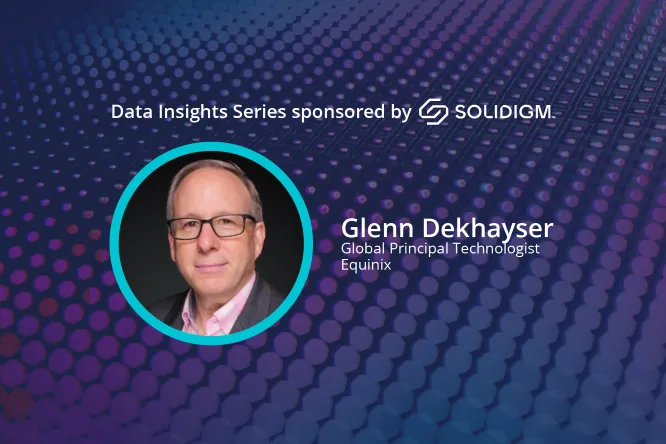
Equinix & Solidigm on the Real Cost of AI Infrastructure Demands
Equinix’s Glenn Dekhayser and Solidigm’sScott Shadley discuss how power, cooling, and cost considerations are causingenterprises to embrace co-location among their AI infrastructure strategies.

5 Fast Facts: Vigilent’s AI for Cooling Plant Optimization
We sat down with Dr. Cliff Federspiel, founder, president & CTO at Vigilent, to talk about compute efficiency in the AI era—specifically, how smarter cooling optimization can keep SLAs tight as rack densities rise. From sensing to predictive control, Cliff explains why letting an on-prem AI continuously tune the cooling plant beats static setpoints, helping operators protect reliability while cutting energy and carbon.
The company builds an on-prem, vendor-agnostic AI control layer for data-center cooling. A sensor network and machine learning generate an Influence Map® of how each AHU affects rack inlet temperatures; the system then adjusts fans and unit states only where needed. Vigilent integrates with BMS/DCIM and also monitors and controls chillers, which allows for optimization across the entire cooling plant. Guardrails and fail-safes—including snap-to-full-cooling—ensure resilience while delivering measurable efficiency gains.
Q1: Vigilent has been applying AI/ML to cooling optimization for 17 years—well before today’s wave of AI-driven data center demand. How has this early market entry shaped your leadership position as operators now face power densities and cooling challenges beyond the limits of traditional air cooling?
A1: Data centers are highly variable in how they’re configured and operated. There are different cooling technologies from different vendors. Control strategies also vary. For example, temperature vs. pressure. Facility layouts are different, for example, raised floors vs. slab and varying types of containment. As you say, Vigilent has been around for a long time, and that means we’ve seen all of these configurations and learned how to optimize cooling in each case. Years ago, we scratched our heads when seeing something new, but by now we’ve pretty much seen it all, including the complexities associated with optimizing across the air-side and chiller plant.
Increasing IT power densities just add another layer of complexity to the cooling challenge, and we’ve got the experience and gray hairs, and software and engineering talent, needed to deal with it.
Q2: Most traditional cooling systems rely on static setpoints, while Vigilent uses machine learning to understand the influence of each cooling unit on IT equipment across a facility. How does this dynamic approach transform cooling efficiency compared to conventional methods, and what measurable outcomes—like SLA compliance, energy use, or equipment longevity—can operators expect?
A2: Machine learning enables Vigilent’s AI to empirically understand exactly what’s going on in a data center. If a fan is ramped up or down, or a cooling unit is turned on or off, where will temperatures go up, and where will they go down? Machine learning allows the AI to create a predictive model, basically knowing in advance the effects of any actions it takes. This enables the AI to deliver very high SLA compliance with a bunch of other benefits. One colocation operator went from about 94% SLA compliance to 99.96% compliance. In the same data hall, this operator reduced PUE by 10% and energy and carbon emissions by 32%. Since cooling is only used when and where it’s needed, there has been a big reduction in wear and tear, which means their cooling infrastructure will last longer and there are fewer replacement parts. They are now using the AI as a competitive differentiator vs. other colocation operators.
Q3: With over 1,000 deployments across 35 countries and partnerships with companies like Schneider Electric, NTT, and Siemens, how does Vigilent’s global footprint enhance your AI models, and what unique advantages does this breadth of operational data provide to new customers, particularly those entering high-density AI computing environments?
A3: To address the diversity in data center designs and operations, Vigilent has developed platform capabilities that complement our core AI technology. We integrate with any type of cooling infrastructure, whether it be air cooling, liquid cooling, or the chiller plant, and also with BMS and DCIM systems plus other assets like power equipment. We also rapidly deliver bespoke capabilities with a tool called Vigilent Studio. And we have an information layer in our platform called Vigilent Insights, which uses the data captured and generated by Vigilent’s AI to provide facility staff with guidance about how to improve resilience or operate more efficiently.
Our strategic partners are global leaders in providing infrastructure and services to data center operators. This has positioned us well for the increased densities we’re seeing now. For example, Schneider Electric acquired the liquid cooling company Motivair and collaborates with NVIDIA on designs for AI data centers.
Q4: As rack densities push past 100 kW and liquid or hybrid cooling strategies become mainstream, where do you see AI-driven optimization playing the biggest role? How can it accelerate both sustainability and carbon reduction goals for next-generation infrastructure?
A4: Joint optimization of the air-side and water-side of the cooling plant will be increasingly important as rack densities rise and liquid cooling is used to remove some, but in most cases, not all, of the IT heat load. Higher densities shorten ride-through times in the event of a cooling failure, and hybrid cooling increases the complexity of the cooling plant. There is plenty of research showing that AI-driven vehicles are safer and more fuel-efficient than human-driven vehicles. Similarly, AI-driven optimization not only improves the efficiency and sustainability of complex data centers, but it also improves their reliability.
Q5: For operators considering AI-driven cooling optimization, what are the top three factors they should prioritize in evaluating solutions? And where can readers learn more about Vigilent’s approach to dynamic cooling management?
A5: People can be understandably nervous about letting AI control data center cooling, just as people are nervous getting into a self-driving car. But with proper safeguards, they can ensure data center resilience and be rewarded with significant benefits. What are those safeguards?
• First, make sure the AI operates within the premises, within the corporate firewall. This will avoid security risks associated with cloud-based applications.
• Second, make sure the AI has guardrails that protect against hallucinations, and fail-safes that ensure full cooling if there is ever a problem with the AI.
• Third, make sure the AI is proven. Has it been deployed in other mission-critical environments? How many? What were the results?
Learn more about Vigilent.

Clearing AI’s Costly Bottlenecks with Cornelis Networks
CEO Lisa Spelman explains how tackling hidden inefficiencies in AI infrastructure can drive enterprise adoption, boost performance, and spark a new wave of innovation. Check out Cornelis Networks.

Synopsys Accelerates Chip Design with AI Copilot Release
This week, electronic design automation (EDA) leader Synopsys unveiled expansions to its Synopsys.ai Copilot generative AI capabilities, promising to transform workflows for semiconductor engineering teams, enabling them to take on more complex designs on accelerated timelines.
Synopsys reports that the new generative AI (Gen AI) capabilities accelerate workflows that previously consumed days into tasks completed in mere hours, and processes that took hours into operations finished in minutes. Early adopters are already reporting extraordinary gains: 30% faster ramp time for early-career engineers using knowledge assistant and 35% boost in engineering productivity for early-career and expert engineers within formal verification workflows using formal assertion assistant.
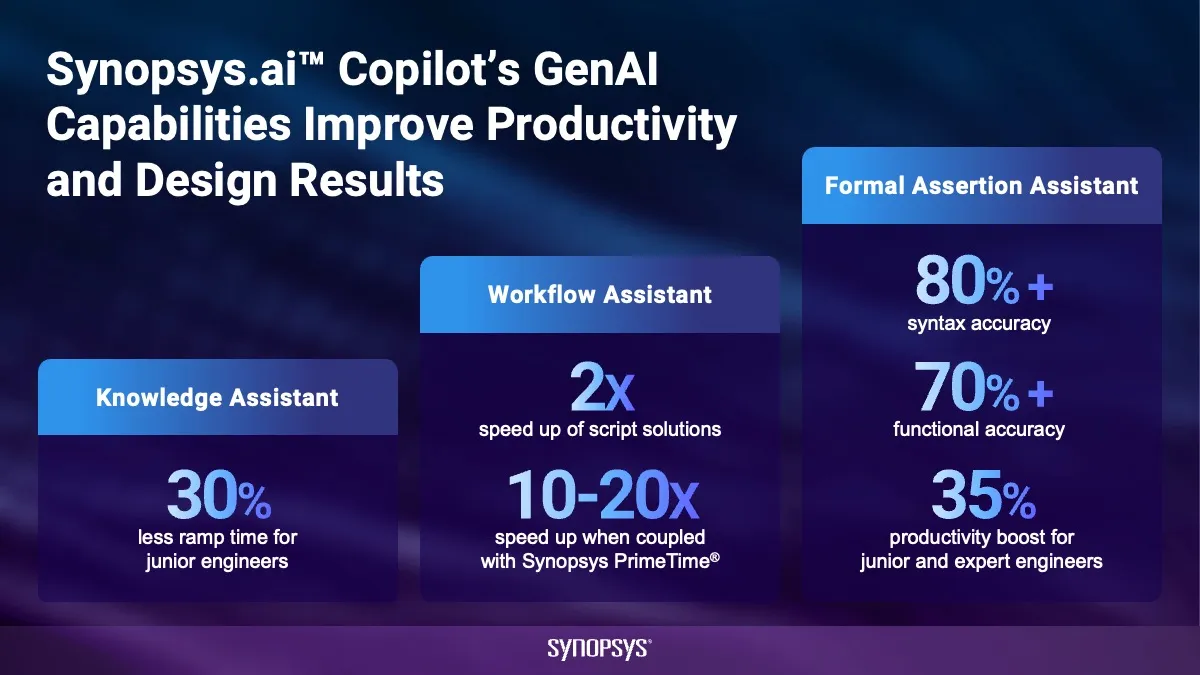
At the heart of this transformation lies Synopsys.ai Copilot’s dual approach: assistive and creative AI capabilities. The assistive features focus on knowledge management and workflow optimization, helping engineers to navigate complex documentation, generate scripts, and guide newcomers through the labyrinthine world of chip design. The creative capabilities venture into more ambitious territory, automatically generating formal assertions and register-transfer level (RTL) code with greater than 80% syntax accuracy and more than 70% functional accuracy.
This AI expansion gains additional significance when viewed through the lens of Synopsys’ recently completed acquisition of Ansys. The integration is already paying off with the recent introduction of Ansys Engineering Copilot and updates to Ansys SimAI, extending AI capabilities deep into simulation and analysis workflows.
In addition, Synopsys is looking beyond current generative AI applications toward what it calls AgentEngineer technology for chip design. Developed in collaboration with Microsoft, this represents a progression toward increasingly autonomous design systems. The company envisions a five-level evolution: from step-level actions (L2) to complex multi-agent operations (L3), dynamic flow optimization with adaptive learning (L4), and ultimately autonomous decision making (L5).
The first prototype offers a glimpse of a future where AI agents don’t just assist engineers but actively participate in the design process. As Microsoft’s Aseem Datar notes, “Together, we are not just optimizing existing workflows—we are introducing a new paradigm to advance engineering innovation and productivity for next-generation chip designs.”
The TechArena Take
In an industry where time-to-market can determine billion-dollar market positions, Synopsys has just handed its customers a significant advantage. The timing is particularly crucial as the industry grapples with a combination of design complexity and workforce shortages. Advanced AI chips require sophisticated design methodologies, while simultaneously, the pool of experienced semiconductor engineers remains constrained.
Synopsys’ AI capabilities directly address this paradox by accelerating novice engineers’ learning curves while amplifying expert productivity. The real test will be execution at scale, but the early results suggest meaningful progress toward AI becoming a more integral part of the semiconductor design process.
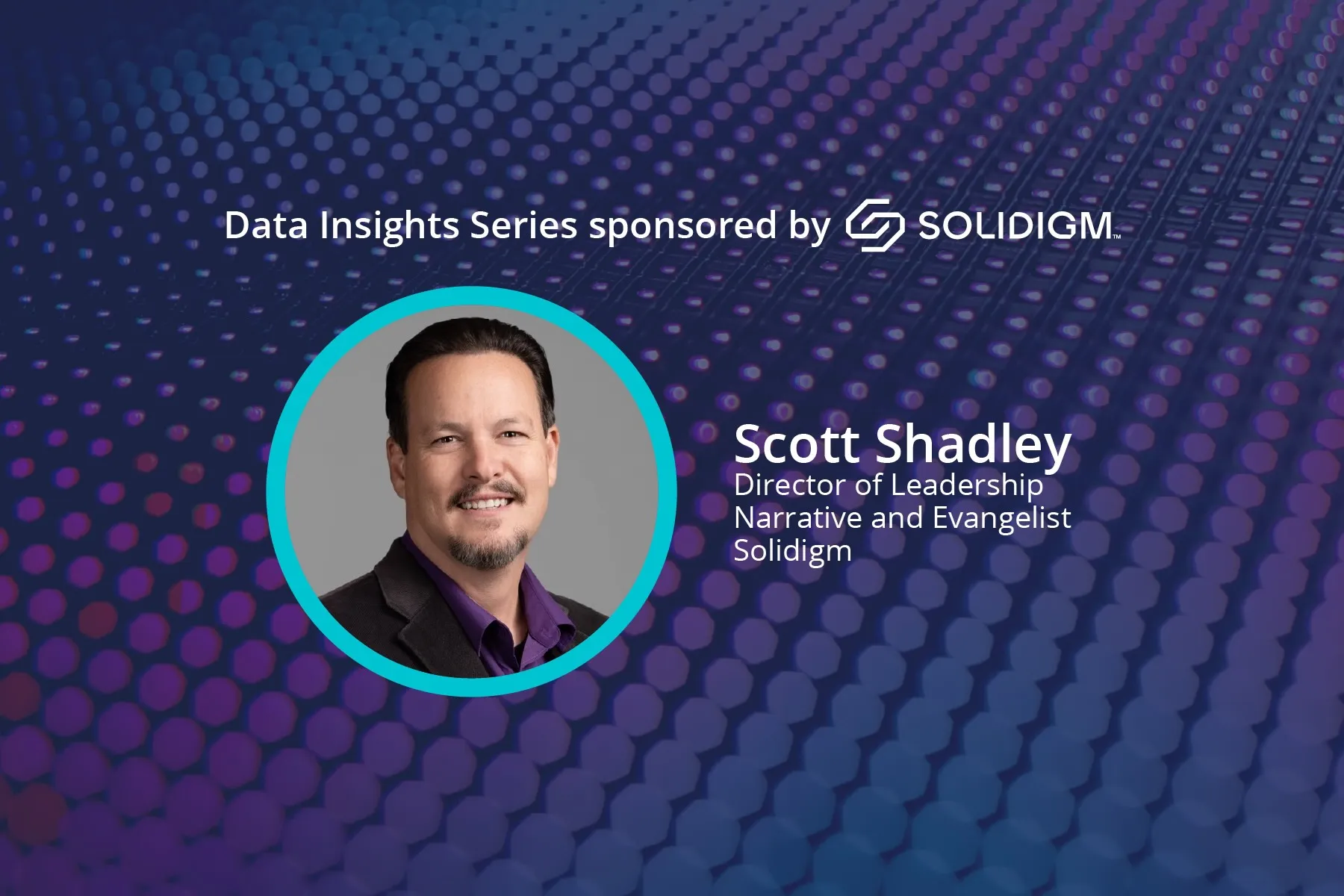
Cracking the Code on Storage Efficiency with Solidigm
Explore myths, metrics, and strategies shaping the future of energy-efficient data centers with Solidigm’s Scott Shadley, from smarter drives to sustainability-ready architectures.
Inside Data-Centric Strategy with Equinix and Solidigm
Equinix’s Glenn Dekhayser and Solidigm’s Scott Shadley join TechArena to unpack hybrid multicloud, AI-driven workloads, and what defines a resilient, data-centric data center strategy.

Hyperscalers Weigh In on Immersion Cooling’s Future
As AI drives power demands sky-high, hyperscale leaders share opportunities, obstacles, and the urgent path forward for immersion cooling adoption.

Antillion’s Alistair Bradbrook on Designing Edge Tech That Lasts
Alistair Bradbrook, founder and COO of Antillion, has spent decades wrestling with one central challenge: getting the right information to the right people at the right time—no matter the environment. From early exposure to Phase I clinical trials at his father’s pharmaceutical company to leading edge-AI hardware design, Bradbrook’s career is a study in curiosity, iteration, and purposeful design.
In this conversation, he shares how Antillion approaches technology, leadership, and research/testing at the edge.
Q: You helped found Antillion with a mission to bring cutting-edge performance to the edge. What was the spark that told you this company needed to exist?
A: There wasn’t one epiphany—it was a series of moments over decades. My interest in collecting data at the source started when I was 12 or 13. I worked with my father in his business, which was a pharmaceutical company that did Phase I trials, testing drugs in humans for the first time. The challenge in that business had always been about collecting data—like heart rate, ECG, and all those metrics that are key to understanding the effect of drugs on humans—quickly enough to aggregate them so decisions could be made.
This was ~35 years ago, so the idea of putting high-performance computing at the edge was unimaginable. We were working with the home computers of the day—not exactly capable edge devices. But the challenge was the same as today: collect data close to its source, aggregate it quickly, and empower people to make decisions in real time.
That fascination stayed with me—whether in healthcare, environmental sensing, or defense—and eventually led me to Antillion. I’d grown frustrated with existing products and felt that if no one else was building the kind of capable, usable, and non-intimidating technology I envisioned, then we should do it ourselves.
Q: Antillion’s products blend engineering rigor with industrial design aesthetics. What does “good design” mean to you in the context of edge technology?
A: My industrial design lead and I start pretty much conversation with a few factors that are really critical. The object we’re building needs to not feel alien—it needs to not feel so brand new that it’s not relatable and people don’t understand how to use it. So, coming up with designs that are not alienating is key.
We also think a lot about portability—not just size, weight, and power (SWaP) in the defense sense, but true portability. Can one person move and operate it easily? Does its form factor match its purpose? We’ve built devices that, in hindsight, didn’t meet that standard—they were too big for their capability or too small to be useful. That balance matters.
We also iterate quickly, moving from sketch to 3D design to a first physical prototype, because some flaws only reveal themselves when you can hold and use the object. Perfection is unattainable, but each release gets closer.
Q: Running a fast-moving company at the frontier of hardware and edge AI is no small feat. What have you learned about leadership in unpredictable environments?
A: My style is collaborative and passion-driven. I’ll never ask someone to do something I wouldn’t do myself. In a ~30-person company, I can stay connected with everyone, but as we grow, that culture will rely on managers carrying it forward.
I want people who have genuine interest in what we’re building—not just a nine-to-five mindset. The best moments are when someone takes an idea I’ve shared, runs with it, and comes back with not only what I asked for, but something I hadn’t even considered. That’s where the magic happens.
Q: Your R&D approach starts with research-first thinking. How does that influence your company culture?
A: I’m naturally inquisitive. Every new idea starts with research—often me digging into the “why” before handing it to engineering or marketing to explore further.
We won’t build something just to compete unless we see a way to make it meaningfully better. If I can’t see that potential, I park the idea until I can. If I do see it, we’ll prototype quickly, test functionality, and only then think about aesthetics and packaging.
This approach encourages the team to think critically, test early, and be comfortable with iteration.
Q: ANTEX (Antillion’s field research activities) tests products in the wild, not just in the lab. Can you share an example where this approach paid off?
A: One example was a small device designed to extend radio range in mountainous terrain. We tested it in the Alps—hiking, throwing it in the snow, getting it damp and cold, using it the way it would actually be used.
It passed the environmental tests, but more importantly, we learned how people actually carry, deploy, and treat the equipment. That kind of insight simply can’t be replicated in a lab.
Q: As AI moves from cloud to edge, how do you see the role of field-deployed systems changing?
A: I’m still not sure how much of the current push for AI at the edge is driven by genuine need versus commercial opportunity. There are clear cases where edge AI is essential—especially when you need faster decisions or want to limit the data sent upstream—but I think the technology may be a little ahead of widespread operational readiness.
The real opportunity isn’t “AI” as a buzzword—it’s making better decisions closer to where data is created, in ways that either empower local operators or optimize system efficiency.
Q: Antillion operates in high-stakes environments where failure isn’t an option. How do you build resilience into your team?
A: We don’t really talk about “failure.” We invest heavily in early-stage research and iteration to reduce the chance of failure, but when it does happen, it’s rarely black and white. We treat it as another step toward solving the problem. Resilience comes from seeing it as a shared responsibility—between our team, our products, and our customers—to mitigate and learn from setbacks.
Q: When people look at Antillion 10 years from now, what do you hope they say?
A: I’d love for one or more of our products to still be in use, still delivering on—and maybe exceeding—their original purpose. Longevity is the ultimate proof of value. If our technology continues to serve customers in ways we couldn’t predict at launch, I’ll consider that a success.
Powering AI: Solidigm’s Vision for the Future of Storage
Industry leader Scott Shadley reveals how Solidigm’s innovations in SSDs, partnerships, and architecture are reshaping data centers to meet the rising demands of AI, edge, and enterprise workloads.

MLPerf Automotive v0.5: A New Benchmark for AI in Vehicles
As AI becomes more tightly integrated into applications such as robotics, manufacturing automation, and autonomous vehicles, the need for industry-specific performance benchmarks becomes increasingly important. Today, MLCommons announced it is rising to the challenge of vertically oriented benchmarking with the release of MLPerf Automotive v0.5.
This new benchmark suite provides a trove of data for the automotive industry as its members evaluate AI systems destined for safety-critical vehicle applications. The release establishes the first standardized performance baseline for automotive AI workloads, which will help procurement decision makers in the automotive supply chain.
Cross-Industry Collaboration Drives Innovation
The benchmark emerged from a collaboration between MLCommons and the Autonomous Vehicle Compute Consortium (AVCC). It brings together technical expertise from organizations spanning the AI and automotive manufacturing ecosystems, including Ambarella, Arm, Bosch, C-Tuning Foundation, CeCaS, Cognata, Motional, NVIDIA, Qualcomm, Red Hat, Samsung, Siemens EDA, UC Davis, and ZF Group.
This collaborative approach reflects the complexity of modern automotive AI systems, which must integrate everything from silicon-level optimizations to safety-critical software stacks. The benchmark addresses this reality by measuring complete system performance rather than isolated component capabilities.
“As vehicles become increasingly intelligent through AI integration, every millisecond counts when it comes to safety,” said Kasper Mecklenburg, Automotive Working Group co-chair and principal autonomous driving solution engineer, Automotive Business, Arm. “That’s why latency and determinism are paramount for automotive systems, and why public, transparent benchmarks are crucial in providing Tier 1s and OEMs with the guidance they need to ensure AI-defined vehicles are truly up to the task.”
Addressing Real-World Automotive Demands
MLPerf Automotive v0.5 introduces three core performance tests: 2D object recognition and segmentation, and 3D object recognition. The tests use high-resolution, 8-megapixel imagery that reflects real-world camera systems.
“Many of the key scenarios for AI in automotive environments relate to safety, both inside and outside of a car or truck,” said James Goel, Automotive Working Group co-chair. “AI systems can train on 2-D images to be able to detect objects in a car’s blind spot or to implement adaptive cruise control….In addition, 3-D imagery is critical for training and testing collision avoidance systems, whether assisting a human driver or as part of a fully automated vehicle.”
The benchmark implements two distinct measurement scenarios designed for automotive contexts. The “single stream” scenario measures raw performance and throughput for applications like highway vehicle tracking. The “constant stream” scenario addresses mission-critical functions where AI systems must process data at fixed intervals, such as collision detection systems.
Setting the Foundation for Industry Evolution
The initial submission round included entries from NVIDIA and GATEOverflow, establishing baseline performance data for development systems (evaluation systems not inside a production vehicle) across the closed and open benchmarking divisions. The closed division enforces strict rules to enable direct apple-to-apple comparisons between systems. The open division allows more flexibility in implementation approaches, showcasing cutting-edge techniques.
The benchmark’s impact extends beyond simple performance comparison. By standardizing measurement approaches, it promises to streamline the notoriously complex automotive procurement process, where original equipment manufacturers (OEMs) traditionally navigated a complex comparison challenge among many suppliers with limited standardization.
The TechArena Take
The race to implement AI in automotive just shifted into a new gear. MLPerf Automotive v0.5 creates the first neutral ground with transparent, safety-focused metrics that matter to vehicle manufacturers. Now there’s a common measuring stick with the results that can drive real procurement decisions across the global automotive market.
For OEMs, this benchmark suite eliminates the guesswork from multi-million-dollar platform decisions. When choosing between competing AI systems for next-generation vehicles, they finally have standardized, reproducible data to base their decisions on.
We expect the existence of these standardized benchmarks to accelerate automotive AI innovation cycles. When performance gaps become visible through standardized benchmarks, engineering teams move faster to close them. The result: better, safer AI systems reaching production vehicles sooner.

Inside Entertainment’s Storage Revolution with Dell Technologies
In highly collaborative industries like media and entertainment, time isn’t just money—it’s opportunities. Giving your animators, designers, and visual effects artists more time means they have more space to coordinate and develop better creative outcomes. And when you have hundreds of collaborators, saving each one just a few minutes every hour can exponentially increase the amount of time spent on creative endeavors instead of, for example, waiting for software to load.
I recently had the opportunity to explore how storage innovation is enhancing collaborative workflows in the media and entertainment industry with Alex Timbs, Senior Business Development Manager of Media and Entertainment at Dell Technologies, and Scott Shadley, Leadership Marketing Director at Solidigm. During our Data Insights episode, it became clear that changes in content production workflows from pre-production to final edits are causing a fundamental shift in how storage supports content creation, moving flash storage from “nice to have” to essential for modern production pipelines.
Alex brought a unique perspective to our conversation, having spent 15 and a half years at Animal Logic (now Netflix Animation) before joining Dell. His experience as the company scaled from 80 to over 1,000 people globally provided compelling real-world context for understanding storage evolution in creative environments.
Alex saw firsthand the “serendipitous performance improvements” that emerge when organizations transition to flash storage and save minutes that add up to hours of freed-up creative time, witnessing gains that went far beyond what traditional metrics might predict. At Dell, he’s worked with customers who achieved this as well. He cited a recent Dell film studio customer who achieved 100x performance improvements—not 100% gains, but literally 100 times faster workflows.
The need for faster storage has been recently accelerated by AI and real-time workloads, which demand rapid filling and flushing of video random access memory (VRAM) on graphics processing units (GPUs). Where 24GB VRAM used to be sufficient, today’s workloads often demand 96GB or more. To keep these GPUs fed, VRAM must be filled and flushed at extreme speeds, making high-performance flash storage no longer a luxury, but an absolute necessity.
Scott emphasized how storage has transformed from an afterthought to a critical performance enabler. The concurrent access patterns required by modern workflows—where multiple users need simultaneous access to large files alongside their associated metadata—can only be efficiently handled by flash technology. Existing spinning HDD storage simply cannot deliver the random access performance required for today’s collaborative, high-resolution content creation environments.
Dell’s AI Factory serves as a robust foundation for media and entertainment organizations striving to lead amid surging data growth, new content formats, and adoption of AI-powered workflows. The platform uniquely combines validated, full-stack solutions, enabling companies to start small and scale incrementally, directly addressing the sector’s dual mandates of technological advancement and financial discipline.
At its core, Dell AI Factory leverages the PowerScale family: from the cost-effective F210, optimized for studio or departmental use, to the high-density, high-performance F910 designed for the most demanding enterprise-scale operations. This architecture empowers customers to only pay for what they need today, with the confidence they can scale both performance and capacity linearly as their needs evolve, eliminating the risks of overprovisioning or stranded investment.
The result is a unified platform that streamlines collaborative workflows (including editing, visual effects, and broadcast), consolidates data silos, and supports both on-premises and multi-cloud deployment, all with high security and efficiency. Multiple industry-leading media organizations already rely on PowerScale for everything from 4K/8K post-production to real-time virtual production and generative AI–driven analytics. Dell’s integrated data reduction, metadata solutions, and cyber protection further drive down operational costs, while the modular “grow as you go” model enables ongoing financial prudence. This makes the AI Factory a trusted partner: future-ready, validated by top global brands, backed by deep ISV partnerships, and proven to accelerate creative delivery while protecting the bottom line.
The edge computing dimension adds another layer of complexity and opportunity. A modern film production might have 10 cameras that are capable of capturing resolutions up to 17K, and the crew will want to start working with that immediately. Alex described in-camera visual effects (ICVFX) scenarios where directors give real-time creative feedback, viewing final-quality visual effects directly on on-set monitors. This surge in edge computing for ICVFX pushes the need for high-performance storage that can operate in demanding production environments, all while delivering the rock-solid reliability that tight shooting schedules require.
Interestingly, Alex compared today’s transformation to the shift from analog film to digital photography. Just as digital cameras delivered instant feedback and removed the high cost of mistakes tied to film processing, modern workflows in content production combine real-time creative feedback with minimal risk. This immediacy allows teams to iterate more often, experiment more boldly, and ultimately achieve stronger creative outcomes by removing traditional bottlenecks.
Solidigm’s collaborative approach resonates strongly with this philosophy. Rather than pushing customers toward the highest-performance solutions regardless of need, Scott described how their solutions lab and upcoming AI lab allow customers to test workloads before making commitments. This “try-before-you-buy” model helps organizations right-size their storage investments while ensuring they can achieve their performance objectives.
Looking ahead, both experts see storage demands continuing to accelerate. Organizations working in 4K today need to prepare for native 8K workflows tomorrow, requiring storage architectures that can scale both performance and capacity over multi-year timeframes.
The TechArena Take
The convergence of AI, real-time workflows, and edge computing is fundamentally reshaping storage requirements across industries, with media and entertainment serving as the proving ground for technologies that will eventually transform other verticals. As Alex noted, the future belongs to organizations that can make the most informed real-time decisions possible, and that capability fundamentally depends on having the right storage foundation in place. Dell and Solidigm’s partnership demonstrates how thoughtful collaboration can deliver solutions that scale from individual creators to global production companies.
For more insights on Dell’s storage solutions for media and entertainment, visit their website www.delltechnologies.com/powerscale or connect with Alex Timbs on LinkedIn. Learn more about Solidigm’s AI-focused storage solutions at solidigm.com/ai or reach out via LinkedIn to Scott Shadley.

Optum’s AI Health Care Vision: Privacy-First Innovation
The use of AI in health care promises a remarkable transformation. For an industry facing chronic staffing shortages against increasing demand, the potential for always-on support for care providers and an ability to move toward proactive, predictive care systems would literally save lives. My recent discussion with Dr. Rohith Vangalla, lead software engineer at Optum, revealed how AI has the potential to reshape everything from infrastructure architecture to clinical workflows, and why privacy-first design has become the cornerstone of scalable health care AI.
During our conversation ahead of the upcoming AI Infrastructure Summit, Rohith shared insights from his unique background, which includes backend development, aviation (he’s also a licensed helicopter pilot), and academic research. These diverse experiences have shaped his perspective that AI must focus on creating tools that make health care “smarter, faster, and more human-centric.”
The regulatory landscape in health care presents unique challenges that many industries don’t face. As Rohith emphasized, “A bad model doesn’t just mean poor performance. It literally costs lives.” Rather than viewing regulations as obstacles, he sees them as essential safety rails that prevent innovation from going off track. The real danger, he argued, lies in under-regulation that could allow biased or opaque models into clinical care, leading to misdiagnosis and eroding trust in health care systems entirely.
With trust acting as a crucial cornerstone in health care AI delivery, privacy-first architecture has emerged as an essential element to new solutions. Rohith highlighted how federated learning enables hospitals and rural clinics to train shared models without moving patient data off their servers, maintaining local data control while harnessing collective intelligence. When combined with zero-trust frameworks that verify every access request, and confidential computing that keeps data encrypted even during processing, these technologies create infrastructure that doesn’t sacrifice privacy for performance.
The conversation revealed how these architectural strategies are opening doors for international collaboration that wouldn’t have been possible otherwise. Rather than slowing down innovation, privacy-first design is actually accelerating it by enabling secure data sharing across previously isolated health care systems.
Real-world impact is already visible across multiple health care domains. AI can highlight tiny anomalies on X-rays that experienced radiologists might miss, reducing diagnostic errors and accelerating treatment. Voice-enabled documentation frees physicians to spend more time connecting with patients. And on the operational side, AI-powered call centers could route patients to appropriate specialists in seconds, eliminating anxiety-inducing hold times.
Looking ahead, Rohith identified the most exciting frontier as the shift from reactive to proactive care. Predictive analytics can now identify early risk factors for conditions like heart failure or sepsis before symptoms appear, enabling clinicians to intervene before patients require emergency care. This capability becomes even more powerful when considering underserved areas. A rural clinic without a cardiologist, for example, could leverage AI-powered tools to support general practitioners in making critical diagnoses.
The infrastructure evolution supporting these advances focuses on efficiency and accessibility rather than raw computational power. Technologies for fine-tuning large language models (LLMs) enable organizations with limited resources to customize powerful models without enormous infrastructure investments. Rohith shared an compelling example from a university hackathon where students created a lightweight AI system that could run directly in ambulances, helping paramedics triage patients en route based on vitals and symptoms without requiring cloud connectivity.
At his upcoming AI Infrastructure Summit presentation, Rohith will address the critical balance between privacy and performance when choosing cloud, on-premises, or hybrid deployments. While cloud offerings provide speed, scalability, and cost optimization, on-premises solutions offer greater control and data residency, which are crucial factors in health care. Hybrid architectures often hit the sweet spot by keeping sensitive data local while offloading heavy compute workloads to the cloud.
The TechArena Take
Rohith’s vision for health care AI represents an industry focused on practical, ethical solutions that prioritize patient outcomes. His emphasis on privacy-first architecture, responsible AI development, and proactive care models demonstrates how thoughtful engineering combined with regulatory compliance can drive meaningful innovation.
The future Rohith envisions, where AI serves as a non-judgmental health and wellness companion working in the background to ensure people feel seen, supported, and safe, reflects the true potential of AI in health care. It’s not about the technology itself, but about how that technology can bridge gaps in access, improve care quality, and ultimately save lives through early intervention and predictive insights.
Connect with Rohith on LinkedIn to continue the conversation about AI infrastructure in health care. Learn more about Optum’s AI initiatives at the Optum Marketplace, where you can find the latest articles and trials on health care AI innovation.