
Welcome to
the Forum
Engage innovators and practioners on the edge of technology advancement.


.jpg)




img.jpg)









.webp)
Flex Demonstrates Leadership with Acquisition of JetCool
For those who have been following our continued coverage of the liquid cooling industry's rapid consolidation, it likely will come as no surprise that Flex announced its acquisition of JetCool today.
The companies had announced a strategic collaboration prior to OCP Summit, and with moves by Schneider and Jabil to acquire competitors in the space, that strategic collaboration was likely to get cozier. Today's announcement brings JetCool's direct liquid cooling propulsion technology, developed out of the MIT brain trust, into the Flex data center portfolio as a perfect complement to Flex's critical and embedded power offerings. Of equal importance, it brings top tech talent into the growing data center business best known for manufacturing services.
Some people may wonder why Flex targeted direct liquid cooling over an immersion cooling alternative as an acquisition target. During our recent TechArena podcast interview with Rob Campbell, Flex’s President of Communication, Enterprise and Cloud, he shared that JetCool's patented precision, direct-to-hotspots cooling jets enable direct liquid cooling systems to cool much higher compute densities than previously assumed. If true, this could be a game changer for many operators seeking to avoid the added complexity of immersion tank deployment.
Regardless, this is a win for Flex customers, as they can now source innovative liquid cooling with the same scale and supply chain flexibility that Flex offers for compute infrastructure and power solutions, critical with growing demand in AI data centers.
We'll be following this story with more engagement with the JetCool team at SC'24 next week.

Solidigm Introduces World’s Highest Capacity Drive: D5-P5336
We write a lot on TechArena about applications of technology to propel business, connect us in virtual communities, and propel humanity forward with scientific discovery and advancement.
The topic of the moment, of course, is artificial intelligence (AI) and how it’s vastly transforming how technology is serving as an increasingly valuable tool in productivity and insight. In all of these stories, there are a couple of foundational truths: everything reaped from the technology spectrum comes from processing and insight of data, and that data resides in infrastructure based on a silicon foundation.
This is why Solidigm’s gathering in Manhattan last night to introduce their latest QLC NAND feat – the delivery of the D5-P5336 – a first-of-its-kind 122 terabyte drive, is a foundational advancement for the broadest range of innovation. With its introduction, Solidigm maintains its QLC NAND leadership position that it first established with the quad bit per cell technology introduction in 2018. They recently passed 100EB of QLC NAND shipped, redefining what’s possible in data center-to-edge storage environments.
Before we delve deeper into the impact that it will have across markets, let’s unwrap the drive details. QLC NAND was developed for maximum storage density, storing 4 bits per NAND cell. This density also yields improved cost and energy efficiency but has some perceived tradeoffs in design, with lower write speed and endurance but notably higher read speeds.
Historic perception of QLC NAND has also questioned the durability of the drives. As the leader in QLC technology, Solidigm has been tackling these challenges focusing on delivering TLC performance with QLC technology. How have they done it? One thing that characterizes serious SSD innovation is whether a company is driving their own controller architecture, and Solidigm is serious about controller design as well as firmware engineering to drive up write performance. What has this resulted in within the D5-P5336 drive? Solidigm is claiming a 134.3 PBW rated endurance, which, in practical terms, promises 5 years of constant read and write without wearing out.
That’s an incredible achievement that opens the door for QLC NAND in a lot of new environments.
The new drive delivers 7,400 megabytes per second (MB/s) and comes in a variety of form factors including U.2 and E1.L, providing flexibility to systems designers for integrating into a variety of system configurations from edge to cloud. Notably, it sips power per TB, perfect for high-capacity data challenges where power savings is critical to free up needed watts for compute.
And then there’s, well, the ridiculous amount of capacity that this delivers. To put into perspective, you’d need about 500 drives to store IMDb’s 13 million movie catalog in HD. Four drives could store all of Spotify’s 100 million song titles. These examples put into context real use cases where large scale data pipelines are required. Let’s unpack a few offered from the Solidigm event:
PEAK AIO: Roger Cummings, CEO of PEAK AIO was on hand to share their vision for utilizing storage innovation to drive improved density in AI and HPC environments. PEAK AIO is driving solutions to the edge, carving a role for themselves with efficiency platform deployments. The market has responded well with a 4X growth of deployments within the last year. What markets are they targeting? Edge solutions can be found across verticals and applications as diverse as visual analytics, drones, MRI machines and more.
VAST Data: Renen Hallak, Founder and CEO of VAST Data, discussed how his team is driving a profound redefinition of data platform delivery for AI. Renen discussed a seven year history of collaboration with Solidigm to deliver innovation to customers and discussed how his data platforms, those covered broadly on TechArena, were to be found in the “biggest of the big” including QLC drives. The 122 TB drive, in Renen’s mind, presents the moment to move away from hard drives to a fully SSD era, accelerated by AI models.
CoreWeave: Jacob Yundt, Director of Compute Architecture at CoreWeave, was on hand to discuss how his team was building native cloud services for AI, and how his company is tapping QLC NAND to drive the scale of data that are required by his customers. The collaboration with Solidigm runs deep with Coreweave, as evidenced by the TechArena interview with Jacob from GTC earlier this year. Jacob claimed that “what we’re doing wouldn’t be possible without these high-capacity drives because our customers say ‘I need all of it’ and we’re constantly seeking more storage.”
Arm: Chloe Jian Ma, VP China GTM and IoT Line of Business at Arm, discussed how data center and cloud infrastructure require increased efficiency starting with Arm processors and extending to efficient storage deployment. Chloe discussed how hyperscalers such as Microsoft, Google and Amazon, are seeking these platforms to drive the energy savings to free up energy to fuel their AI training.
Ocient: Sophie Kane, Director of Growth Marketing at Ocient, discussed always-on compute intensive workload management bringing compute and storage closer together and delivering 50-90% improved compute and storage deployment efficiency. Sophie emphasized the close collaboration with Solidigm hardware and Ocient software to deliver infrastructure sustainability and more acutely energy efficiency. Ocient solutions are targeted to a variety of verticals driving analytics solutions deep into the enterprise.
So what should we make of the drive introduction? SSD demand has been on a tear with the rise of AI in the data center, and we do not see this adoption curve slowing down as enterprises seek to implement generative AI at scale in their edge-to-cloud environments in 2025. Getting the likes of VAST Data and CoreWeave to show up for an SSD introduction underscores the importance of this foundational silicon innovation to the big things these companies are doing in the AI arena. It also showcases Solidigm’s unique savvy operating in the data center arena and understanding “up the stack” requirements that transforms them from procurement engagement to strategic technology collaborator.
The work the Solidigm team has delivered within controller and firmware development highlights their tech prowess that puts them atop drive considerations for these markets. I expect the 122 TB capacity to get a lot of attention from the world’s largest data centers given the efficiency it provides to storage arrays and the immediate action needed for freeing up power within data centers to fuel power-hungry GPUs.
The level of resiliency built into the drives also should be welcome news for IT managers seeking to modernize their storage environments, but potentially sitting on the fence for concerns about QLC reliability and longevity. We’ve got some serious FOMO about not having our deployment plans in place at TechArena and are wondering…what would you do with 122?
Watch this space for more.


MLCommons’ David Kanter on Benchmarking AI, Accelerating Innovation
David Kanter discusses MLCommons' role in setting benchmarks for AI performance, fostering industry-wide collaboration, and driving advancements in machine learning capabilities.

The Rise of High-End Audio in Modern Vehicles
The audiophile trend is finding its way to the automobile – and OEMs are seeing dollar signs.
In this post, I’ll discuss the state of car audio today and break down options for audio amplifiers. But first, let’s take a moment to reflect on car audio through the decades.
As you can see, there were some 1950s-era cars that were equipped with phonographs. For obvious reasons, having a record player in the car was not a good idea. And while it was claimed to be impervious to skipping, it did indeed skip. The phonograph was based on a unique 7” format, which was never embraced by the music industry, leading to a catalog of 8 records and total sales of less than 5,000 units. This did, however, illustrate the point that there was a move underway to replicate the home entertainment experience in the car.
Ford became one of the first to offer 8-track players as a factory option in cars and trucks in 1965. Popular throughout the 1960s and 70s, they were replaced with cassette players in the early 1980s. CD players came onto the scene in the 1980s, but didn’t garner widespread popularity until the 1990s. And during the time in between, it was quite popular to have a vehicle equipped with a dual cassette player and CD changer.

CD players remained a common feature in cars through the 2000s, though they started to decline in popularity in the 2010s with the rise of digital media and Bluetooth audio. By the mid-2010s, many car manufacturers began phasing out CD players as streaming and auxiliary connections became the standard for in-car audio.
Fast forward to today, and bringing the high-end audio experience into the car is officially a thing. Today’s consumers are expecting the same, seamless digital experience in their cars as they have in their homes. Original Equipment Manufacturers (OEMs) are embracing this trend as it leads to greater revenue-per-vehicle while unlocking an opportunity for after-market revenues. (See my previous blog, How Software-Defined Vehicles are Reshaping the Auto Industry)
Historically, OEMs would install a fairly low-end AM/FM radio and then the various other players we’ve discussed based on when those formats came in and out of use. For audio enthusiasts who wanted something better in their cars, there was a large after market that opened for high-end car audio equipment and speakers – money that rightly could have been for the auto OEM. (Well, that’s not going to happen anymore.)
So you want high-end audio? Let’s talk about how to enable it.
Which Amplifiers are Best for Vehicle Audio?
Class A audio amplifiers are generally considered to be the best sounding amplifier of all the different classes of audio amplifiers. Unlike the more common class B amplifier, which uses a complementary output pair that is based upon push-pull operation between two output devices (transistors), the class A amplifier does not use a complementary output pair or push-pull operation. The class A amp processes the full swing of the audio across the output devices.
Because the class B amplifier effectively splits the audio signal in half, switching between the push-pull output stage – there is a period when one transistor is turning on and the other is turning off, where there is a “dead zone,” which is referred to as “cross over distortion.” This type of distortion leads to listener fatigue. While class A doesn’t suffer from crossover distortion, the overall power efficiency of a class A amplifier is very poor – at the level of 10%. This implies a modest 100-watt class A amplifier would require 1000 watts of power from the wall. The cost of the electronics, power transformers, and thermal management (cooling 1000W requires lots of heat sinks) makes this class prohibitive to the masses. Class B amps are inherently more power efficient, leading to significantly lower costs.
However, class A amps are common in audiophile circles because for the audiophile, price is not an issue. A high-end home audiophile-quality system can easily exceed $100,000. While there are some amazing systems that deliver some amazing, unmatched performance, this is an area that is riddled with snake oil, in which it’s difficult, if not impossible, to prove the difference in performance of some of these esoteric gimmicks with price tags that are not for the faint of heart.
A pair of “high-end” speaker cables three meters in length costs upwards of $7,000. For equivalent length cables sufficiently capable of driving high-end speakers, the cost is roughly $40. But apparently, you’re missing out on how “the synergistic blend of metallurgy and conductor strikes a keen balance between detail, transparency and a natural tonal presentation.” I’m not sure what that means, but I know industry “golden ears” have refused to perform blind A/B testing of different cables to avoid the risk of identifying “low-end” cables as the superior choice.
So what class amplification is finding its way in the vehicle – class A or class B? Actually, it’s neither – it’s class D. I’ll spare the detailed underlying technical description, but class D allows for significantly greater power and cost efficiency than even class B. Without the burden of heat and power, even smaller form factors can be realized. In its infancy, class D was not vogue due to the unpleasant artifacts that arise from the underlying high-speed switching architecture. Throughout the years, engineers have been able to address those artifacts leading to audio performance specs that are at least on par with class B.
That said, you will still have the rogue audiophile complain that these amplifiers don't deliver the keen balance between detail, transparency and a natural tonal presentation. (If you know what that means, shoot me a comment on LinkedIn.)
Now that we understand the available amplifier options a little better, let’s look at some of the carmakers that have already implemented high-end audio offerings.
Automakers Seizing the Audiophile Trend
Examples of carmakers who have jumped on the audiophile movement include Jeep, Hyundai and Kia. Two years ago, Jeep rolled out a vehicle with the highly coveted high-end audio equipment brand McIntosh inside. Jeep touts it as the McIntosh living room experience in the car and has received mostly positive reviews. Jeep promotes “a sweet spot” in every seat.
Other audiophile brands including Marc Levinson, Focal, and B&W are also finding their way into higher-end vehicles. However, controversy exists as to whether these high-end brands are mostly licensing their brand name to the OEM or Tier 1, where the underlying technology is based on commodity hardware with little to no actual involvement from the stated brand. Again, it appears as though we’re even seeing snake oil sales happening in audio in the car.
Beyond providing an audiophile experience in the car, OEMs are rolling out vehicle interiors that offer immersive experience that can be personalized for every occupant in the vehicle. Hyundai Kia is introducing this capability – referred to as Separated Sound Zone (SSZ). This technology allows each passenger to have their own unique audio stream without interference from other vehicle occupants. This includes sources such as phone calls, bluetooth connection, music, etc.
SSZ is based upon technologies that are similar in nature to those used in noise-canceling headphones or “beam forming” to focus the sound. Beam forming is used in WiFi and cellular networks and directs the RF signal to the network/cellular user for optimal signal strength on a user-by-user basis.
In conclusion, it would seem the sky is the limit for in-car audio. Which begs the question: with vinyl coming back in vogue, should we revisit the in-car phonograph?
JetCool Tackles AI’s Power Demands with Precision Cooling
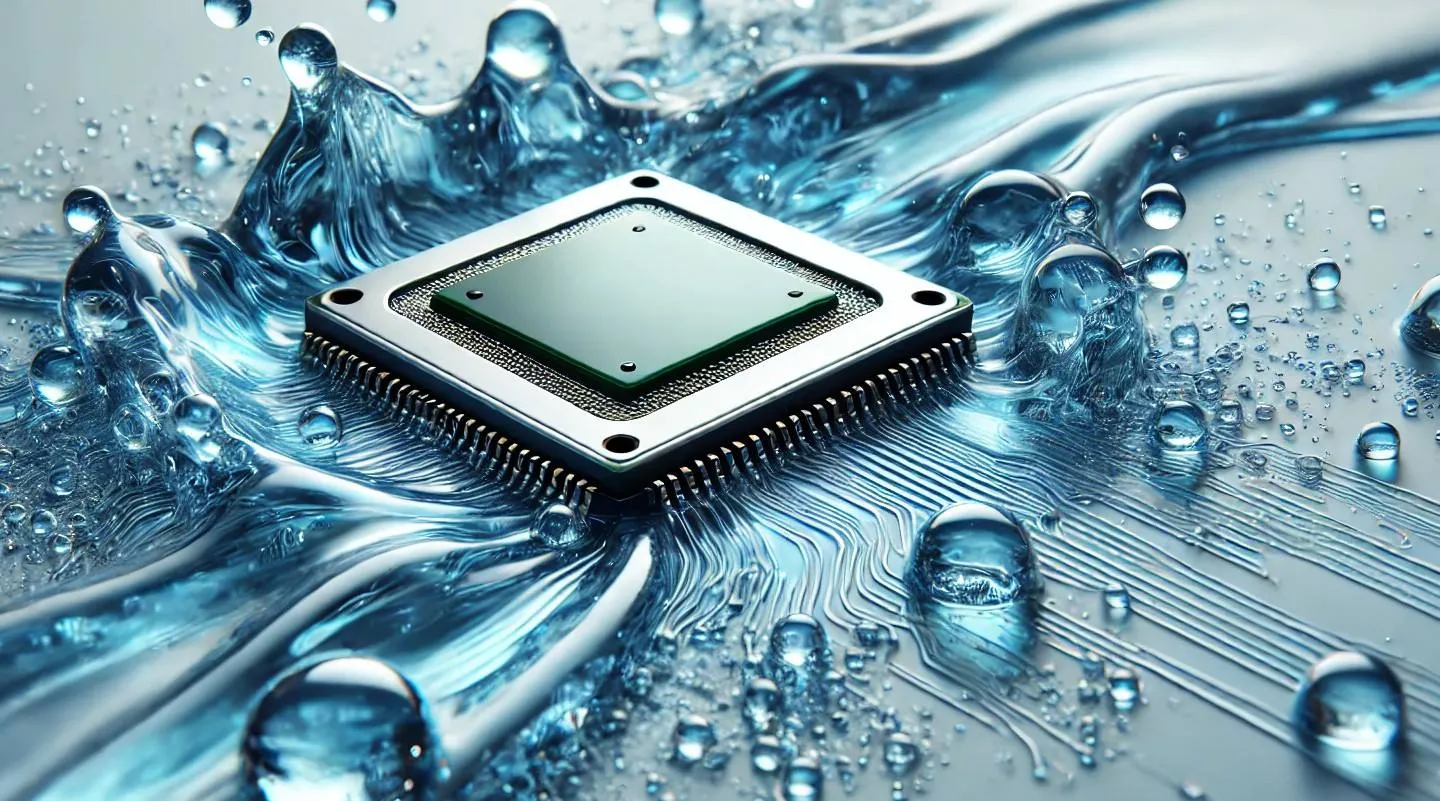
I recently had the pleasure of sitting down with JetCool Founder & CEO Bernie Malouin to discuss the company’s liquid cooling tech, which uses arrays of microfluid jets to directly target chip hotspots. This precise technique allows JetCool to chill processors reaching up to 3,000 watts – a figure that’s mind-boggling when you consider traditional cooling systems.
JetCool collaborates closely with major chipmakers like Intel and NVIDIA to understand exactly where each chip’s hottest points are, designing their jets to tackle those areas directly. The result is highly effective, efficient cooling that keeps even the most power-intensive chips running smoothly.
As part of TechArena’s Data Insights series with Solidigm, my co-host Jeniece Wnorowski and I caught up with Bernie during OCP Summit 2024.
JetCool spun off from a research project at Massachusetts Institute of Technology (MIT), which explored cooling technologies capable of managing extreme heat loads for aerospace applications. As chip power demands surged with the advancement of data centers and AI, JetCool launched – shifting its focus to data centers and advanced computing and taking its place as an industry innovator with a unique and compelling liquid cooling solution.
With customers including Intel, AMD, and NVIDIA, JetCool has emerged as one of a small group of players at the forefront of a crowded field of cooling solutions.
Providing a Gradual Approach to Liquid Cooling Adoption
Many companies may not be ready to adopt full facility-level cooling, so JetCool provides tailored solutions for both “brownfield” (existing) and “greenfield” (new) data centers. Bernie described how the company’s self-contained single-phase cooling systems are a great entry point for data centers looking to implement liquid cooling gradually.
As processors get more powerful, so do their cooling needs. Bernie projects that 100-150 kilowatts per rack will become standard in many deployments, with performance clusters reaching up to 300 kilowatts per rack.
As installations scale up, they can transition to larger solutions, like JetCool’s new CDU (Cooling Distribution Unit) line, which supports up to 300-kilowatt racks.
JetCool and Flex: A Strategic Partnership
Bernie also highlighted a recent announcement regarding JetCool’s strategic partnership with Flex – a move he sees as crucial for the company to rapidly scale. Flex brings 50 years of advanced manufacturing experience to help reach markets faster, delivering customized cooling products for hyperscalers and enterprises alike. Flex’s global reach enables JetCool to support clients worldwide.
Reusing Heat & Committed to Sustainability
A fascinating part of our conversation centered on heat reuse. JetCool has engineered its systems to operate at higher coolant temperatures, making it feasible to repurpose waste heat for applications like district heating, greenhouses, and even municipal projects. This capability is particularly popular in Europe and gaining traction in North America. JetCool’s approach allows coolants to reach 50-65°C, far higher than typical systems, enabling more efficient heat recovery for sustainable operations.
JetCool demonstrates its commitment to responsible innovation by selecting efficient materials, designing cooling systems that lessen energy consumption, and aligning its tech to the broader goal of reducing environmental impact. Bernie highlighted that the company’s systems operate on minimal power, helping data centers reduce their carbon footprints without sacrificing performance.
So what’s the TechArena take? JetCool’s combination of unique precision cooling, scalability, and sustainability differentiates them. I love the way they provide different stages of solutions that reduce barriers to entry for customers. And I admire that JetCool is paving a path that balances performance with responsibility, taking meaningful strides to help shape the future of sustainable high-performance computing as the industry faces growing pressures to reduce environmental impact.
Interested in the future of cooling and sustainable data center management? Check out the full podcast with Bernie and learn more about what JetCool is doing.
.webp)
.webp)
Great Debate featuring voices from Intel, Metrum AI, and NeuReality
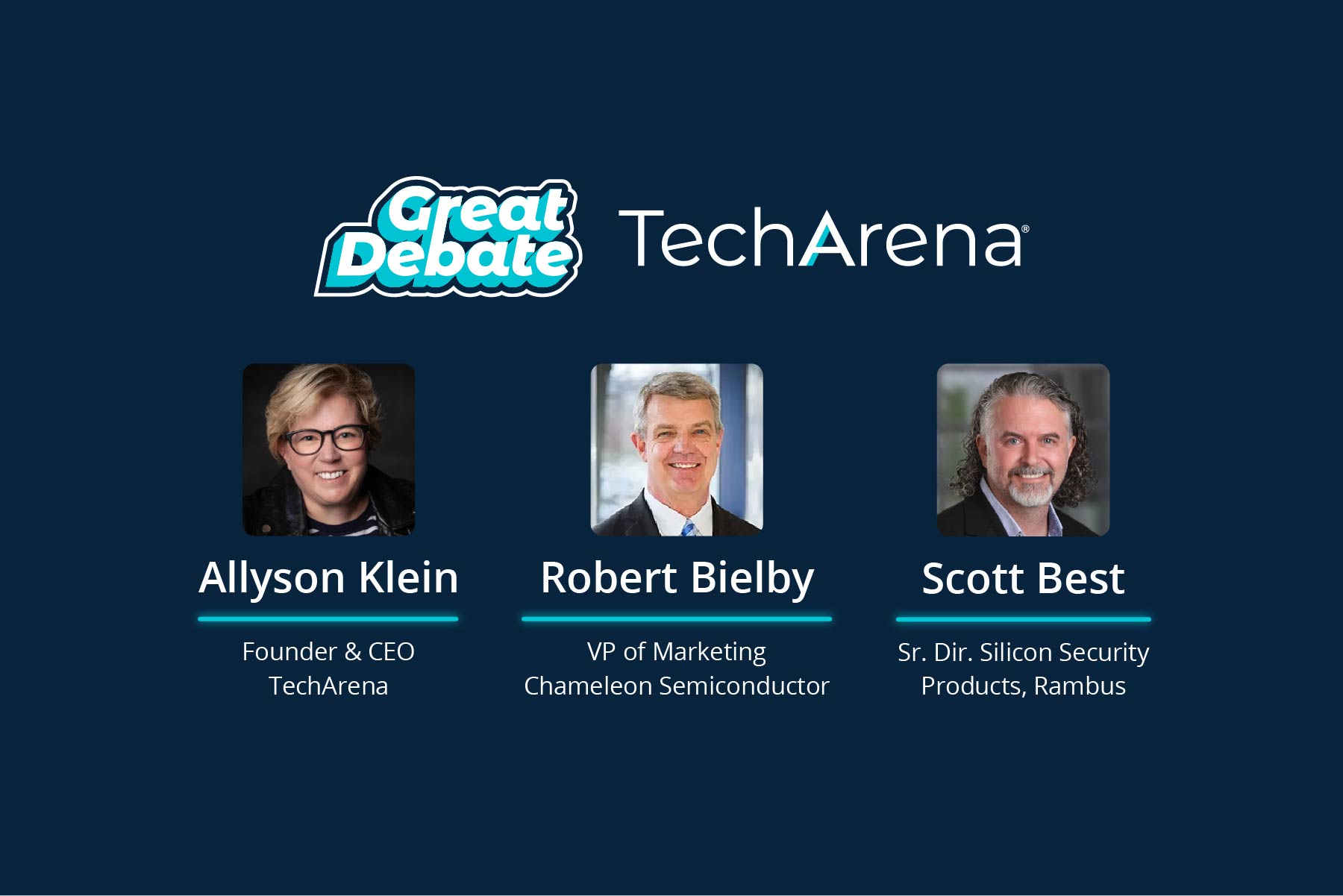
In this Great Debate, moderator Allyson Klein tees up the topic, "Enterprise Adoption of AI: Hype or Hope" with industry experts Iddo Kadim, Field CTO at NeuReality, Lynn Comp, VP at Intel, and Steen Graham, CEO of Metrum AI. They delve into enterprise adoption of AI and explore the advancements in multimodal AI as well as the potential shift toward robotics and physical AI.
The panel discusses the need for trust, security, and practical integration to avoid pitfalls like hallucinations or catastrophic security issues. They also detail some of the challenges enterprises face, including data management, cost, infrastructure, and sustainable differentiation. They conclude that AI’s adoption must be strategic, considering enterprise-specific needs and ethical safeguards for true value.

Revealing the Algorithm Genie: The Astounding Promise of AI
AUSTIN – November 8, 2024 – Machine learning (ML) and artificial intelligence (AI) technologists from around the globe packed a standing-room only ballroom this morning, transfixed by Jepson Taylor’s keynote address kicking off Day 2 of in-person sessions at the ML Ops World – Gen AI Summit 2024.
Taylor, Former Chief AI Strategist at DataRobot & Dataiku and founder of VEOX Inc. – took center stage and shared anecdotes about deeply personal parts of his life journey while weaving a mind-bending narrative about the power and potential of AI.
Delivering a talk entitled, “Unleashing the Algorithm Genie: AI as the Ultimate Inventor” – Taylor engaged the audience with a visual demonstration of how AI can exponentially augment each practitioner’s ability to imagine and invent – and specifically, to generate advanced, high-quality algorithms. Intertwined with the AI and the math, Taylor shared his intricately true-to-life AI portraits and delved into powerful anecdotes from his journey – including referencing a period of time when he chose to be homeless in the snowy hills of Utah as a college student – continuously challenging himself to incrementally more difficult living conditions.
Taylor is a popular speaker in the AI space, having been invited to give AI talks to companies like Space X, Red Bull, Goldman Sachs, Amazon, and various branches of the U.S. government. His applied career has covered semiconductor, quant finance, HR analytics, deep-learning startup, and AI platform companies. He co-founded and sold his deep-learning company Zeff.ai to DataRobot in 2020 and later joined Dataiku as Chief AI Strategist. He is currently launching a new AI company focused on the next generation of AI called VEOX Inc.
His keynote landed powerfully and was filled with personal insights, humor, and deep reflections on the pace and nature of change in AI and innovation.
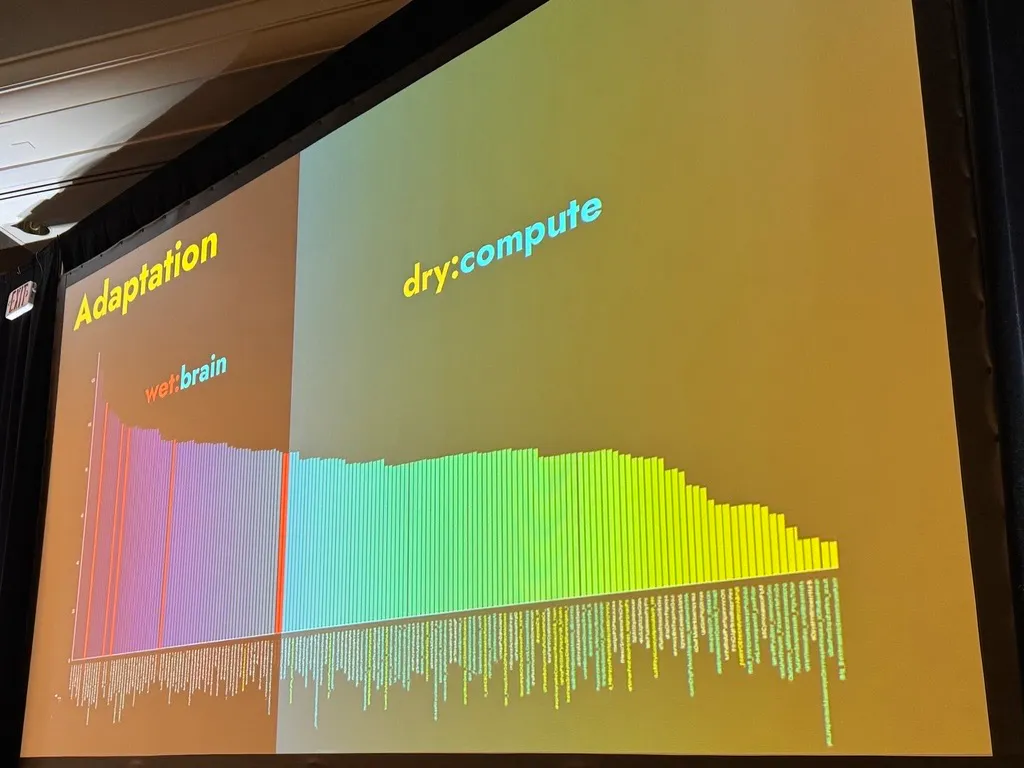
He opened by describing his passion for invention and innovation, noting the rapid acceleration of advancements in AI. He describes his "chaotic" presentation style, emphasizing his intention to blend storytelling, science, and personal anecdotes to make key concepts memorable. He divided his talk into four main themes: decisions, intelligence, innovation, and adaptation.
Decisions: Do I have the muscle memory to execute?
Taylor began with a discussion of decision-making, exploring how the human brain handles choices and adapts to challenges. Reflecting on his experiences snowboarding down a steep mountain, he used the anecdote as a metaphor for navigating high-stakes decisions and “facing down fear.” He illustrated this through the brain’s interaction between the amygdala, which "thinks we’re going to die," and the neocortex, which, while aware of mortality, doesn't believe death is imminent. He highlighted the role of muscle memory in decision-making, explaining that complex skills, whether driving or surgery, cannot be learned by simply watching — they require practice and experience.
He emphasized that life and career paths are often “a random walk,” with decisions sometimes driven by unpredictable opportunities rather than clear-cut plans. He shared a humorous anecdote about his early programming journey, including how he failed as a PhD student because his motivation at the time was video games – and how he lived in a tent in the snow during college, garnering the nickname, “Homeless Ben.” His aim at the time was simple: to not pay rent. But he used the experience as a way to continually improve, daring himself to increasingly difficult living conditions.
Intelligence: The acquisition of knowledge to be used for future decisions
In his discussion on intelligence, Taylor offered a unique perspective on what it means to be “smart” and how intelligence develops over time. He defined intelligence as "the acquisition of knowledge to be used for future decisions," pointing out that intelligence isn’t merely about innate ability, but the compounding effect of shared human experiences. He contrasted the intelligence of different species, noting that while a butterfly may react to immediate threats, humans are uniquely capable of transferring knowledge across generations — allowing us to build on each other’s learning, as seen in complex achievements like space exploration. Taylor illustrated this with a striking thought experiment: “Are you smarter today than you were yesterday?” Time, he argued, does not guarantee growth in intelligence. Instead, he emphasized that advancing intelligence requires stepping out of one’s comfort zone, actively seeking new ideas, and “colliding” with other people to spark innovation. This collision of ideas and perspectives, he concluded, is essential for fostering the creativity needed to tackle future challenges and adapt to a rapidly changing world.
Innovation: Mining for Gold
Moving on to innovation, Taylor compared it to "mining for gold," with discoveries often emerging through a combination of luck and persistence. He reflected on his graduate research, where a computer algorithm delivered a breakthrough by finding a mathematical insight he hadn’t anticipated.
“Am I smart, or am I lucky?” he pondered, attributing the success to the machine’s relentless testing capacity. He pointed out the inherent limitations of human ideation, noting:
“Humans can't come up with a thousand ideas on the spot—at most, we have three or five. But AI can try millions of ideas and vet them instantly.”
Taylor shared examples of how generative AI has transformed creativity, even in fields traditionally seen as human domains like visual arts. He contrasted the high cost and time associated with human-produced visuals seven years ago with the near-instant, cost-effective results achievable with today’s generative AI.
"Everyone’s an artist; they just don’t know it yet,” he said, urging attendees to experiment with creative AI tools like Midjourney.
One of the most compelling parts of Taylor’s talk was his description of an imagined AI-generated competition for the best headshot. He explained how adaptation plays a vital role in such contests, with AI developing hyper-realistic images, down to details like micro hairs on a nose or reflections in an eye. AI’s capacity for “emergence,” a spontaneous formation of complex, life-like patterns, represents a revolutionary step in creative fields.
Adaptation: Mining for Gold with a Tool that “Boils the Ocean of Possibilities” For You
Taylor concluded by emphasizing adaptation as the ultimate key to success. He highlighted the need for AI systems to be adaptable to different contexts and requirements. For example, he described his development of an AI “hacker” that autonomously tests and breaks his company’s security protocols, then learns to avoid making the same mistakes in future runs. This self-learning mechanism, or “adaptive system,” has broad implications for fields like cybersecurity.
Taylor also addressed the transformative effect of AI in software development, asserting that there may soon be no “sacred” part of the engineering workflow immune to automation. He explained that within his company’s internal development, agents can handle entire projects, performing refinement, modularization, and even making their own agents to improve project efficiency. This represents a profound shift in how engineering is done.
“You don’t need an engineer to define the structure anymore; AI can boil the ocean of possibilities for you,” he said.
He discussed the role of inspiration in driving innovation. Humans can create algorithms inspired by natural phenomena, such as pheromone trails left by ants. However, AI now holds the potential to push beyond this human capability by generating truly novel concepts that defy typical human thought processes.
In his closing remarks, Taylor encouraged attendees to embrace AI tools and experiment with their capabilities.
“If you’re not spending at least an hour a day with tools like OpenAI and Anthropic,” he urged, “you’re missing out on a complete game changer.”
His excitement for the future of AI was palpable as he outlined a vision of a world where human creativity and intelligence are augmented by machines. He offered a glimpse of a future where knowledge is more accessible, learning more engaging, and innovation knowing no bounds.

ML and AI Technologists Convene, Connect at ML Ops World
AUSTIN, Nov. 7, 2024 – Leading machine learning (ML) and generative artificial intelligence (AI) technologists from around the globe gathered in Austin today to kick off Day 1 of the in-person global ML Ops World/Gen AI Summit.
Amidst an environment of rapid industry acceleration, ML and AI practitioners are seeking connections, collaborations, best practices, recommendations and tools.
AI Makerspace Co-Founder Greg Loughnane opened the conference with encouragement for technologists to take advantage of the ML Ops community and learn from one another in addition to attending deep-dive sessions on topics ranging from tutorials on building LLM applications to architecting multi-agent systems for code generation.
“It’s always good to learn from others’ experiences,” said Prabhdeep Singh, a ML engineering manager at United Airlines who is working to build and tune a machine learning platform and hopes to learn best practices from the ML Ops community.
“There is ambiguity in the industry – and there are tons of tools,” said Robin Amin, an ML ops engineer at Veterans United, as he gestured toward the conference exhibition hall, where dozens of vendors tout their products and services. “I’m here to see what types of automations other organizations are adopting so that I can select some tools and then develop others.”
Also working to build or coalesce their employers’ ML platforms are an IT leader from Fannie Mae and an ML Ops engineer from Turo.
“Building from the ground up is not a popular or efficient approach,” said Angelica Pando, an engineering manager at Turo who is looking for plug-ins and best practices to help expedite her project.
Cyber Advisor and Evangelist Helen Oakley, CISSP, GPCS, GSTRT, who is founding partner of AI Integrity & Safe Use Foundation, said she is attending the conference to make new connections. The foundation’s work centers around helping organizations build and acquire resilient AI systems.
Denys Linkov, head of ML at Voiceflow, took the main stage to reflect on key advancements made in the ML and AI space in 2024. He discussed multimodal LLMs that combine vision, audio, and other data types, such as Gemini Pro and GPT-4.0, which significantly expand context length and functionality. These advancements, including open-source tools like PaliGem and CoPali, are setting new standards for AI's ability to interact with multiple data forms. Linkov also pointed to human-computer interaction breakthroughs, noting Meta's integration of LLMs within its ecosystem, reaching billions of users worldwide. This trend is furthered by OpenAI's acquisition of Multi, which supports multi-agent systems, and GPT Canvas, enhancing desktop interactivity. In video generation, Linkov noted releases like Runway Gen3 Alpha and Meta’s MovieGen, which have introduced exciting new capabilities, with both closed and open-source options now available to developers.
Also in 2024, we have seen the rise of MegaGPU clusters, he said. These vast supercomputing networks, such as Elon Musk’s Colossus, are built to support complex AI models but face challenges with power demands and reliability.
Linkov underscored the importance of evaluations in AI model performance, with major vendors like Anthropic, Cohere, Google, and OpenAI launching platforms for evaluating and optimizing AI models. This focus on evaluation tools reflects the industry’s need for precise measurement in GenAI. He also discussed how automation remains central to AI's future, with companies like Google and Amazon leveraging AI-driven automation in tasks such as Java migration and customer support, despite return on investment (ROI) not being the primary focus initially. And he emphasized the emergence of synthetic data as a pivotal resource, as demonstrated in the Llama 3 paper.
Stay tuned for more to come tomorrow from the ML Ops World – Gen AI Summit in Austin!

CoolIT: Leading the Pack on Liquid Cooling
As hyperscalers, supercomputing operators, and advanced enterprises globally rush to modernize and expand operations, CoolIT has emerged as a key partner for data center cooling – providing efficient, reliable solutions that have been proven in the market for 20 years.
Liquid cooling – once the target of skepticism across a data center industry that balked at its complexity and didn’t need it yet – has exploded on the data center scene as one of the key enablers of heavy AI workloads. During the OCP Summit 2024, new liquid cooling entrants could be seen in every direction. And what’s more, established players in other parts of data center infrastructure have begun planting liquid cooling flags.
It’s more than apparent that the opportunity is gargantuan. But there are few liquid cooling players that come to this data center modernization party with 20 years of expertise. CoolIT is one of them.
I thoroughly enjoyed the opportunity to sit down during OCP Summit with Charles Robison, Director of Marketing for CoolIT Systems, to learn more about this critical player in the AI - data center landscape.
From Chips to Data Centers
CoolIT’s liquid cooling tech has its roots in making cooling chips for high-performance gaming platforms. This foundational knowledge of chip-level cooling enabled the company to quickly pivot when data center demand began to skyrocket.
Today, CoolIT’s offerings include cold plates and advanced cooling loops designed to support Original Equipment Manufacturers (OEMs) and Original Design Manufacturers (ODMs).
But as Charles highlighted, its core offering is cold plate technology, which targets hotspots on chips, delivering focused cooling where it’s needed most, ensuring systems operate optimally even under high workloads.
Why the Focus on Direct Liquid Cooling
In the liquid cooling industry, various methods are available, including immersion cooling and rear-door heat exchangers. CoolIT focuses on single-phase direct liquid cooling (DLC) because it is proven, reliable, and scalable. With liquid cooling technologies tested across generations of servers from brands like HPE and Dell, CoolIT’s cold plates stand out for their reliability. Single-phase DLC is particularly effective for handling high thermal design power (TDP) in modern chips, including hot spots that require targeted cooling. By focusing on DLC, CoolIT addresses both the demand for scalable solutions and the ability to cool today’s high-powered chips.
While CoolIT recognizes the value of other cooling approaches, such as immersion cooling, DLC remains the most feasible option for wide-scale deployment. As Robinson explained, “Our technology has been through multiple generations… it’s a proven technology and a scalable technology.” This commitment to proven solutions ensures data center operators have reliable and consistent performance, a necessity in an industry where operational continuity is crucial.
CoolIT’s reputation as an end-to-end provider has been bolstered by their ability to cover every aspect of data center cooling. They supply a full suite of products, from cold plate loops that deliver direct cooling to chips, to Coolant Distribution Units (CDUs) that manage the overall cooling flow. This comprehensive approach ensures that customers receive a streamlined solution, custom-tailored to their needs – making CoolIT’s systems a reliable choice in a high-stakes environment where consistency is paramount.
Charles aptly pointed out that when Jensen Huang of NVIDIA announced liquid cooling as the future of data centers, it marked a turning point for the liquid cooling segment. Once confined to high-performance computing (HPC) and academia, it is now erupting onto the data center infrastructure scene as a solution that significantly enhances energy efficiency.
“Liquid cooling has crossed the chasm; it’s now a mainstream approach,” Charles said.
With their single-phase direct liquid cooling, data centers can handle AI-driven workloads that push conventional cooling to its limits.
Quality. Service. Support.
“Quality, as they say, is job one,” Charles said, explaining CoolIT’s top priorities.
Reliability is at the center of CoolIT’s approach. The cooling systems they produce are meticulously designed, using technologies like friction stir welding to create a single, molecular-level fusion of cold plates. This construction minimizes the potential for leaks, ensuring longevity and reliability. CoolIT employs rigorous quality control, from inspecting incoming parts to conducting end-of-line testing. Every system is tested before it leaves the factory, guaranteeing that clients, including major server manufacturers like Dell and HPE, receive a flawless product.
Beyond the product itself, CoolIT offers a comprehensive service network covering more than 70 countries, ensuring seamless deployment and ongoing support. CoolIT assists customers at every stage, from design consultation to installation and commissioning, making it easy for operators to integrate liquid cooling into their existing data centers.
“So you want to figure out how to design?” Charles said. “We'll help you with that. Would you like to install it? Yep. We've got an installation team that will come in. And we'll put together a secondary fluid network if you need…We'll help you figure that out. We'll commission it. So we'll put the fluid in and we'll actually get it running.”
Scaling for Growth
Looking into 2025 and beyond, the demand for liquid cooling will only increase as data centers handle denser and more complex workloads. CoolIT has invested significantly in expanding their production capabilities, scaling up by 25 times to meet the growing demand. This capacity enables CoolIT to handle both brownfield deployments – where liquid-to-air CDUs can be introduced to existing data centers – and greenfield projects that require a more comprehensive cooling solution from the ground up.
The scale of CoolIT’s investment in production reflects the growth potential they see in the market. As Robinson noted, “We certainly see just a massive deployment of liquid cooling… we have multi-gigawatt manufacturing capacity within our shop.” This preparation positions CoolIT as a capable partner for any data center operator looking to future-proof their infrastructure against the demands of tomorrow’s computing workloads.
Educating the Industry and Pioneering Change
To ease the industry’s shift toward liquid cooling, CoolIT emphasizes education and industry collaboration. As a founding member of the Liquid Cooling Coalition, CoolIT is committed to informing operators, policymakers, and the broader industry about the benefits and applications of liquid cooling. Through these initiatives, CoolIT hopes to normalize the adoption of liquid cooling, fostering an industry-wide shift toward more efficient, sustainable practices.
So what’s the TechArena take? I’m so grateful to Solidigm and our Data Insights series for opening the door to this delightful discussion. As for CoolIT, in short, they are rocking liquid cooling. Their solutions have proven themselves in one of the most demanding environments — data centers powering AI. And while this space is nascent and has more promise than volume deployments, as we head into the second half of the decade, we at TechArena are expecting a hockey stick ramp for this segment of the industry. We also are keen to see how CoolIT leverages this massive opportunity towards financial returns. Listen to the full podcast here.

The Road to Sustainable IT Starts at the App & Microprocessor
We have seen the popularity of Sustainable IT in the enterprise rising. Is it truly a new CIO initiative or simply a revival of the early 2000’s ‘Green IT’ hit?
Sustainable IT is the practice of designing, using, and disposing of information technology in ways that minimize its environmental impact. Its goal is to reduce the carbon footprint and energy consumption of end-to-end IT operations, which includes everything from manufacturing and using computers and servers to managing data centers and disposing of electronic waste.
The scary thing is that I was deeply involved in the first go-around even going as far as to present at the 2009 COP15 in Copenhagen a global energy reductions model for IT. So, what’s different now? Will Sustainable IT make a real impact on any corporate ESG goals?
Let’s start by looking at what is different today. To begin with, there is an abundance of data regarding the amount of energy consumed at the macro level, e.g. at the server, the server rack, storage arrays, the data center facilities (be it on premise, co-location, or with a cloud service provider). There are metrics such as the Power Usage Effectiveness or PUE which indicates the overall efficiency of a compute organization (Note: I had a small hand in helping the Green Grid and Jonathan Koomey develop the metric 😊).
However, in a world where customers are driving to an ‘everything as a service’ business model, the granularity of measurements are not good enough to truly identify what is consuming energy. Simply put, while it is the IT infrastructure and hardware that consumes energy and creates a carbon footprint, it is applications that drive energy consumption across the whole infrastructure. While there is innovation happening to measure the detailed energy consumption at a microprocessor level, this is still not detailed enough.
The emissions digital thread for IT needs to start with the software applications!
Pulling on that thread will take the measurement journey from emissions and consumption at the lines of application code, to the server and disk storage devices, the racks that house the hardware, to the data center facilities and finally to the utility supplying the energy. The compounding effect on CO2 emissions and kilowatts consumed of these steps on the original application impact is missing. While taking on an application resource optimization project is not easy, it really does bring financial and environmental savings. It is also a cross functional effort that includes business units, development, procurement, security, facilities management and of course the sustainability office. Finally, the results of this initiative will impact the decision and priorities of any application migration or rehosting as part of any migration strategy.
To start any application resource optimization, businesses need to assume that they need to be prepared to measure each application’s resource consumption whether it’s a legacy standalone application or part of a virtual machine/container environment. By accessing the IT CMDB (configuration management database), map memory, compute, and disk storage resource consumption to validate application modernization and migration priorities. Despite the number of applications to be measured being large in some companies, the 80-20 rule seems to apply. Eighty percent of emissions are accounted for by 20% of the applications.

Often applications get chosen to be migrated to the cloud based on their software licensing costs without knowing what their environmental costs are. However, over the life of the asset, energy costs are frequently larger than the hardware and software acquisition costs. By auditing and mapping the carbon emissions footprint of each application, migration and modernization prioritizations change will result in lower emissions and energy costs. This approach will lead to application development and testing deployment teams having a better understanding of how to embed sustainability into their application portfolio.
Finally, corporate sustainability offices have turned a blind eye to the carbon footprint of infrastructure utilization. Why should they be bothered accounting for something that they believe typically accounts for 4 – 6% of a business’ total emissions? IT is often overlooked as an emissions reduction priority. However, with the advent of emerging technology trends such as AI, Digital Twins, and Edge Computing, data center energy consumption will see an explosion in energy demands to the point that within the next 5 years, the total emissions for IT infrastructure will double. This will put pressure on fossil and renewable energy sources to power the data centers, create water security issues and a larger IT asset recycling problem.
The solution to a successful sustainable IT industry lies in two places. Applications need to be optimized for efficiency as well as functionality. The better the application runs, the larger the savings multiplier will be throughout its value chain. Since applications don’t generate emissions, but rather the compute platform that they run on does, it makes sense to accelerate the investment in significantly more efficient computing by starting at the microprocessor.

How LLMs Are Powering Next-Gen Malware: The New Cyber Frontier
Welcome to the AI cyber arms race, dear reader.
What is the state-of-the-art in LLM-generated malware?
Disclaimer: The following information is for educational and lawful purposes only. Misusing LLMs for unauthorized activities is illegal and unethical. By proceeding, you agree to adhere to all relevant laws and regulations.
Introduction: The biggest LLM risk
The rapid advancement of AI, in particular Large Language Models (LLMs), presents revolutions in cybersecurity, which is defense, and cyber, which is offense. In defensive cybersecurity jargon, which you might be most familiar with, “cyber tools” are called “malware.” Ever wonder what the state-of-the-art is in cyber tools?
Some cybersecurity concerns with LLMs include data privacy, discrimination and bias, attacks on AI systems themselves, misuse of synthetic AI-generated or edited media, using AI to support social engineering cyber-attacks, a lack of transparency and power asymmetry between users and AI companies, and ethical considerations, such as having a human “on” the loop controlling autonomous weapons.
This article is about another LLM risk – one covered much less – using LLMs to develop advanced cyber tools (i.e., malware) that are extremely challenging to detect and defend against. Quoting ChatGPT: “ChatGPT can potentially generate harmful content, including phishing emails, social engineering attacks, or even malicious code. Malicious actors may try to exploit the technology to create malware or other attack vectors.”
How LLMs Generate Malware:
Cyber actors exploit LLMs to generate malware in three ways: they manipulate general-purpose LLMs, buy custom LLMs tailored for cyber-attacks, and train LLMs.
Cyber actors use LLM jailbreaks sold on the dark web as a part of a criminal economy. A more benign “hacktivist” version of an LLM jailbreak is explored here.
Alternatively, cyber actors buy pre-trained LLMs specifically designed for cyber-attacks, such as PhishingGTP, which uses an LLM to generate tailored phishing cyber tools rapidly. These LLMs specialize in one type of cyber tool and do not have the content moderation controls you see in ChatGPT and Gemini. This specialization can make them effective for their intended purposes even if they lack OpenAI or Google’s vast resources.
Lastly, advanced cyber actors, besides buying and chaining together pre-trained LLMs, build their own LLMs to generate cyber tools. Because of the computational resources and technical expertise involved, this is a challenging project, but well within the capabilities of many advanced threat actors. According to Microsoft threat intelligence, Iran has been doing exactly this with LLM-supported social engineering, LLM-generated code, and LLM-enhanced anomaly detection evasion.
Growth areas for LLM cyber tools
LLM-assisted cyber tooling use cases include reconnaissance and vulnerability research, threat generation, personalized attacks, adaptation, and enhanced evasion techniques and security feature bypass.
The initial stages of cyber-attacks, such as reconnaissance, can be automated using LLMs. They can refine proven network management tools, like Nmap, and innovate new methods for vulnerability discovery. Additionally, LLMs can tailor cyber-attack tools to specific targets, making the attacks more precise and effective.
Welcome to Day Zero of the LLM cyber revolution
One interesting use of cyber LLMs is to discover vulnerabilities in target systems and generate exploits for them. The LLM can analyze the entirety of the source code and configuration of the software you use and leverage these vulnerabilities to create cyber tool exploits and attack sequences. This has consequences for zero-day and other time-sensitive exploits.
For commercial software, where the source may be unavailable for LLM training, be aware that cyber LLMs can be trained on disassembled code (assembly code, for example) as easily as they can read open-source code, thanks to tools like Ghidra. Ghidra is a well-known software reverse engineering (SRE) framework developed by the US National Security Agency (NSA) and released to the public back in 2019.
A zero-day attack exploits a previously unknown hardware, firmware, or software vulnerability. This means that a patch to address it does not exist.
Between a patch's release and consumer installation, a one-day attack can take place. The name "one day" suggests a short time frame, but in reality, because patching is delayed, these vulnerabilities remain in every organization for months. The most notable example of a long-running vulnerability is Heartbleed, which Neel Mehta and Michaël Ras of Google's Project Zero security team discovered in 2014. Despite the availability of a vendor provided patch, cyber actors continued to exploit the vulnerability for years due to delays in patching (it was not a straightforward remediation).
LLMs accelerate the discovery of time-sensitive vulnerabilities and increase the effectiveness of cyber tools to exploit them. Cyber actors are eager to launch their attacks before the vulnerabilities are patched in the system they are targeting. Using LLMs reduces the time it takes to make a viable cyber tool (i.e., exploit) enabling cyber actors to successfully attack even systems that are patched quickly.
The forefront in LLMs cyber:
The most advanced use of LLMs in cyber tooling lies not in their ability to create zero day exploits, but in their ability to enhance evasion techniques. AI can generate malware variants with unique characteristics that bypass traditional detection methods. By generating many malware variants, each with unique but functionally equivalent profiles, AI challenges most widely adopted anti-virus detection systems that rely on known patterns. Advanced evasion techniques include content obfuscation through encryption and encoding, polymorphism, metamorphism, and anti-analysis tactics.
Metamorphism is malware capable of rewriting its entire code from scratch in new ways to avoid detection, making it impossible for antivirus software to recognize the threat using traditional methods that search for specific malware signatures. AI's practical application in evasion is not only theoretical, but a reality, with automated and adaptive strategies already in use.
It might be that behavior based cybersecurity tools can help, if the LLMs cannot easily circumvent them as well as the go tos of patching, Continuous Monitoring and Response, Zero trust, Layered Security Advanced Threat Intelligence and cybersecurity awareness training.
This is just a partial list of how and why cyber actors are using LLMs to create and improve cyber tools.
Welcome to the AI cyber arms race
AI-generated malware poses a formidable challenge to traditional cybersecurity due to its rapid evolution, ability to mimic legitimate software, and potential for high-severity attacks. AI's automation capabilities make it difficult to keep up with the constant threat, while the unknown nature of AI algorithms can hinder the development of effective countermeasures. This combination of factors means cybersecurity professionals need innovative tools that leverage AI for cybersecurity to develop effective countermeasures: Welcome to the AI cyber arms race. It’s the only way they have a chance.
Knowledge is power when it comes to protecting digital data and processing. By staying informed about the latest tactics used by cyber actors, we can develop more robust defenses. Understanding cyber actor tactics helps in developing stronger defenses. Resources like Microsoft's threat intelligence reports, which publicly acknowledge the use of LLMs by adversarial nation-states including Russia, China, and Iran, can help us stay ahead of the curve. Additionally, tools such as MITRE ATLAS, dedicated to understanding the adversarial landscape of AI systems, can help improve safeguards.

Arm's Data Center Advances: Chiplets, Efficiency & AI Integration
I was lucky to catch up with Eddie Ramirez, VP of Marketing for Arm’s infrastructure business, at the recent OCP Summit. Eddie was last on the show at last OCP Summit talking about Arm’s focus on development of a data center ecosystem, and I was keen to learn about the progress the company had made in this arena. Arm’s advancements in data center technology are making a mark on innovative data center infrastructure with a focus on efficiency, chiplet innovation, scalable solution design.
During the recent OCP Summit 2024, Data Insights podcast co-host Jeneice Wnorowski of Solidigm and I had the pleasure of welcoming Eddie back to the TechArena to better understand the company’s impact across the industry. Arm’s big announcement this year at OCP Summit centered around the power of chiplets to accelerate silicon design. Chiplet technology enables multiple processing units to be combined in a single package, streamlining custom chip design. Arm’s Total Design program enables partners to adopt their cores efficiently, with configurations that cater to diverse needs, from general-purpose tasks to specialized AI processing. This modular integration approach enables flexibility, supporting efficient scaling for data centers that need adaptable configurations for different workloads.
Eight different partners within Arm’s Total Design program announced chiplet projects that they've kicked off, ranging from 16-core to 64-core setups that can be used in a variety of products. One partnership in particular brings together Samsung Foundry, a Korean ASIC design partner, ADTechnology, and Rebellions AI - a startup delivering TPU accelerators. Through this collaboration, Arm has demonstrated how its program helps deliver an integrated design that enables 3X greater performance efficiency than conventional GPU-based solutions – underscoring the power of best in breed chiplet solutions’ role in data center applications. When seeing where chiplet design is going with Arm, it comes as no surprise that this was a focus of OCP Summit, land of the hyperscalers. Arm cores have gained traction among the major players – AWS, Microsoft and Google – which all now integrate the technology in their home-grown designs – utilizing them for internal workloads as well as customer instances.
It's been in Arm’s DNA to provide compute efficient architectures. Their design delivers up to 60% higher power efficiency than x86 servers, allowing cloud providers to reduce power consumption and total cost of ownership (TCO) while achieving sustainability goals. This energy-saving approach is the key to Arm’s success with the hyperscalers, Eddie said, providing them a huge benefit and positioning Arm as an optimal choice for large-scale workloads.
With the rise of AI, the need for GPUs is amplified, especially to train large-scale models. However, CPUs remain essential, particularly for the inference stage, where AI models process data and provide real-time predictions. Unlike training, which demands high power, inference tasks can be handled efficiently by CPUs. Arm-based processors offer a cost-effective solution, balancing performance with reduced energy consumption.
Arm’s reach extends beyond computing into networking and storage within the data center. Arm cores are now embedded in top-of-rack switches, data processing units (DPUs), and baseboard management controllers (BMCs), enhancing efficiency in high-speed data transmission and storage. By deploying ARM cores across types of infrastructure, data centers achieve better resource management and power optimization, aligning with performance demands from AI workloads. This integrated approach allows data centers to streamline operations and enhance energy efficiency at every level.
Arm’s Neoverse platform - the company's infrastructure-focused product line – includes high-performance cores and interconnect IPs for data centers and edge environments. Neoverse’s adaptable architecture enables Arm partners to integrate the latest technology and expand it with additional I/O or storage features.
V3 of the Neoverse platform enhances Arm-based systems’ performance and flexibility, making them suitable for AI and data processing applications. This scalable approach enables data centers to meet growing performance needs without compromising power efficiency.
So what’s the TechArena take? I love chiplets and love what Arm is doing with an ecosystem. This design innovation makes sense for a wide array of use cases, and Arm’s foundation will help the industry move further, faster. Arm’s commitment to energy efficiency, modularity, and open collaboration also aligns well to Open Compute Project tenets, transforming data center infrastructure and offering true differentiation in a crowded field. Through programs like Total Design and platforms like Neoverse, Arm is responsibly building efficient and scalable solutions that meet the demands of AI, cloud, and edge applications.
There is a lot of disruption in the compute landscape with AI acceleration taking center stage. I see two paths of opportunity for Arm…one as a “head node” alternative to x86 with noted energy efficiency advantages, the other as a chiplet core with integration of TPU or other acceleration chiplets as alternative to GPU. Both are exciting to see gain traction in the market, and we’ll keep watching this space for more.
Listen to the full podcast here.

OCP Summit Recap: Innovation, Collaboration & Future Focus
OCP’s Rob Coyle shares insights on AI, cooling innovations, and open hardware’s role in transforming data centers as the industry accelerates toward scalable, sustainable infrastructure.

Boo! TechArena's Spookiest Tech Trends Heading to 2025
Do you hear mysterious footsteps in your data center? Are there otherworldly forces controlling your data? To celebrate Halloween, TechArena introduces the top 3 spooky tech trends heading into 2025.
1) Zombie data: Before you start thinking that the TechArena team spent last weekend with a Night of the Living Dead binge watch, zombie data is a real issue for data centers that's genuinely spooky for its potential costs to IT managers. What is it? Zombie data is data living inside organizations that is, well, dead, because it's tied to sources such as employees no longer at the company. Alive...but dead...hmm.
This is no laughing matter when you consider, for example, that data center storage consumes approximately 25% of all data center power. What can you do to finally put the zombie data to rest? You can tackle this at the individual and organizational level.
Individuals can receive training to delete twice and be aware of potential zombie data sharing from USB drives. Organizations can implement use of data management tools and smart data processing, tapping AI scanning for the undead data stores. Use of professional IT disposal services with an eye on responsible circularity will also help ensure lack of spread of zombie data.
Before we leave the topics of zombies aside, a bonus tip we had to include was TechArena guest Jonathan Koomey's aptly titled Zombie Data Center session at OCP Summit - well worth a look!
2) AI hallucinations: Our number two trend touches on a spooky trend that has run across the headlines of tech media in 2024. While TechArena is headquartered in Oregon, the first state to feature legal hallucinations, this trend is not influenced by that kind of trip. These AI hallucinations are much spookier for enterprises seeking to engage gen AI solutions across their businesses. What are they? In purest form, AI hallucinations are the perpetuation of false information based on that information's inclusion in AI training. This false information can have serious consequences, for example, extending bias into decision making, providing inaccurate recommendations to customers, delivering inaccurate medical diagnoses and spread misinformation. All of these can contribute to cratering a company's brand profile, so the threat must be taken with utmost seriousness.
What can companies do? Doing a great job at data collection and review prior to training an algorithm is a great place to start. This not-as-sexy element of the AI data pipeline helps reduce risk of improper sources getting into corporate AI tooling and cannot be an area that is under-resourced. Tools like RAG can help along this journey, and TechArena will continue to cover solutions to this challenge in the months ahead.
3) Cyborg Revolution: With the 40th anniversary of the release of Terminator this week, TechArena selected the rise of human and machine integration as our penultimate spooky tech trend. For those who do not follow the advancement of cyborg tech, this integration is most advanced in the development of machine controlled artificial limbs, an area that can give new mobility to people who have suffered the loss of a limb. Cochlear implant technology works in a similar fashion, giving the brain new access to hearing.
But...no spooky post would be complete in 2024 without a mention of Elon Musk. His Neuralink effort achieved a milestone in 2024 with the first implantation of a brain chip in a live human brain. With a vision to supercharge human intelligence well beyond the limits of biology, Neuralink and other efforts in this arena may redefine what it means to be human...or who controls humanity. With consideration of that future state that we deem beyond eerie, the entire TechArena team wishes you all a spookiest of Halloweens.

How Software-Defined Vehicles are Reshaping the Auto Industry
On September 1, 2000, Nokia introduced the iconic 3310 mobile phone. In its time, it was considered the industry’s best-in-class mobile phone. Designed to make mobile calls, it could also support texting through an awkward interface that appeared to be mostly an afterthought. If I recall correctly, a few very basic preinstalled games could also be played. In its time, the Nokia 3310 was considered the “must-have” mobile phone.
Seven years later, Apple introduced the iPhone, which forever transformed the mobile phone industry – ultimately creating the new smartphone market segment, which ultimately led to the demise of Nokia and the “fixed function” mobile phone market.
iPhone introduced many changes. Notably, the smartphone was more than just a purpose-built device for placing and receiving calls – it was a platform that supported a wide variety of capabilities and functions with an ecosystem of applications and application developers. These developers provided an ever-expanding library of applications, and more importantly, recurring revenue streams, for both Apple and the developers.
This open platform which supported a recurring revenue stream vaulted Apple to become one of the most valuable companies on the planet. Another lesser, but important detail, is that the same IOS and application can be downloaded via Over-The-Air (OTA) updates regardless of the level of the iPhone or the capabilities associated with a given model (more on the importance of that later).
So what does the transformation of cellular phones to smartphones have to do with the Software Defined Vehicles (SDVs)? Ultimately, it is the same transformation that the automotive industry is aggressively embracing. More specifically, constructing vehicles that are purpose-built for driving – where each model is uniquely designed for low-end to high-end – will quickly become a thing of the past. More importantly, from an automotive OEM perspective, there is a spellbinding allure associated with building a platform that ultimately has lower R&D costs while allowing for after-market revenues.
Tesla has already demonstrated that single-digit billions of dollars can be generated annually in after-market, subscription-based services. In this case, this is to enable ADAS capabilities which Tesla deems “full self-driving” (FSD). Market analysts project that the automotive industry as a whole can realize upwards of $150 billion annually in subscription-based revenues in less than 10 years. This is a game changer for an industry that typically operates on low-digit profit margins relying on dealership revenues coming from service and maintenance to provide some relief on profitability.
Subscription-based services like OnStar, which is offered by GM and provides in-vehicle security, emergency services, and remote diagnostics, have seen nominal traction as the industry grapples with determining exactly which services will be the winning app until vehicles with true SDV architectures come to market. Other notable failed attempts from auto OEMs include heated seats as a service – pay a monthly fee to turn on your seat warmer and remote start as a service – pay a monthly fee to start your car remotely.
As discussed in an earlier blog “From Chaos to Control: The Future of Automotive E/E Architecture,” the centralized E/E architecture is required to enable the vision of the SDV to be fully realized. As mentioned in that blog, for the incumbent OEMs, the transition from a legacy architecture to a centralized architecture is a complex, extended process that will take years to unfold. That said, the promise of large, profitable aftermarket revenues provides very meaningful motivation and tailwinds.
Because a common hardware platform can be used from a high-end through low-end vehicle, the overall R&D costs will be reduced in addition to a reduction in the time to a minimum viable product. It may be, that the “perfect” full-featured vehicle may not be available upon vehicle introduction, but over time and through Over-The-Air (OTA) upgrades, this can be addressed in time.
What has changed is that the personality and the capabilities of the vehicle are now defined via software – hence the term Software-Defined Vehicle. Similar to the IOS of an iPhone, one common software footprint will be deployed across all platforms and the specific capabilities of each model will be determined based on model type and associated population of vehicle sensors.
To that extent, personalization will be possible on a vehicle-by-vehicle basis and based on user preference. Furthermore, the capabilities of the vehicle can be upgraded over time by simply adding sensors that enable additional capabilities that weren’t present, for example, in a low-end vehicle. These sensors can be purchased later by the car owner and quickly installed like adding an add-on card in a personal computer. Again, these are all new business models and opportunities for new revenues that were previously not possible with older E/E architectures. With this vision in mind, there are industry efforts underway to support “programmable exterior paint” so the car owner can change the color of the vehicle at any time over the lifetime of the vehicle, or, daily, or hourly – for a price, of course.
Not only can external capabilities and various features be upgraded or enabled over time, the interior, or cockpit, of the vehicle can be tailored to the desires of the vehicle owner. There was a popular term referred to as software-defined cockpits (new terms go in and out of vogue quickly) and not only reflects the ability to tune the cockpit to the owner’s desires but the cockpit can be modified based on the individual driving the vehicle at the time. Furthermore, when coupled with AI, these changes can be made automatically based on recognizing the driver’s mood and tuning the cockpit accordingly. The range of possibilities is endless – from user-defined lighting styles, vehicle temperature, and music selection based upon a measure of the driver’s biometrics, an understanding of their calendar, their habits, traffic conditions – the list goes on and on. It’s very safe to expect that there will be many failed and crazy ideas, but the opportunity cost will be nominal since it’s all mostly software.
But it is a LOT of software. The modern car is projected to grow from 100 million lines of code to 1 billion lines of code within roughly a decade. With Windows 11 at 50 million lines of code, the automobile already contains the most lines of code of any application and that is about ready to explode. Seamless orchestration of software updates with appropriate levels of security and safety will be paramount to success. As the overall control of so much of the vehicle will be under the control of software, the importance of cybersecurity at this point can’t be overemphasized.
Will this vision of the future resonate with every car owner? Probably not. There will be those who probably want to go back to the good-old days when they had their Nokia 3310 that simply just placed calls and texts and had a game where the snake chased its tail.

Digital Ethics in AI: 3 Key Considerations for Leaders
In the last year, we’ve seen significant growth in the adoption of artificial intelligence (AI). One way to judge a technology’s maturity is to find its place on the Gartner Hype cycle. The challenge here is that “AI” is an umbrella name for a variety of distinct AI systems. And thus, there is no one place where we can put AI, but rather AI deserves multiple entries in the hype scale to demonstrate its true impact according to this measure.

Expert systems and narrow AI are more mature as they move into the plateau of productivity. But one of the more familiar systems, Generative AI, seems to have moved beyond the Peak of Inflated Expectations into a phase where companies are grappling with practical implementation challenges like ethical concerns, computational demands and sustainability challenges.
While this big technological revolution has enormous potential, implementing AI comes with its own set of unique challenges. We’ve all seen some of the more public examples of what can happen when AI gets it wrong – including recent instances of AI applications showing bias. This is where businesses need to de-risk the implementation of AI and ensure AI systems can be a force multiplier for the business rather than a counterproductive or disruptive element.
From an ethical perspective I believe there are three high level considerations for organizations determining their AI strategies.
- Bias & Fairness
The first thing is to have a good awareness and understanding of the system you are implementing and WHY. It’s important that this awareness and understanding spans your organization from procurement to senior leadership so all involved in the decision process can ask the right questions. Many free resources exist to get educated on the strengths and weaknesses of AI technology. This technology is rapidly evolving, so it is important to stay informed about the status quo.
Without awareness and understanding, we focus on the promise but overlook the implications. While you could potentially have significant gains in productivity, the flip side is that your AI system may be generating unfair outcomes because it’s biased and/or is discriminating. I’ve seen it firsthand when a client I was working with experimented with a vision-based recognition system for advertisement that didn’t work for people from certain demographics.
2. Transparency & Explainability
The other part of this is the WHAT. Be very clear on WHAT you want to achieve by implementing the technology and what benefit you want to realize. Once that is clear, de-risk the ideal outcome. Per example: If you implement a computer vision system, what happens when an image is identified with a false-negative or positive? When you use a supervised learning system, what are the label criteria and how are they applied? Or what if your NLP system gets the translation wrong ever so slightly? What could the worst impact be? How do you ensure the quality of your answer? And if it is not accurate, how do you inform your audience of this possibility – very much like that sticker on your car mirror?

AI is a transformative and very powerful technology, but it’s also a black box technology – meaning its decision criteria and decision-making process are very hard to reverse engineer to verify and ensure accountability. Some good news here is that developments on XAI (explainable AI) are underway and rapidly evolving too. Another related research area of interest is machine unlearning, which will help further refine models when old, illegal or incorrect data need to be removed from existing models. Several universities and big tech companies are researching this capability. Both examples underline my initial point to keep abreast of the latest developments.
3. Privacy & Data Security
AI, by nature, requires large amounts of data to train and improve its models. Frequently, this can include private and personal data, which is a concern for how data is collected, stored and processed. And while regulations such as GDPR are put in place, the pace of AI innovations is already challenging these legal frameworks in areas like data minimization, user consent and decision making. Per example: AI algorithms could leverage personal data in ways that weren’t foreseen when collecting this information, making it very challenging to get informed, and specific user consent, that GDPR requires.
Methods to address these challenges include data minimization and anonymization techniques and informing users that the data they submit for collection and processing can be used for AI purposes. As stated before, this is complex to implement, but certainly something to keep front-and-center when discussing AI.
Awareness and Education
Implementing AI requires continuous education and awareness. This is critical as this field and its capabilities are ever expanding. With the arrival of Generative AI, there has been mass adoption, but it has not been accompanied by mass education. This is a gap that will need to be addressed over time. Education moves slowly, but it has big impact in the long haul.
Driving more awareness of AI capabilities is at an all-time high as AI is right on top of the hype cycle and projections of economic gains in productivity are skyrocketing. This drives natural interest and hype from the industry. But awareness for some of the limitations and impact of AI and some of the ethical solutions is low and it’s up to us in the industry to share the learnings.
One of the best examples to date that I’ve seen is this highly educational YouTube video by Andrej Karpathy who is an AI researcher who worked at OpenAI and Tesla. Not only does he explain and provide examples of how Large Language models (LLMs) work, but he explains the security risks of LLMs (timestamp 45:44) and how prompt injection, data poisoning and jailbreaks can affect LLMs. He provides examples for these scenarios, too. The industry needs more of this kind of content and educational leadership.
There is more to be optimistic and encouraged by. I recently attended the Worldsummit.AI event in Amsterdam. And besides real-world implementation examples, it had dedicated tracks for responsible AI and governance and HUMAN-AI convergence and created a platform to discuss the current and future impact of AI on society. It’s clear that the democratization of AI comes with lots of benefits, but it also includes a worrying factor. Next to all the technological limitations, there are also the malicious actors who will continue to exploit this technology, which adds to the complexity of managing it all. Legislation will help mitigate some of the negative impacts.
Walking away from these two intense days, I’d like to share some observations from my discussions:
The first one is, “Every company is an AI company,” whether they have a strategy or not. Employees are experimenting and implementing.
The second one is that AI risk assessments seem to be the biggest driver of use-case adoption in the industry now. This assessment is typically done by an independent third party. And it seems to be a good balance between innovation and (to a degree) ethical implementation. It puts tension in the system on the checks and balances of outcomes and impact.
However, as one panelist discussing third party validation of AI mentioned, “Some things are checkable; some things are not...”
In summary
As with any technology, it’s critical to keep an open, curious and objective mind when thinking of AI applications and ensure due diligence on the digital ethical aspects of the implementation. We are all students of this new technology, so it’s on us to put the right guard rails in place.
Get Involved
If this topic holds your interest, I’d love for you to join the D.E.A.P. (digital ethics awareness platform) LinkedIn group. I’ve recently created it with the intent of bringing more awareness to the capabilities and ethical solutions and research available. This way, we can all make better informed decisions. Feel free to join and contribute relevant information here: https://www.linkedin.com/groups/13079342/.
OCP Insights with Scott Shadley: AI, Collaboration & Storage
Join Allyson Klein and Jeniece Wnorowski in this episode of Data Insights as they discuss key takeaways from the 2024 OCP Summit with Scott Shadley, focusing on AI advancements and storage innovations.

3 Top Takeaways from OCP Summit
The Open Compute Project Foundation’s OCP Summit is a haven for the cutting edge of tech requirements and a hub for the industry connections that are needed to solve them.
The event was the first that TechArena sponsored starting in spring of last year, and this past week was a humdinger for new insights on the industry. In my post about what I was looking forward to from the Summit, I'd identified performance, power and cooling, and standards as topics that I'd be tracking through the week, and the Summit delivered in spades across all fronts. Let's explore!
1. Performance: As we get into the late dawn of the AI era, the persistent need for more performance as quickly as possible is not abating. In my talk with Google's Amber Huffman, she called out a need for yearly platform innovation, faster than Moore's Law, that stresses every element of infrastructure design (more on this later). This acceleration of the industry was reflected in everything I saw at OCP. First, there was the sheer size of the event – at over 7,000 people – coupled by a massive leap in sponsors and a mushrooming of content. OCP has become a central hub for what's next in data center computing, well beyond a reference design for the elite.
The attitude of vendors underscored how massive a business opportunity this moment is for all. There's a lot of business to be had with new investment in infrastructure to fuel AI, and while vendors are being pushed to innovate, being brought in earlier to align technology, and being pressured to ensure supply, there is a bright-eyed optimism that the concept of an AI hype cycle does not reflect the tsunami of purchase orders fueling hyperscale data centers. And OCP, once a very CPU-centric event, featured NVIDIA's debut of a Blackwell platform design, a keynote, and a first-of-its-kind presence at the show. Not to be outdone, AMD showcased its right-out-of-the-fabs 5th Gen EPYC and MI325X platforms at the show, very much targeting Blackwell momentum while also placing a huge reminder on the growth of AI inference ahead. And while Intel was present at the show with a keynote, the torch of leading-edge platforms has squarely passed to an NVIDIA - AMD battle for long term superiority.
The most interesting thing about the performance talks at OCP was not the shift to GPU-centric designs or advance of CPU, GPU and broad acceleration offerings...it was open discussion of model delivery with more efficiency in mind. Many technologists at the show remarked to me that the industry needs to chart a path forward that puts into question the endless pursuit of vector processing on steroids in favor of disruptive compute algorithms that advance AI without the computational cycles or energy utilization on our current trajectory.
We've come to these moments before at smaller scale. Video delivery comes to mind, where the value proposition of what was to come seemed out of reach based on what was then an inability to render, transcode and deliver at scale. That was, until new technology paths were found, in this case with parallel advances in compute, networks, and compression technologies. I do think the industry is seeking a similar answer to AI and would not be surprised at all if we see new algorithmic approaches, math, compute architectures...something...as the center of discussion at OCP Summit 2025. Expect more reporting from TechArena on this in the months ahead.
2. Power: While performance scale and greenfield deployment is being ushered ahead with frenzy, the power draw that it's requiring is eye-opening. We published our TechArena Data Center Compute Efficiency Report in advance of OCP Summit, and the conversations at OCP, regardless of where they started, at some point came to a question on what power demand will be required ahead.
One thing that was notable to me was how quickly we've all pivoted to a new normal that hyperscalers are now running nuclear power plants. Nuclear was discussed as a part of the power equation in a way where it was a future consideration just six months ago. For those who have not been following the plot on this topic, Microsoft kicked off the nuclear conversation with their eye-opening announcement regarding the re-opening of Three Mile Island on September 20, quickly followed by Amazon's announcement of their own nuclear deal last week and Google's move yesterday. Think about this: Either the big three were playing a massive game of chicken on who was going to take the nuclear plunge first, or these companies can truly pivot on a dime to deliver groundbreaking business moves at massive scale. My bet is on the former reality as the companies continued to struggle with sourcing power from traditional grid. Regardless, nuclear is now being referred to as a carbon emission-free, positive alternative to other power sources that will free up electricity to fuel mountains of compute for AI. And with all of this power-rich compute, the liquid cooling industry is about to go bonkers. Everyone and their brother is now offering liquid cooling solutions; ODMs are rushing to integrate both direct and immersion solutions to their portfolios, and the liquid cooling players – once the niche industry relegated to the HPC arena – are being gobbled up by larger players at a stunning pace. Just last week Flex announced a strategic collaboration with JetCool and Schneider announced the acquisition of Motivair following on the footsteps of Jabil's acquisition of Mikros (who was an independent entity at last month's AIHW Summit, showcasing how rapidly these moves are playing out).
My question about the liquid cooling market is not that the hyperscalers – forecasted to be a majority of infrastructure sales in the next couple of years – will use liquid cooling. It's how far liquid will...well, flow. Will we see this migration to liquid immerse itself into the enterprise as organizations build their petit versions of training clusters? (And will enterprises build compute-intensive training clusters or opt for smaller models?) As enterprises adopt AI, will these configurations be deployed in edge environments, taking liquid cooling to these harsher locales? We'll continue to explore these questions in the months ahead, but for now, I expect to see continued consolidation in this space as solution providers position themselves for competitive advantage in the market.
3. Standards: Competitive advantage in the market also takes us to our final topic, standards. When I called out standards as a trend I was hoping to hear more about at the Summit, I did not imagine the Intel - AMD kumbaya that occurred from the keynote stage with the companies joining together in x86 instruction set harmony. While it's undebatable that this was a surprise development, the really interesting question is why it's happening and why now.
GPU rise has placed a foundational fear within x86 land that general purpose computing is dead. Those who are not media trained by their companies may state that fear as bluntly as I've written it. And moments of fear create strange bedfellows, in this case the once lofty Intel realizing that a collaboration with their arch-rival places them in a much better position against accelerated computing that the traditional hands-off approach that has defined the last two decades plus of x86 land. While I believe customers win with this collaboration (and think that general purpose computing and mixed workload configurations will keep x86 alive and kicking for some time – after all, mainframes are still running strong), I also think that my first question of a need for a different architectural approach to AI performance may, in part, be answered from this collaboration.
There is more to unpack from OCP Summit in the weeks ahead, but one thing is clear: While some companies came into OCP Summit leaping (i.e. liquid cooling companies, NVIDIA) and others limping (i.e. Intel), the entire industry is operating at a pace and fury that will unleash new compute capability. And if you believe AI will deliver to the promise of business and societal change that its proponents profess, we will all win from the engineering advancements that the community is delivering. More to come.

Insights on AI & Sustainability from Jonathan Koomey
Jonathan Koomey of Koomey Analytics shares insights on AI’s role in energy efficiency, sustainability, and the tech sector’s potential to address climate challenges in this must-listen episode.
.webp)
Inside AMD’s Vision for AI and Data Center Evolution
In this episode of Data Insights by Solidigm, Ravi Kuppuswamy of AMD unpacks the company’s innovations in data center computing and how they adapt to AI demands while supporting traditional workloads.

Keysight’s AI Test Platform: Optimizing AI Networks for Data Centers
The Keysight AI Data Center Test Platform is designed to meet the unique demands of high-performance communications within AI clusters. It provides capabilities such as emulating AI workloads, benchmarking AI network infrastructure, and co-tuning AI cluster performance, making it ideal for sustaining complex AI workloads in the data centers.
Why Is Networking Important in AI Data Centers?
The AI data center relies on a robust network infrastructure known as the AI Fabric. This network facilitates the transfer of large volumes of data between AI Hosts and ensures fast, high-capacity communication to effectively train AI models.
A reliable and efficient network infrastructure prevents data bottlenecks that can slow down AI model training and reduce overall infrastructure efficiency. Keysight’s AI Data Center Test Platform provides a comprehensive solution for testing, validating, and optimizing these networks to meet the demanding requirements of modern AI workloads.
Key Features of the AI Data Center Test Platform
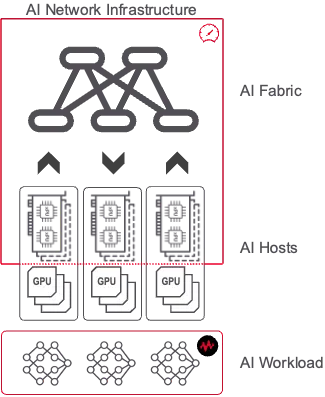
Emulate AI Workloads:
The platform emulates real-world AI workloads, allowing AI operators to stress-test their networks with the same data patterns in production environments. This helps identify performance issues and bottlenecks before they affect real-world AI applications.
Benchmark AI Network Infrastructure:
The platform can benchmark key network elements, assessing the AI Fabric's performance. This process is crucial in ensuring that the network infrastructure can effectively handle AI workloads' high-throughput, low-latency demands.
Co-tune AI Cluster Performance:
Optimizing the AI infrastructure and the network fabric is essential to achieving peak performance. The platform offers tools to co-tuneAI hosts and their connected network infrastructure.
Integrated Software, Hardware with a Fabric Test Methodology for AIWorkloads
Keysight’s AI Data Center Test Platform delivers flexible and comprehensive solutions through both software and hardware components, tailored to optimize AI workloads and network performance.
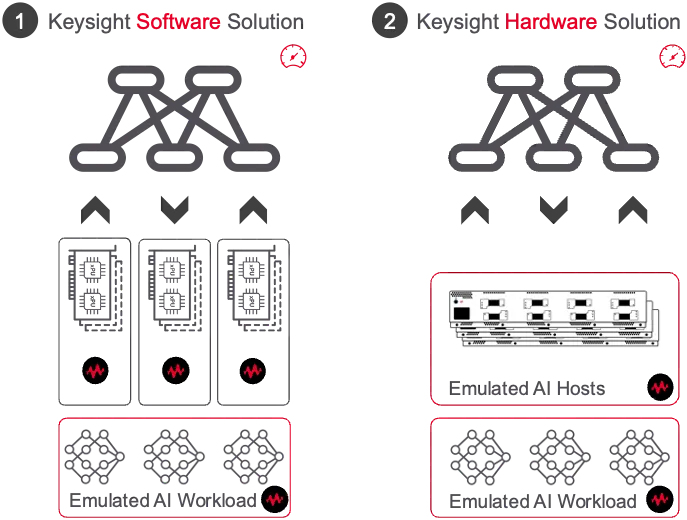
The software solution offers cost-effective validation, supports new transport protocols, and is ideal for production and cloud environments. Key benefits include minimal overhead with NIC+Fabric co-tuning for efficient network management. This solution enables AI emulation and workload validation without the need for large-scale infrastructure, making it suitable for cloud-based environments.
The hardware solution focuses on isolated fabric validation, providing a high-performance infrastructure capable of handling up to 800G throughput and delivering deep network insights. It allows users to test and validate their AI infrastructure while emulating real-world AI workloads, ensuring reliable results for performance benchmarking.
At the core of both solutions is the Fabric Test Methodology, which ensures that network fabrics are validated independently and optimized for AI data center demands. This methodology allows users to qualify AI network fabric efficiency in job completion time, performance isolation, load balancing, and congestion control mechanisms.
Conclusion:
Keysight's AI Data Center Test Platform is designed to validate network design at the core. AI clusters depend on efficient communication for optimal performance, and this platform provides superior capabilities for validating and fine-tuning network architectures. It is essential for identifying weak points in the AI fabric or optimizing data flow between GPUs, making it crucial for building next-generation AI data centers.
For more information please refer to our AI Data Center Fabric Test Methodology Black Book.

Inventec Delivers Cutting-Edge Cooling for AI Workloads
In this episode, Inventec’s Edward King discusses how AI workloads are shifting to the edge, and how innovations like liquid cooling and ruggedized infrastructure can power the next wave of tech advancements.

AI’s Impact on OCP: Scaling Innovation and Infrastructure Growth
In this episode, OCP CEO George Tchaparian shares how OCP is driving AI infrastructure innovation, fostering collaboration, and tackling scalability, efficiency, and sustainability challenges in data centers and beyond.

From Chaos to Control: The Future of Automotive E/E Architecture
With Halloween just around the corner, it seemed appropriate to bring a little intrigue and mystery into this week’s blog. In the heart of Silicon Valley is the Winchester Mystery House which, throughout the years, has grown to become a relatively popular tourist attraction.
Owned by Sarah Winchester, the heiress of the Winchester Repeating Arms fortune, (think Winchester rifles), this mansion was constructed over the course of 36 years from 1886 to 1922. The legend goes somewhere along the lines that she regularly heard haunting spirits tell her that tragic things would happen if she ever stopped construction on the house. This was the motivation that caused her to transform her eight-room farmhouse into a 24,000 square foot mansion with 160 rooms, 47 stairways and fireplaces, with 13 baths, 6 kitchens and a host of other amazing factoids regarding the ridiculous size and scale of this mansion.
Beyond its sheer scale, what is most unique about this mansion is that these rooms were added on with very little rhyme or reason or forethought. Sarah Winchester’s obsession with adding rooms led to a floor plan where the location of the rooms and the function that they served were irrelevant. The resulting mansion, that over 12 million people have visited since it was opened to the public in 1923, is a hodgepodge of illogical rooms, hallways, and dead-ends.

Perhaps a harsh analogy, but in a similar fashion, it feels like throughout the years, the automotive industry has continued to add more and more electronics to the vehicle employing an E/E architecture with similar levels of forethought as Sarah Winchester’s floor plan. The continued addition of electronics has led to high-end vehicles with over 130 microcontrollers that are physically located wherever it seemed to make best sense at the time – resulting in what’s commonly referred to as distributed architecture. The resulting wiring harness required to interconnect all the distributed microcontrollers and other devices, has grown from 55 wires with a total length of 150 ft in 1948 to the present day where the wiring harness for a vehicle based upon a distributed E/E architecture weighs roughly 120 lbs and contains 1,500 to 2,000 wires with a total length of 5,280 feet (one mile).
To a certain degree, it’s not too hard to see how this distributed architecture may have come into existence. More than two decades ago, the automotive OEMs viewed electronics as context, not core to their businesses. This led to the eventual spin-out of the OEMs’ EE teams and the formation of Tier 1s, an external company that had indirect responsibility for the OEM’s electronics and associated E/E architecture.
Today, automotive OEMs are becoming acutely aware of the importance and impact of both the electronics and the underlying E/E architecture. This is driving the mature OEMs to shift back to their original model where the electronics teams were vertically integrated. Fun fact, I have been told that this trend is not uncommon across different industries and that the Harvard Business Review refers to this shift from dis-integration back to vertical integration as “the double helix.”
With this greater, more immediate focus on the electronics and underlying shift to greater control of the vehicle through electronics, there is a similar increase in focus by the OEMs that is placed upon the underlying E/E architecture. More specifically, there is a keen focus on how to reduce the size, weight, complexity, cost, and associated poor reliability of the wiring harness. The impact of the wiring harness, which has typically been considered innocuous, has now become very significant.
EV startups without the baggage of legacy architectures have mostly embraced the centralized E/E architecture, which holds the promise of addressing all the above-mentioned challenges associated with the distributed architecture. However, for most mature automotive OEMs with legacy architectures, the move to centralized can prove too much of a stretch. So the approach is to move from a distributed architecture to a domain architecture and then eventually to the centralized architecture.
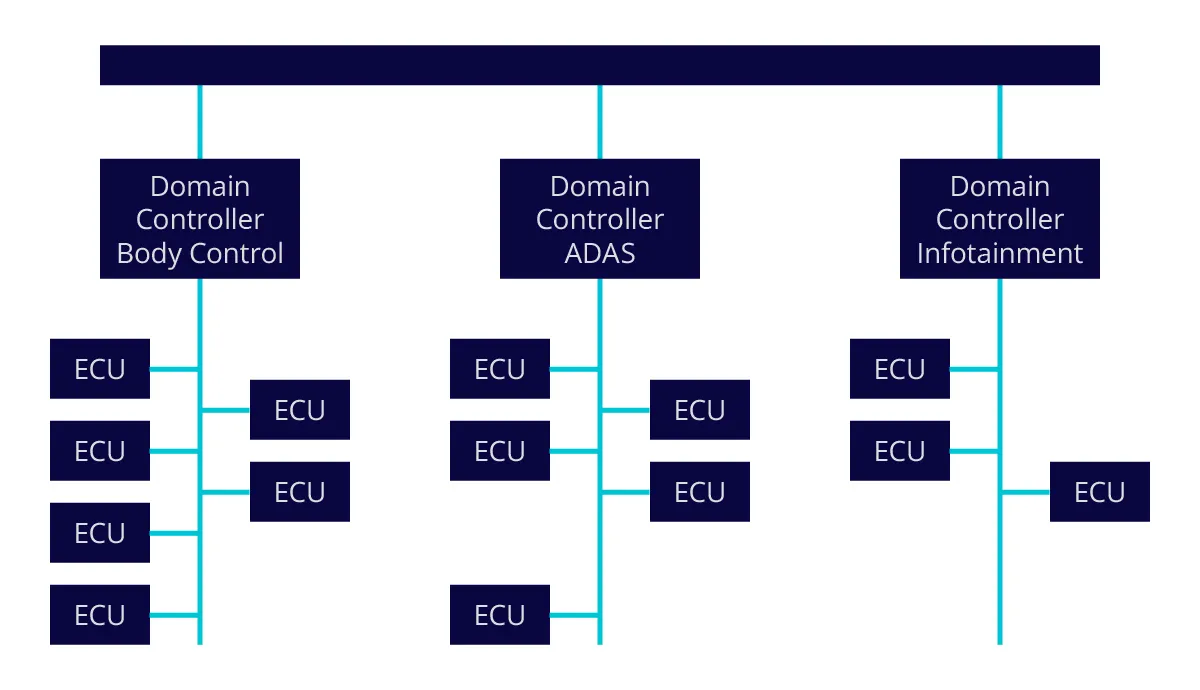
Domain controllers allow for rich communications between electronics control units (ECUs) within a common domain, while isolating unrelated communications between other, unrelated domains.
As shown in Figure 1., one of the key concepts behind the domain architecture is that not all electronics control units (ECUs) need to communicate with one another at all times. This concept is similar to the way that office computer networks are typically constructed. Breaking the network traffic into local area networks with common communication needs leads to greater efficiency and reduced costs. As an example, personnel within an engineering department need to regularly communicate with others in the engineering department, but less frequently with personnel in the shipping department. Breaking these groups into two unique local area networks, i.e. engineering and shipping, allows for rich communication within each group and isolation between the two groups via a bridge. This allows only relevant conversation between either group to occur, and leads to a reduction in wiring while greatly improving communications throughput and reliability.
While the domain architecture offers significant improvements over the distributed architecture, the physical location of the different ECUs directly impacts the physical length of wire required to connect to the appropriate domain controller. The centralized architecture, on the other hand, addresses wiring length and provides many additional, significant benefits.
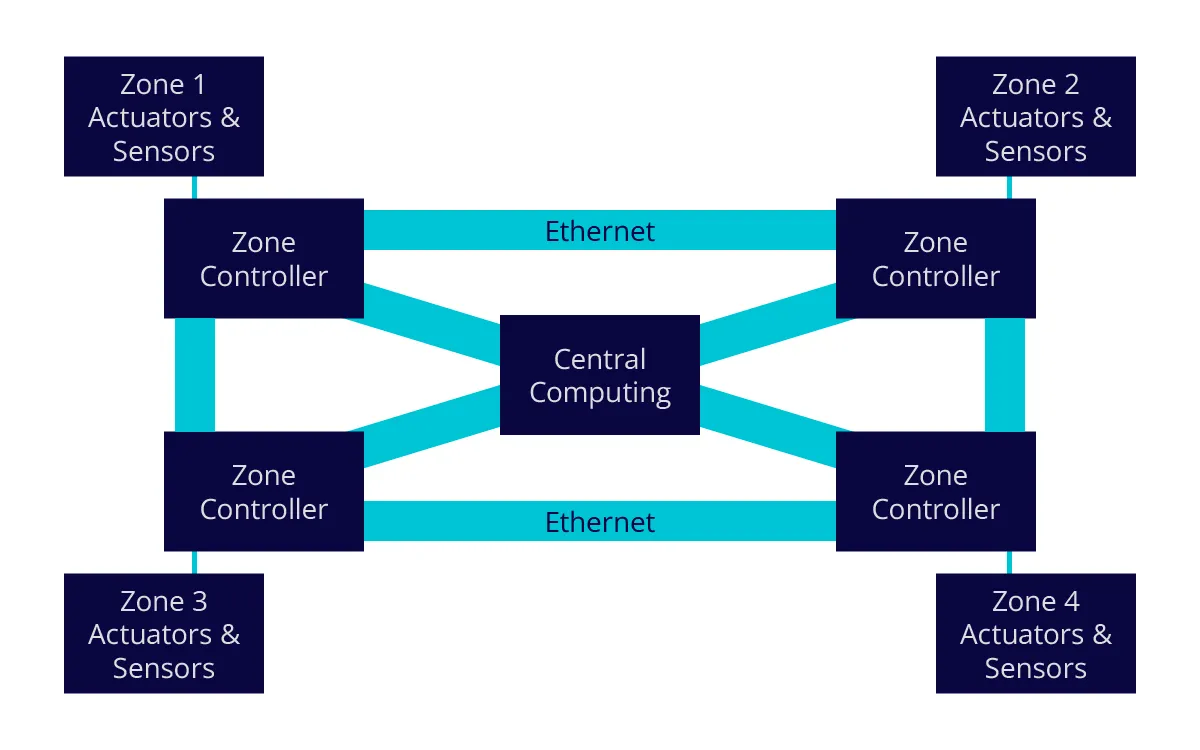
The centralized architecture, as shown in Figure 2, is the eventual, target E/E architecture for most incumbent OEMs. While there are variations on a theme of this actual architecture, typically what they all hold in common is the majority of the computing is aggregated into one common, centralized location. The zone controllers are physically located in different quadrants of the vehicle and connect the different actuators and sensors that are found in the same physical location of a given zone.
For purposes of definition, an example of an actuator would be the physical controller that engages the brakes in the case of anti-lock or automatic emergency braking, whereas a sensor might be a camera or radar that is again, located in the given quadrant, or zone of the vehicle.
As noted in Figure 2., the different zone controllers are interconnected via Ethernet in a mesh configuration – implying that every zone controller has more than one way of connecting to the central computing block. Ethernet connectivity is chosen because it is a very mature, proven, robust serial communication technology that relies on lightweight cabling for connection. Variants of Ethernet, including TSN (time sensitive network) are gaining momentum in automotive as they offer greater levels of determinism in communication timing performance, typically a requirement in real-time embedded applications.
Employing a mesh-based connectivity architecture allows for one or several segments of the network to fail without impact. The network simply seeks an alternative connection path, which is enabled through this scheme. This connectivity topology is typically found in today’s data center in support of what’s referred to as a “fail-over” architecture. As previously mentioned, in many different ways, the vehicle of the future is increasingly becoming a data center on wheels.
The centralization and consolidation of compute resources also leads to a significant reduction in the total number of discrete ECUs while also more readily accommodating computational redundancy, again leading to greater levels of reliability.
Within a given zone, the sensors and actuators can be added based on trim level of the vehicle in a manner similar to populating a PC with a new add-in card. The sensor or actuator identifies its presence and personality to the centralized computer via a unique IP address and the vehicle’s computer’s operation is updated accordingly. This allows for greater levels of simplicity in the manufacturing of different classes of vehicles, which typically contain different numbers and types of sensors and actuators. Different types and numbers of sensors are added on the manufacturing floor based on vehicle type or level. This type of “plug-and-play” also supports the concept of upgrading a vehicle to a higher trim level years after the vehicle has left the showroom floor.
With software scaling into the 100 to 300 millions of lines of code, the importance of practical support of over-the-air OTA software updates cannot be overstated. The distributed architecture with over 130 MCUs that are distributed throughout all corners of the vehicle, does not lend itself to simple OTA updates. A similar point can be made in regards to the manner in which the centralized architecture leads to a more rational and practical way to address cybersecurity.
Without a centralized architecture, the hot industry buzzword, Software Defined Vehicles (SDV) would be almost impossible to realize.
In the same way that the evolving E/E architectures are driving transformation, the SDV is also poised to transform the auto industry in even more significant ways.
This is, however, another topic that I will discuss in a future blog.

Roy Chua of AvidThink on AI, Networking, and Sustainability at OCP
Allyson Klein and Roy Chua, founder & principal of AvidThink, explore AI-driven networking, sustainability challenges, energy efficiency, and more in this insightful episode, recorded at OCP Summit 2024.