
Welcome to
the Forum
Engage innovators and practitioners on the edge of technology advancement.









.webp)
The Network Revolution: Cornelis Tackles AI’s Efficiency Crisis
As artificial intelligence (AI) systems grow increasingly complex and demanding, a critical bottleneck has emerged that threatens to limit the transformative potential of enterprise AI: network efficiency. While organizations pour billions into graphics processing units (GPUs) for compute power, a surprising percentage of that computational capacity sits idle, waiting for data to move through inefficient network architectures.
Lisa Spelman, CEO of Cornelis Networks, and I recently discussed her perspective on this challenge. During our conversation, she revealed how Cornelis is addressing what she calls “the efficiency problem plaguing AI and HPC mega systems” through network design that promises to unlock significantly more value from existing infrastructure investments.
The Hidden Cost of Network Inefficiency
The scale of the efficiency problem becomes clear when examining GPU utilization patterns. Research reveals that GPUs spend 15% to 30% of their time in non-math mode, purely handling communications rather than performing the calculations that drive AI breakthroughs. This represents billions of dollars in computational capacity that organizations have purchased but are not fully using.
“We are throwing more compute at the problem, putting more scale around the problem, putting more concrete, more power, all these things around the problem and saying we just have to brute force through these models,” Lisa explained. “We’ve got to move to elegance.”
That elegance comes through innovation that addresses bottlenecks at the system level. Multiple bottlenecks exist, but for the network, Cornelis has developed an end-to-end backend network architecture with unique features that improve GPU utilization and compute efficiency while maximizing the value of existing power budgets and infrastructure investments.
The Enterprise On-Premises Opportunity
While hyperscale cloud providers continue to drive frontier model development, Lisa identifies a significant opportunity in enterprise on-premises AI infrastructure. She notes that cloud providers currently capture 40 to 50% of the AI infrastructure market, which leaves substantial opportunity for enterprises, neoclouds, and sovereign cloud implementations that prioritize economics, privacy, security, and specific use case optimization.
This distributed approach to AI infrastructure creates new requirements for network efficiency, since enterprise implementations must maximize utilization within relatively constrained environments. The network becomes even more critical in these scenarios. Inefficiencies that might be tolerated by hyperscalers become prohibitive bottlenecks in enterprise deployments.
Real-World Impact Through System-Level Innovation
The practical benefits of network optimization extend far beyond theoretical performance improvements. Measurably better results can be achieved through Cornelis Networks’ solutions, including the recently launched CN5000, a 400-gigabit end-to-end network platform.
These improvements manifest in multiple dimensions: better GPU utilization translates to faster model training and inference, and reduced power consumption per workload enables more intensive processing within existing power budgets. Improved overall system efficiency allows organizations to tackle larger problems with the same hardware investments, delivering system-level benefits that improve total cost of ownership and accelerate time to value for enterprise AI initiatives.
Looking Ahead: Sustainable AI Infrastructure
Recent studies suggest that over 90% of enterprise AI efforts struggle to achieve meaningful return on investment. However, Lisa believes the industry stands at an inflection point where that dynamic is about to reverse completely. And as organizations move from experimental AI projects to production deployments that must deliver measurable business value, efficiency optimization becomes crucial for long-term success.
Lisa’s confidence in this transformation stems from her experience across multiple technology waves, including her time managing IT infrastructure during the early cloud computing era. The pattern suggests that enterprises that embrace efficiency-focused AI infrastructure today will establish competitive advantages that become increasingly difficult for competitors to match.
The TechArena Take
Cornelis Networks’ approach addresses a critical gap in current AI infrastructure discussions. While much attention focuses on computational power and model sophistication, network efficiency represents an often-overlooked opportunity to unlock significant additional value from existing investments.
Lisa’s emphasis on moving from “brute force to elegance” reflects a maturing industry that recognizes sustainable AI deployment requires optimization across the entire infrastructure stack. Organizations that prioritize network efficiency alongside compute power will be better positioned to achieve the ROI that has proven elusive for many enterprise AI initiatives.
The convergence of AI-native enterprise cultures with efficiency-optimized infrastructure creates conditions for the kind of transformative business impact that will differentiate winners in the next phase of AI adoption.
For more insights on Cornelis Networks’ approach to AI infrastructure optimization, visit cornelis.com or connect with Cornelis Networks on LinkedIn.

Scality and Solidigm Reshape Storage Protection in the AI Era
For 15 years, Scality has operated at a scale most enterprises never contemplate. Its customers routinely manage petabytes, tens of petabytes, and now exabytes of unstructured data. My recent conversation with Paul Speciale, chief marketing officer of Scality, alongside Jeniece Wnorowski from Solidigm, revealed how this software-defined storage pioneer is navigating a shift in how organizations think about data protection in an era of ransomware threats and AI workloads.
Shifts in the Data Protection Landscape
The ransomware threat has fundamentally changed the data protection conversation. As Paul noted, you can’t go a day without seeing news of a cyber attack, and this constant barrage has added a new priority for chief information officers: in addition to backup speed, recovery speed is now top of mind. Organizations need their backup systems to serve as insurance policies that can quickly resurrect operations after an incident. This demand requires special architectural considerations and performance characteristics from the backup system.
AI also has introduced additional complexity to the data protection equation. First, the integrity of data feeding AI systems becomes paramount. “Imagine training your AI on data that’s been tampered with or has some kind of integrity constraints,” Paul said, raising the possibility of the potentially catastrophic outcomes. Second, AI itself becomes a tool for both attack and defense. While Scality explores embedding AI capabilities to detect suspicious access patterns and questionable payloads, ransomware actors are simultaneously weaponizing AI for sophisticated phishing attacks and impersonation schemes.
The Flash Storage Tipping Point
The flash storage revolution is reshaping Scality’s deployment patterns in ways that would have seemed unlikely just years ago. Historically, Scality’s massive capacity deployments relied primarily on high-density hard disk drives (HDDs), with flash comprising only 1-2% of total capacity to accelerate metadata operations and data lookups. The converging costs between flash and HDD storage, combined with performance demands from analytics and AI workloads, are driving increased adoption of all-flash configurations.
Paul cited a conversation with a major analyst firm that reinforced this trend: AI models in cloud environments are already training on object storage backed by flash. The same pattern is emerging for on-premises deployments. Even fast backup operations can benefit from all flash storage. “Why? Because again, it’s back to this restore equation,” he explained. “If I have flash, I can do a faster job of restoring.”
Software-Defined Advantage in a Competitive Market
Paul emphasized Scality’s software-only approach as a core differentiator in an increasingly competitive storage market. By remaining hardware agnostic, Scality can leverage best-of-breed components like Solidigm’s high-capacity SSDs while optimizing for specific media characteristics. This flexibility extends to energy efficiency, performance tuning, and media-specific optimizations.
The conversation revealed Scality’s vision toward becoming a data platform, extending their reach beyond storage. “And what is a platform?” he asked. “A platform is something that has a series of services. It might be a search service, a data cleansing service, a vectorial database for AI.” Paul sees software vendors as holding advantages in delivering these integrated service offerings given they are not tied to specific servers or form factors.
Object Storage and the Path Forward
Object storage’s mainstream emergence represents another important industry change. After 15 years of evangelizing object storage’s benefits, Paul sees the market finally recognizing its fundamental advantages for managing unstructured data at scale. Object storage’s inherent scalability, combined with its understanding of metadata and data characteristics, positions it ideally for immutable data protection and AI workloads. The hyperscalers have already validated this approach through Amazon S3 and Azure Blob adoption for AI applications. “The opportunity is huge as an object storage player in that arena,” he said.
The TechArena Take
Scality’s 15-year journey demonstrates the importance of being able to adapt alongside shifting enterprise priorities. Storage solutions must balance performance, resilience, and flexibility to meet the growing demand for data restoration capabilities and to address the changes rising from AI’s dual role as both a workload and security tool. As object storage enters the mainstream and flash economics continue improving, organizations managing massive unstructured data volumes will increasingly depend on software-defined approaches that optimize across media types and deployment models. Scality’s platform vision, rooted in pure software architecture and object storage expertise, positions the company to address these converging demands.
For more information on Scality’s data protection solutions, visit scality.com.

From OCP 2025: Arm’s Chiplet Push and the AI Ecosystem Play
Allyson Klein and co-host Jeniece Wnorowski sit down with Arm’s Eddie Ramirez to unpack Arm Total Design’s growth, the FCSA chiplet spec contribution to OCP, a new board seat, and how storage fits AI’s surge.

CelLink at OCP: 3 Key Takeaways for AI Factories
During CelLink’s first-ever exhibit at the Open Compute Project Foundation’s 2025 global summit, what struck me wasn’t a single system or new tech announcement. It was the massive scale and complexity of the systems on display in San Jose. Design considerations that once were limited to the inside of a chassis now span racks, pods, and even data halls. Power and cooling, data transmission, and commissioning strategies are being simultaneously developed into an integrated plan for massive data centers. For an electric vehicle supplier entering the data center market, there’s a clear signal: the data center universe needs system-level thinkers more than ever. Below are three takeaways I brought from San Jose.
1) The unit of design has shifted to the rack (and multi-rack)
For many years, the data center industry treated the server box as the center of gravity and the rack as a container. At OCP 2025, the gravitational center sat firmly at rack scale and beyond. Vendors weren’t just announcing parts; they were showing buyable racks and reference pods with standardized mechanics, predictable service windows, and modularity that assumes multi-vendor integration.
When the entire data center is the product, interoperability and collaboration are fundamental requirements, not one-off, after-the-fact engineering projects. Power distribution, liquid manifolds, fabric, and service clearances need to be engineered together, tested together, and delivered as a single, repeatable unit. That reduces onsite “glue work,” accelerates time-to-online, and makes capacity build-outs behave more like a supply chain problem instead of an R&D project.
2) Efficiency must span the whole power path, from the grid down to the GPU
Energy costs and utility constraints are hard walls that every operator contends with. The conversation used to stop at power supplies or busbars; now it spans the entire power path. From upstream skids and medium-voltage gear, through prefabricated power pods, into rack-level distribution and finally to the last few centimeters inside the server, every interface is being scrutinized for energy loss, complexity, and long-term reliability.
Two themes stood out. First, high voltage power delivery and fewer mechanical connections are becoming a design tenet, not just wishful thinking. Second, manufacturability is part of the efficiency story. If you can pre-integrate cleanly at the factory, you don’t just save electrons; you save weeks of field labor, re-terminations, and retests that sap schedules and budgets. Efficiency is both electrical and operational.
3) Liquid cooling is table stakes—now make it efficient and flexible
Every serious roadmap now assumes liquid cooling. The debate is no longer air vs. liquid; it’s which liquid strategy unlocks density and speed without limiting the facility to a shorter lifespan. Cold plate, immersion, hybrid approaches—they all have a place. But the winners will minimize facility disruption, maximize reliability, fit into standardized rack mechanics, and keep serviceability reasonable.
I heard operators ask a simple question: Will this let me scale up and scale out without ripping up what I just installed? Solutions that pair rack-native mechanics with straightforward commissioning, safe quick-disconnects, and clear maintenance windows are getting the nod.
What This Means for How we Build
For AI factories, we should co-design power, cooling, and interconnect with the same discipline that goes into a production line. Standard racks, standard interfaces, and predictable service envelopes. The upside is more than density, it’s repeatability. That’s how we compress power-on schedules and make capacity a planning exercise we can trust.
Just as important: It’s imperative that the industry reduce manual, low-value assembly steps across the chain. Every extra wire to cut, crimp, route, label, and verify is a schedule risk and represents a potential field failure. Automation at the component level matters, but the real leverage appears when you can eliminate multiple assembly steps in server assembly and data center build-out.
CelLink PowerPlane: Efficient Power—Coupled with Integrated Cooling
At CelLink, we are focused exclusively on power and cooling. Our PowerPlane product replaces bundles of discrete wires with a space-efficient, flexible laminated power circuit that can deliver high currents in a flat and ultrathin form factor. Instead of connecting motherboards together one cable at a time, motherboards are docked directly to the Powerplane with a simple and repeatable installation process.
This matters to a server manufacturer for several reasons:
Density without chaos. By consolidating conductors into a flat, designed path, we free up precious volume for more compute and signal transmission – the true value-add functions of a server. The PowerPlane makes it easier to place accelerators and signal connections where they need to be and maintain clear service windows.
Cooling-ready by design. Power and cooling shouldn’t fight each other for space. The design approach we take to deliver power in a very thin (<1mm) form factor can be tailored to align with liquid-cooling manifolds—keeping designs clean, minimizing interference, and opening the door to integrated power-and-cooling layers that enable a revolution in rack and system design.
Unlocking vertical power delivery. By delivering power and cooling to the backside of the motherboard, the PowerPlane provides efficient heat removal from vertical power voltage regulators, ensuring that the regulators operate in their most-efficient temperature range.
Stepping back, this isn’t just a different cable. It’s a revolutionary design concept that eliminates manual wiring and replaces it with a high-precision, repeatable, space-saving component.
The PowerPlane product is trademark CelLink.
Banani Mohapatra on AI with Purpose
Banani Mohapatra leads experimentation and causal measurement for Walmart Plus, where testing isn’t a checkbox—it’s the operating system. She treats causal inference as a product capability, using disciplined experiments to turn ambiguous ideas into decisions the business can trust.
In this conversation, Banani—one of TechArena’s newest voices innovation—shares how moving from India to the U.S. rewired her problem-solving lens, why innovation now lives as much in system design and governance as in algorithms, and how AI and human creativity work best as collaborators.
She breaks down a first-principles framework for separating signal from hype—customer impact, quantifiable value, scalability, and responsible deployment—and explains why disciplined iteration beats flashy launches.
Q1: Can you tell us a bit about your journey in tech?
A1: My journey in technology spans over 13 years across analytics, AI, and data science leadership. I began at MarketRx, a pharma analytics startup later acquired by Cognizant, where I learned to turn raw data into actionable business stories long before modern BI tools existed. From there, I joined Citibank’s risk modeling team, designing and validating predictive models to manage financial risk and optimize decision-making at scale. In 2015, I relocated to New York with Citi and began collaborating closely with data engineering and product teams to embed analytics into large-scale business systems. Subsequent consulting roles at Visa, Cisco, and Realtor.com broadened my exposure to diverse domains, from financial services to e-commerce, revealing how context, customer behavior, and scale shape the practice of data science.
At Walmart, I lead experimentation and causal measurement for Walmart Plus, transforming an ad-hoc analytics function into a structured experimentation platform. When I started, we ran one experiment per quarter; today, we execute over 150 annually, driving measurable impact across pricing, marketing, and engagement. What excites me most is how experimentation has evolved from a testing mechanism to a strategic driver of innovation. Building systems that empower teams to learn faster, make data-informed decisions, and embed causal thinking into product development has been the most fulfilling part of my journey. For me, the true impact of technology lies in helping organizations by analyzing data to continuously learn and adapt.
Q2: Looking back at your career path, what's been the most unexpected turn that ended up shaping who you are today?
A2: Without a doubt, my transition from India to the U.S. was the defining moment. It wasn’t just a geographic move; it was a cultural and professional transformation. It pushed me to unlearn and relearn, adapt to new problem-solving frameworks, and navigate ambiguity in diverse teams. That experience taught me resilience and the importance of contextual intelligence, understanding not just what to solve, but how to make it relevant for the environment you’re in.
Q3: How do you define “innovation” in today’s rapidly evolving tech landscape? Has your definition changed over the years?
A3: Absolutely. My definition has evolved alongside the field of data science itself, from deterministic and predictive models to adaptive and generative intelligence. Earlier, innovation meant improving accuracy or efficiency, now it’s about scalability, interpretability, and accessibility. With the evolution of machine learning to deep learning and now to generative and agentic AI, innovation isn’t confined to algorithms anymore; it’s about system design, governance, and responsible deployment. True innovation now means enabling impact at scale, responsibly, inclusively, and sustainably.
Q4: When you’re evaluating new ideas or technologies, what's your framework for separating genuine innovation from hype?
A4: When evaluating new ideas or technologies, I always start from the first principles - what business problems are we solving, and who benefits from it? Innovation only has meaning when it’s anchored in purpose and outcomes.
The first lens I apply to is customer impact. Every idea, no matter how exciting, must solve a real, measurable problem for the end user. Technology should simplify, empower, or enhance an experience - not just exist because it’s novel. Next, I focus on quantifiable outcomes. If we can’t tie an idea to clear success metrics - whether in efficiency, engagement, or revenue - it’s usually a sign that the value proposition isn’t strong enough. Data-backed validation helps separate genuine innovation from experimentation for its own sake. Then comes sustainability and scalability. True innovation must move beyond the proof-of-concept stage. It should be capable of evolving across teams, products, and time - without losing its integrity or business alignment. Finally, every decision is weighed against governance and privacy considerations. In an era where trust defines technology adoption, building responsibly isn’t optional - it’s essential.
For me, innovation without discipline is just noise. The real differentiator lies in how consistently an idea delivers measurable, ethical, and sustainable impact at scale.
Q5: What's the biggest misconception you encounter about innovation in the tech industry?
A5: One of the biggest misconceptions about innovation in tech is that it’s all about speed and novelty, building something new, fast, and flashy. But true innovation isn’t defined by how quickly you can launch a product; it’s how meaningfully you can create sustained value through technology. What many overlook is that innovation isn’t just an invention, it’s integration. It’s about reimagining how technology, people, and processes come together to deliver something enduring. Some of the most meaningful advancements in tech today, from generative AI to adaptive experimentation systems, didn’t emerge from a single breakthrough, but from years of disciplined iteration and scaling inside large ecosystems.
Q6: How do you see the relationship between AI advancement and human creativity evolving? Are they competitors or collaborators?
A6: I’ve always seen AI and human creativity as collaborators rather than competitors. AI has this incredible ability to process information at a scale and speed we could never match, it can generate possibilities, surface hidden connections, and even inspire new directions we might not have considered. But creativity, at its core, is deeply human. It’s shaped by emotion, context, curiosity, and even imperfection - things machines don’t quite grasp.
What excites me most is how the two can amplify each other. When AI takes on the repetitive or data-heavy parts of the creative process, it gives humans the space to think, imagine, and explore. I’ve seen this in my own work, using AI to model outcomes or test ideas frees up energy for the “why” and “what if” questions. The future of creativity isn’t replacing humans with algorithms; it’s co-creation - humans setting up the vision, and AI expanding what’s possible.
Q7: When you're facing a particularly complex problem, what's your go-to method for finding clarity?
A7: When I’m faced with a complex problem, my first step is to slow down and reframe it. The first go-to question is, “What exactly are we trying to solve, and why does it matter?” Often, complexity comes from unclear framing rather than the problem itself. Next, it's time to structure the problem into layers, i.e. what’s known, what’s unknown, and what’s uncertain. This helps separate assumptions from facts and brings focus to where more data or context is needed. I’ll then bring in cross-functional perspectives—engineers, product managers, and analysts, because complex problems rarely sit within a single domain. Different lenses often reveal the simplest path forward. Finally, layer in data to validate intuition. Whether it’s causal analysis, experimentation, or quick prototypes, I look for small, measurable signals that bring clarity and confidence before scaling a solution.
Q8: Outside of technology, what hobby or interest gives you the most inspiration for your professional work?
A8: Outside of work, I enjoy writing and mentoring - it’s a great way to share ideas, learn from others, and stay curious. I’m also part of local meetups where I get to co-learn with people from all kinds of backgrounds. And when I’m not talking about data or AI, you’ll probably find me meditating - it helps me reset, think clearly, and bring a bit calmer and perspective into my work.
Q9: What excites you most about joining the TechArena community, and what do you hope our audience will take away from your insights?
A9: What excites me most about joining the TechArena community is the opportunity to connect with innovators who are shaping how technology drives real-world impact. I’ve spent over a decade building AI and data science solutions that power large-scale decisions, and I see TechArena as a platform to exchange ideas that bridge research and application. I hope the audience walks away from my insights with a deeper appreciation for how experimentation, causal inference, and responsible AI can turn data into meaningful action. Beyond algorithms, I want to emphasize the human side of technology, i.e. how we design systems that learn, adapt, and make organizations smarter over time. TechArena brings together a rare mix of curiosity and execution, and I’m excited to contribute to that dialogue, sharing what’s worked, what hasn’t, and how we can collectively shape the next wave of AI innovation.

Memory Matters: CXL 2.0 Strategies
As AI takes center stage in the enterprise, system memory has taken central stage, as systems rush to feed compute with low latency to drive the AI pipeline and conduct everything from analytics to a mix of highly parallel workloads. The question becomes, how do you scale memory without breaking the IT budget? Meet CXL 2.0, a supercharger for enhanced memory activation that places more capacity into IT reach and does so by accessing stranded memory.
How is this possible, and what is stranded memory? In many systems today, even as compute reaches peak utilization, memory sits underused. I think of this as a stranded resource where something of high value sits underutilized. At the same time, another host might be starved for memory capacity. This fragmentation can be wasteful, especially when memory constrained applications like AI workloads and vector databases require capacity.
Enter CXL 2.0. This innovative standard brings memory pooling, tiering, and switching capabilities that let memory across systems behave as a shared, dynamically allocated resource pool, rather than rigid per-socket islands. Early implementations have shown that memory pooling across 8–16 sockets can reduce DRAM cost while keeping performance at near parity with traditional architectural approaches.
Want to take advantage of this game-changing technology? Here are three deployment strategies I recommend:
Memory pooling across adjacent nodes
Deploy CXL switches with CXL 2.0 enabled systems to aggregate memory, allowing hosts to draw from a common memory pool depending on application requirements. This is ideal for workloads with variable memory footprints. You may see slightly higher latency compared to local DRAM, so deploy pool sizes where your latency tradeoff is acceptable.
Tiered memory architectures
In this model, the system maps “hot” data to local DRAM, and overflow or less-critical data to CXL-attached memory. The OS or memory manager dynamically moves pages. This approach offers better aggregate capacity without overprovisioning.
Be mindful that software within these configurations must be intelligent about page placement.
Dynamic rebalancing / elastic memory allocation
This model allows for dynamic migration and reallocation based on workload priority in real time. This flexibility helps especially in multi-tenant or bursty environments.
To try out these new approaches in your live environments, it’s important to do your homework, carefully measuring application capability for various approaches and implementing solutions that best meet your environment’s demands. Pooling, tiering, or dynamic rebalancing each have tradeoffs, so pick the model best aligned to your workload requirements. Regardless of your path ahead, Xeon 6 processors with integrated CXL 2.0 support is a future-ready foundation for advanced memory applications.

Equinix and Solidigm Map AI’s Ripple Effects Across Tech
The artificial intelligence “surge” is here, and with it, data center infrastructure is fundamentally changing. From increased demand for liquid cooling to a rise in interest for co-location services, both bleeding-edge and well-established solutions are being called into play to answer AI’s appetite for power, cooling, and data access. I recently explored this phenomenon with Glenn Dekhayser, global principal technologist at Equinix, and Scott Shadley, leadership marketing director at Solidigm, to understand how enterprises are navigating AI’s infrastructure demands.
The fundamental challenge facing enterprises deploying AI can be summarized in two words, according to Glenn: “power and heat.” Where graphics processing units (GPUs) once served as passengers in computing architectures, they now drive the entire infrastructure bus, and the power they demand is staggering. An estimated 97gigawatts of new power will be required for all registered data center projects by 2030, and when one average nuclear reactor puts out 1.4 gigawatt, “The math doesn’t work,” as Glenn said.
These power requirements create cascading effects throughout the infrastructure stack. Glenn noted that not every organization needs the highest-performance solutions, and liquid cooling becomes necessary only when rack density exceeds 40 kilowatts (kW). However, when direct-to-chip liquid cooling can capture and dissipate up to 1,000 times the amount of heat that air can, enterprises deploying next-generation GPUs must confront the requirements to implement this technology. This transition fundamentally changes total cost of ownership calculations and operational complexity for new infrastructure investments.
The full effects of AI’s increasing prevalence remain to be felt, but as Glenn noted, AI is driving change across all industries. While generative AI has advanced adoption so that “everybody has a need for” AI now, different forms of machine learning are also being used to solve domain-specific problems. “Every conversation has some angle to it,” he noted. “Whether you’re to be a consumer or provider or some middle service provider for data.”
Beyond dealing with power and heat, enterprises are adopting a mix of infrastructure strategies to adapt to the needs of AI workloads. For example, contrary to predictions that AI would centralize workloads in public clouds, enterprises are increasingly turning to co-location for AI deployments. The driving factors extend beyond simple cost considerations. The rapid pace of AI innovation means that the public cloud provider chosen two years ago may not offer the optimal AI services, capacity, or specialized models an organization needs today. Co-location provides the connectivity and flexibility to leverage various services without vendor lock-in, while maintaining control over data sovereignty and performance.
Perhaps nowhere is AI’s impact more visible than in storage strategy. Scott outlined how different AI workloads create distinct storage demands, and how innovative techniques can make the most of storage in all portions of the AI pipeline. For example, Solidigm has shown that retrieval-augmented generation (RAG) tasks can be offloaded from expensive distributed random-access memory (DRAM) to optimized solid-state drives (SSDs), and that performance can actually be improved while lowering costs by doing so.
Both experts emphasized that successful AI infrastructure requires holistic thinking across compute, storage, and interconnect. Rather than isolated decisions, enterprises need integrated solutions that can adapt to rapidly changing requirements.
The TechArena Take
The AI infrastructure revolution is forcing enterprises to balance competing demands: the need for high-performance computing against power and cooling constraints, the desire for cutting-edge capabilities against cost considerations, and the requirement for agility against infrastructure investments. Equinix and Solidigm demonstrate how thoughtful collaboration can address these challenges through flexible, efficient solutions that scale from current needs to future requirements.
As AI continues its rapid evolution, organizations that invest in adaptable, well-connected infrastructure today, while maintaining control over their data platforms, will be best positioned to capitalize on tomorrow’s AI innovations. The key is not predicting exactly what AI will become, but building the foundation to respond quickly when it does.
For more insights on Equinix’s AI infrastructure solutions, visit blogs.equinix.com or connect with Glenn Dekhayser on LinkedIn. Learn more about Solidigm's AI-focused storage innovations at solidigm.com or reach out to Scott Shadley on social media platforms.

Xinnor Reinvents RAID for the Era of AI-Driven Data Centers
For decades, redundant array of independent disk (RAID) technology has quietly protected enterprise data, operating as a reliable safeguard designed in an era when hard disk drives were the only storage option available. That legacy architecture is now colliding with the demands of AI workloads, creating a performance gap that enterprises can no longer afford to ignore. As organizations invest heavily in infrastructure to optimize graphics processing units (GPUs), they’re discovering that traditional data protection methods can become a significant bottleneck preventing them from maximizing their AI investments.
During a recent TechArena Data Insights episode, I explored this challenge with Davide Villa, chief revenue officer at Xinnor, and Sarika Mehta, senior storage solutions architect at Solidigm. Our conversation revealed how the transition from hard drives to high-capacity quad-level cell solid-state drives (QLC SSDs) is forcing a fundamental rethinking of data protection strategies for AI environments.
The GPU Utilization Challenge
Davide framed the issue clearly: AI infrastructure is designed around GPUs, with storage often treated as an afterthought. That approach creates significant risks. A leading truck manufacturer shared that every AI-based simulation job they run costs more than $2 million. If they lose data and must rerun a job, they’re facing substantial financial consequences.
The challenge extends beyond data loss prevention. GPU idle time carries steep costs, making it essential to maintain full system performance even during drive failures. Traditional RAID solutions that were designed for hard disk drives (HDDs), a slow media, struggle to meet this requirement. The performance characteristics of modern NVMe drives—capable of delivering tens of gigabytes per second in read and write, and multi-million input-output per second (IOPS) in random operation—require data protection solutions designed specifically for that level of parallelism.
The Performance Delta
Testing conducted by Solidigm and Xinnor revealed striking performance differences between traditional and modern data protection approaches. Rebuilding a 61.44 terabyte (TB) drive took just over five hours with Xinnor’s xiRAID solution compared to more than 53 hours with traditional Linux OS RAID (MD/RAID).
More importantly, those measurements represent system performance during idle rebuild operations. When the same tests ran with heavy workloads active, the performance gap widened dramatically. Xinnor’s solution completed rebuilds 25 times faster while maintaining full system performance. “So you can still run your AI workload…as if nothing happened. And in the background, our software is rebuilding the drive, recovering the data, and avoiding any data loss,” Davide emphasized.
The Storage Transition
Sarika highlighted how the shift from hard drives to QLC SSDs is enabling these improvements. Solidigm’s QLC drives deliver 11 times more write bandwidth and roughly 25 times more read bandwidth compared to 30TB hard drives. Those performance characteristics, combined with capacity advantages—122TB SSDs versus 32TB maximum for hard drives—create compelling economics for AI deployments.
The transition also addresses power and space constraints that have become critical considerations. As GPU power consumption claims the majority of data center power budgets, storage must maximize capacity per watt. High-capacity QLC drives deliver the necessary performance for AI workloads while optimizing the infrastructure footprint.
Another factor driving adoption is the warming of storage tiers. “Data has resided on cooler tiers before, which were primarily served by hard drives. But with AI taking off, those tiers are warming up. The performance that hard drives were providing before is no longer sufficient,” Sarika explained. That shift makes the raw performance of QLC SSDs essential for preventing GPU idling.
Software as the Enabler
Davide emphasized that hardware performance alone isn’t sufficient. Software plays a crucial role in enabling reliable performance at scale. AI deployments require clusters of drives, not individual units. The challenge lies in aggregating multiple drives into larger pools while maintaining the performance characteristics of individual devices. “This can only be done through software implementation,” Davide said. “So that’s exactly what we do. We try to maximize the aggregated performance of what Solidigm brings to the market.”
Xinnor’s approach focuses on maximizing what hardware can theoretically deliver as the industry transitions from PCIe Gen 4 to Gen 5. That optimization ensures organizations can fully leverage the capabilities Solidigm brings to market while maintaining the data protection AI workloads require.
The TechArena Take
The convergence of high-capacity QLC SSDs and modern data protection software represents a meaningful advance for AI infrastructure. Organizations that recognize storage and data protection as strategic components will be better positioned to maximize their GPU investments and avoid the costly consequences of system degradation or data loss. As AI workloads continue to evolve and drive capacity demands higher, the gap between legacy RAID approaches and modern solutions will only widen.
For more information about Xinnor’s data protection solutions, visit xinnor.io. Learn more about Solidigm’s AI-focused storage innovations at solidigm.com.

When AI is a Bad Actor's Best Friend: Fortinet at CFD24
There’s no one more stressed in the IT arena than the SecOps director. With a list of potential vulnerabilities a mile long and bad actors growing more sophisticated by the minute, SecOps teams have full plates keeping an organization and corporate IP safe. This is what makes Fortinet sessions at Tech Field Day always a highlight, as their solutions sit on the wall between customer security and constant threats.
Enter LLMs: A new attack surface has come into the corporate environment with broad-scale employee utilization of AI, shadow AI app deployments within the confines of the enterprise, and a constant threat of data breaches from these new entry points into corporate systems.
Fortinet has taken this head-on, providing a comprehensive suite of tools (including FortiGate, FortiWeb, FortiAnalyzer, and FortiSOAR) that thwart AI-enabled attackers. The Fortinet team walked us through an example of this working in real time with an example of an e-commerce server running on AWS. Integrated into the configuration resided an AI agent server and Model Context Protocol (MCP) server for a complete commerce solution.
Based on a chat-based query from the attacker, the team showed how attackers were able to gain access to highly sensitive data including control of tokens and IDs on the MCP server. As the attack progressed, the team showed how an authoritative tone led to better attack success with helpful chatbots, and that apps and sites developed with vibe coding pose greater risk for organizations as developers may not be aware of vulnerabilities to close before app deployment.
The TechArena Take
We all are aware of the unknowns that AI application development and deployment represent to the enterprise. In fact, this is one of the foundational blocks to broad-scale adoption in enterprise today. The Fortinet team, as always, brought an insightful scenario that underscored the everyday threats that even the most elementary use of LLMs can introduce to environments, elegantly demonstrating how the Fortinet suite can address these new threats in a way that brought the customer experience to life. There's no question that Fortinet is a leader in this space and has been considering AI as an attack vector for years. Ultimately to me, this was more about showcasing enterprise requirements as they evolve vs. driving a hard-hitting value proposition differentiation story to the audience. I think this underscores the team's confidence that the company's tech is leading and that people know that. Well done!

CFD24: HPE Bets on a “Cool-Again” Private Cloud Strategy
Yesterday at Tech Field Day, the topic was repatriation, the “it’s cool again” private cloud, and the need for hybrid management of data. Sensing a theme? Enter HPE, and more specifically Brad Parks and the Morpheus software organization responsible for the HPE CloudOps software suite providing provisioning (OpsRamp), observability (Morpheus), and protection (for private cloud environments). HPE has added this software to its broader portfolio, including HPE private cloud solutions and HPE GreenLake Flex solutions, providing enterprises the foundational tools to drive private cloud efficiency and agility seamlessly.
The question behind this weighty portfolio, of course, is how does it elegantly fit together, and should we see this blend of GreenLake and Morpheus as intentionally distinct or yet another moment where a large organization delivers overlapping solutions to market as they integrate a broader strategy long term? Brad pointed to Morpheus’ fantastic traction with the original equipment manufacturer (OEM) community for cross-platform utilization for private cloud management. It’s an interesting data point and one that makes me wonder how long that reality will be true now that Morpheus wears HPE green.
While we wait for market clarity, one thing that is undeniable is that Morpheus is fantastic software for enterprise buyers. It delivers extensibility across VMs, containers, and a bevy of app services within a self-service model. I have talked to many IT organizations that have not been able to crest this hill, and Morpheus lowers complexity to make enterprise-sized teams able to oversee these environments. As the Morpheus team walked us through the lifecycle of a workload within their private cloud, they described another type of extensibility: software environments. Let’s just say that if you can think of a logo that plays in hybrid cloud, it was on the HPE slide, all built around the HVM—a KVM-based hypervisor.
Management of servers provides flexibility across Windows and Linux environments as well as an optional agent model that simplifies and speeds integration of infra monitoring within the cloud. All of the bells and whistles like role-based access control and integration of open tools like OpenTelemetry are present. As we move to the Morpheus view, all of the OpsRamp provisioning appears in a single-pane-of-glass view of instances within the cloud. The team walked us through the simplicity of bringing up an instance, based on some point-and-click policy setting to ensure best practices for things like storage resource allocation or backup solutions.
The TechArena Take
In the AI era, on prem is becoming more critical when considering data store control and location as an efficiency and monetization vector. The truth is that cloud architects and ops leads are hard to come by as IT staffing remains one of enterprise IT’s key pain points. Lowering the complexity of cloud brings efficiency and agility while lowering this risk for organizations, and this unto itself cannot be discounted as a fundamental value backed by the trusted by enterprise HPE brand. I have questions about further integration of HPE’s cloud software offerings, and while the value of the solutions discussed today is not too concerning, I see some internal alignment challenges playing out within the walls of HPE and hope for a clearer portfolio view in the near future easing customer decision trees. I see Morpheus maintaining their “we work with everyone” mindset in a broader corporate environment and hope this is sustained without any broader organizational intention to stovepipe this elegant solution into
5 Ways To Keep GPUs Fed—Hard-Won Lessons From Our AI Factory Panel
OCP Summit put a spotlight on something I’ve been watching for a while: AI has turned the data center into a living system. The optimization target isn’t a single server box anymore. It’s the confluence of power, liquid cooling, interconnects, storage tiers, and software orchestration, all moving in step to serve wildly dynamic workloads. I was lucky enough to moderate an AI Factory panel last week with CoreWeave’s Jacob Yundt, Dell’s Peter Corbett, NVIDIA’s CJ Newburn, Solidigm’s Alan Bumgarner, and VAST Data’s Glenn Lockwood. These seasoned data center veterans have experience from across the value chain and provided some fantastic insights on how swiftly data center innovation is moving to address customer demand.
Designing for Racks and Multi-Racks
The clearest through-line in the conversation was the industry shift from box-level thinking to rack- and row-scale system design. That change cascades into everything from how you bring in power and manage heat to how you route traffic, where you place data, and how you orchestrate workflows. Jacob framed the pivot crisply, discussing CoreWeave’s move from “thinking of compute as individual units” to racks, rows, and entire data centers, where “everything just needs to work together… power delivery, liquid cooling, networking, storage.”
Glenn jumped on this foundation, explaining why VAST doesn’t merely see that as just a need for more network connectivity but a call for application-specific disaggregation. He clarified that rack-scale and scale-up interconnects lets you design for how the work runs, not just push everything through a generic L3 and hope for the best. He also pointed to checkpointing patterns and the pairing of global shared storage with node-local SSDs to maximize performance and economics.
“Feed the GPUs”: Idle Time is Lost Opportunity and Unbelievable Cost
In AI data centers, compute utilization, more than ever, defines the business outcome. Peter outlined Dell’s view on the topic, plainly explaining that ensuring high utilization means feeding accelerators while not recomputing what you already computed. Operators need to build the surrounding storage and network capabilities so intermediate results and checkpoints can be reused at speed.
That’s harder than it sounds because the software surface is changing at breakneck pace. CJ put a timestamp on it, reflecting NVIDIA’s torrid pace of innovation: “The only thing I’m really confident in is that it’ll be completely different in three weeks.” He emphasized that orchestration must continually decide where data should live, when to move it, and when remote access beats relocation.
Jacob echoed this sentiment stating, “The pace of deployment right now is unlike anything I’ve ever seen… the cost of getting it wrong… is so expensive… if your network or storage is not fast enough.” When considering the scale that CoreWeave is operating, it was clear that guessing wrong here could make or break financial success.
Data Management is Ready for its Close-Up
While it was no surprise that storage was a central discussion point of the panel… after all, Solidigm did host this breakfast… the fervor with which the panelists spoke about storage underscored its architectural importance to this era of the data center. Their message? Stop relegating data plumbing to a downstream team. From metadata and indexing to checkpoint lifecycle and synthetic-data governance, data is foundational to the AI pipeline.
Peter walked through why. Training, inference, RAG, and fine-tuning each have distinct data modes and retention demands. Checkpoints must be instantly restorable and archived for reproducibility, while the generated/ simulated data used to train other LLMs needs cataloging at massive scale. He went further forecasting that “we could see a hundred-x increase” in those volumes.
On the abstraction side, CJ argued for higher-level interfaces that let users express intent, “just go get my data wherever it is,” while the stack decides placement, sharding, staging, and presentation under the hood. That decoupling gives vendors freedom to innovate behind stable APIs as hardware and media evolve.
And the inside-the-enterprise reality check came from none other than Alan, sharing that after a company-wide AI enablement push, Solidigm had discovered very quickly how unclean their data was. His sharing was met with many nods around the room and reflected my own discussions with enterprises that have shared the same scar tissue. To get the most out of AI, governance and operational control are no longer optional programs – they’re table stakes.
Efficiency is Required Everywhere
With the financial and resource-based investment in AI factories, the focus on efficiency has never been sharper. Liquid cooling has moved from science project to assumed ingredient. Jacob didn’t mince words, stating the importance of this innovation for companies like CoreWeave. He explained that the next frontier is tying everything together so when a 20-line command is about to launch and burn tens of megawatts, the power and cooling systems respond proactively, not reactively.
Peter built on this, highlighting why even storage needs thermal re-thinking. Multi-kilowatt drive enclosures are real, and standards groups including SNIA and OCP are working on how to cool serviceable drives in high-density racks, because you still need to pull and replace them safely.
Glenn then took the conversation further, uncovering a somewhat silent efficiency killer. He explained that when something fails or stalls, entire clusters idle and argued for communities like OCP to push shared semantics for reliability in practice so we can identify link flaps, hanging collectives, and other at-scale “ugly bits” quickly, rather than burning cycles waiting for the system to realize that it’s reached an unhealthy state.
One culprit in this equation is how storage granularity can wreck energy math for certain vector-style workloads. CJ provided an example: reading 16–32KB NAND pages to ID ~512 bytes of useful data leads to absurd power budgets. The fix? Targeting coordinated innovation across drives, controllers, firmware, and software to reduce over-fetch and align I/O to what a workload actually needs.
Alan added a note on fabric efficiency at scale, explaining that he’s seeing reports of very high utilization on enormous clusters, which are impressive, but it makes the stack hypersensitive to tail latencies and congestion. Getting protocol/ software choices right is what keeps utilization sustained, not just peaky.
Standards are Required…and Need to Innovate Themselves
As veterans of the data center industry, the panelists knew well that open standards are an innovation multiplier. Peter put it succinctly, stating that standards have been essential for storage innovation across hardware and protocol interfaces because they let multiple vendors innovate behind them and lower barriers to entry for newcomers.
But when you are moving so quickly, can traditional storage approaches keep up? CJ offered a contrarian view, stating that we shouldn’t rush to standardize designs that limit concurrency or add unnecessary complexity. Instead, we should run experiments, share data, then bring the minimum viable interfaces to standards bodies so we minimize time to useful production without locking in untested ideas.
A 2030 Vision: One Mega-Rack Fueled by Lots of Goop
If you compress the future that our panel described into a single image, it’s this: An open chiplet designed fueled single rack, consuming 50 megawatts, surrounded by goop, running elegant software that is utilizing it. That was my summary of the panelists prognostications of a 5-year innovation horizon.
Jacob kicked us off with a view of “football fields of infrastructure for power and cooling,” feeding one mega-rack at ~50 MW. This was not simply a joke, but the logical endpoint of density, liquid loops everywhere, and efficiency work that compresses visible compute while everything around it scales out of sight.
Glenn took the idea further, claiming that the “one rack” only works when it’s surrounded by the unglamorous machinery that turns data into answers. He explained that the AI factory of the future would be full of “goop,” the power, cooling, storage and networking required for compute, and at the center GPUs actually driving insights.
On software, CJ pushed the same abstraction thread forward. He sees a future where operators declare intent (“go get my data wherever it is”), while the stack optimizes where data lives, how it’s sharded, and how it’s staged/presented across heterogeneous building blocks. That keeps innovation vibrant underneath stable interfaces as media, fabrics, and accelerators evolve.
On hardware, Alan expects innovation to move inside the package: by 2030, we’ll need new standards because we can combine different things inside an SoC in ways that aren’t possible at rack or PCB scales today. That’s the open chip economy showing up in real design choices including interfaces, subsystems, and thermal/ power tech that collectively ripples up into rack scale architecture.
And Peter widened the lens: the power envelope itself becomes a macro-catalyst. If the capacity required for AI is built primarily with low-carbon generation, the grid’s evolution can accelerate through economies of scale—changing siting, cooling, and heat-reclaim strategies along the way.
The TechArena Take
AI isn’t just turning the data center into one big server, it’s turning it into a cohesive and interdependent organism. The amount of collaboration required to execute at this design point is unlike anything we have seen before. Aligning on open, agile interfaces that increase industry velocity will be critical to our collective success. Designing everything to remove inefficiency to the whole is now non-negotiable, and a seat is open for anyone at the table who has bold ideas for efficiency breakthroughs.

Pure Storage Offers Prompt-Based Control, Smooth Infra Management
If you’ve been reading TechArena, you know that I spend more than a fair share of time considering storage architectures in light of the AI pipeline impact on all things data. That’s why I was excited to hear from David Stamen and Brent Lim from Pure Storage bright and early this morning at Cloud Field Day 24.
Who is Pure Storage? They play in the all-flash data platform market, offering systems that support a confluence of object, block, and file data. They’ve been in the game for over a decade and have found unique traction to support workloads from across cloud native apps, databases, analytics, and AI applications.
The guys walked us through their new vision for the enterprise data cloud, proposing a shift from management of infrastructure to data itself. While at first blush, this sounded a bit pedestrian, they went a bit further and discussed how they were fundamentally shifting architecture to a horizontal domain that is virtual and automated, enabling administrators ease in managing data stores via policies and with self-service consumption. This can be delivered as platforms for on-prem deployment or via an Evergreen One cloud service.
They described the advancements of their latest platform addressing challenges of complexity and silos present in many storage platforms today that introduce risk of errors. How have they solved for this? Pure Fusion is embedded across arrays including legacy systems enabling storage automation across all data stores. Admins manage this by defining rules and outcomes for both performance requirements and compliance. And this is driven at a fleet level, not purely an individual array, providing an opportunity for scale and efficiency across organizational data stores. Data placement is driven by Pure1 technology, fueled by AI-driven analysis of optimal placement for workflow delivery.
All of this seems...neat if not revolutionary. As David and Brent shared the core capabilities, I was wondering just what was innovative that drove them to share this platform as it sounded like things we’ve heard before. Digging deeper, key elements that Pure Storage touts include a chatbot prompt-based control, moving away from ticketing systems to drive provisioning data stores and harmonious management across all storage—on-prem and in the cloud, Pure Storage boxes and other vendors, and current gen and legacy. Additionally, they’ve delivered Pure Storage Cloud on Azure and Amazon Web Services (AWS) as well as available as a VMWare elastic service.
The TechArena Take
The storage management landscape is a crowded field, and Pure Storage faces some competition from the likes of NetApp, HPE, Dell, and even VAST Data for the same enterprise customers wanting the flexibility of prompt-based control of data oversight and flexibility of object, file, and block storage. Customers who want to consolidate on one hardware platform may veer towards HPE GreenLake or Dell APEX solutions. Those who are moving at warp speed towards large scale AI may be attracted to the global namespace solutions offered by VAST Data. But for customers who have heterogeneous data stores with data across on-prem and cloud, Pure Storage’s one operating model approach with Fusion delivers a single control plane to simplify storage admin management. With policy-first management, the company has delivered an approach that can gain traction with many enterprises.
Immersion, Not Hype: Midas on Liquid Cooling at OCP
Midas Immersion Cooling CEO Scott Sickmiller joins a Data Insights episode at OCP 2025 to demystify single-phase immersion, natural vs. forced convection, and what it takes to do liquid cooling at AI scale.

How Axelera Scales Inference From Edge to Data Center
In the Arena: Allyson Klein with Axelera CMO Alexis Crowell on inference-first AI silicon, a customer-driven SDK, and what recent tapeouts reveal about the roadmap.

CFD24: Oxide Delivers Couture Hyperscale Infra for the Enterprise
Infrastructure innovation is rampant in the data center today.
Last week, TechArena dove into the deep end at OCP Summit 2025 to discuss the latest rack and multi-rack designs driving hyperscale implementations. At Cloud Field Day 24 (CFD24) today, Oxide Computer Company took the stage to posit their view on enterprise infrastructure opportunity, inspired by hyperscale innovation.
Steve Tuck, co-founder and CEO at Oxide, started his talk defining the vision that operational efficiency of the cloud needed to be brought to on-premesis (on-prem) implementation. The opportunity? Increased data center efficiency, enhanced compute density, and accelerated infra deployment.
Oxide invested in a proprietary rack technology, top-of-rack switch technology, and unique BIOS to pave a path to this vision. Going under the covers, Oxide has built an Open Oxide System comprised of compute, storage and network services and platform software and firmware coupled with a choice of open integrations from Kubernetes, Tensorflow, Grafana, and more. Oxide claims traction across industries including financial services, life sciences, federal government, AI infrastructure, and energy and manufacturing sectors.
So what is this and how is it differentiated? Basically, Oxide has combined a custom hypervisor with acute telemetry-based control of systems with a proprietary rack technology that integrates power and network connectivity and compute sleds with a variety of compute configurations. Built-in hardware root of trust? Check. Plug-and-play deployment? Also check. Contrast this with OCP Open Rack v3 (ORV3) designs combined with Open Platform Firmware and integration into a cloud stack of choice, developed by an Oxide home grown tech stack.
The TechArena Take
Oxide is reading the room: bring cloud-class operations to on-premises with strong telemetry, thoughtful rack design, and a clean deployment story. That’s the right problem set, and the innovation suggests a team that sweats details buyers care about—time-to-value, day-2 automation, and security roots that start in hardware.
My caution isn’t a red flag so much as a buyer reality: enterprises often prize standards and multi-vendor flexibility. Oxide’s tight vertical integration is compelling for speed and ultimate efficiency, but some customers will ask for interop, modular buy paths, and lifecycle guarantees that align with existing ORV3 racks and other standards. That’s not a blocker—it’s a roadmap ask.
Meanwhile, the OCP ecosystem is pushing hard into enterprise. That competition can actually help Oxide—clarifying where a couture rack-plus-software stack beats a build-your-own approach on speed, simplicity, and total cost of ownership. Buyers are ready. Secure a handful of marquee deployments, demonstrate compatibility with standards-based components, and document the migration path. That reframes the offer as a low-risk decision.

Why Every Company Is Now a Data Company (If They Realize It or Not)
Data is now the invisible engine running every modern organization. Look inside any business and you will find it quietly driving every decision. Marketing teams analyze engagement to refine campaigns. Operations monitor real-time metrics to improve efficiency. Executives rely on dashboards before making decisions. Data has become the foundation of how companies think, plan, and grow.
The shift did not happen overnight. It started when organizations began collecting information to understand customers better, predict market trends, and reduce risks. Over time, those that learned to connect and act on their data began moving faster than competitors. What used to be a side function of IT has become the central nervous system of the entire business.
Here is why every company today, whether it recognizes it or not, is already a data company.
Data Has Become the New Engine of Growth
For decades, success was defined by brand, product, or location. Today, it is shaped by how effectively a company uses its data. When information from across departments is connected, the organization gains a clearer picture of what works and what does not.
Data-driven companies can predict customer needs, anticipate supply chain issues, and identify new opportunities before others do. They adapt quickly because decisions are based on facts rather than assumptions.
A recent report from Boston Consulting Group found that only a small fraction of organizations see measurable results from artificial intelligence initiatives, and the ones that do have strong data foundations. The lesson is simple: better data, better outcomes.
Every Industry Now Runs on Data
Data has become universal currency. Retailers rely on it to personalize offers. Banks analyze it to detect fraud. Hospitals use it to improve patient outcomes. Even traditional sectors like manufacturing and logistics are now guided by real-time insights.
This widespread adoption shows that data is no longer a luxury or a technical advantage. It is a necessity for survival. The companies that thrive are those that recognize patterns early and use data to make proactive adjustments instead of reacting too late.
A Deloitte study calls data a “strategic asset” that grows in value the more it is used. Organizations that embed analytics into everyday decisions outperform their peers in profitability, efficiency, and customer satisfaction.
Technology Alone Is Not Enough
Many businesses invest heavily in tools but neglect the culture that turns data into value. Software can store, process, and visualize data, but people determine how it is used.
A true data company is one where curiosity and accountability are part of daily work. Teams ask the right questions, share insights openly, and learn from outcomes. When data is everyone’s responsibility, it becomes more reliable and meaningful. MIT Sloan Management Review points out that this cultural shift often starts with leadership. Companies that appoint a chief data officer or equivalent leader signal that data is not just a technical function but a business priority.
Research from Harvard Business Review shows that companies with strong data cultures are several times more likely to improve decision making. The most advanced firms start by building trust in their data before scaling technology.
Data Connects Strategy with Execution
The role of data is no longer limited to reporting what happened. It now guides what should happen next. Modern data ecosystems allow organizations to move from descriptive insights to predictive and prescriptive ones. According to McKinsey’s report “The Data-Driven Enterprise of 2025,” the most effective organizations integrate technology, governance, and talent to make this transition successfully.
In practice, this means creating systems that not only capture information but also learn from it. When customer feedback, operational metrics, and financial data flow together, leaders can make better decisions in real time.
This approach transforms data from a static asset into a living feedback loop. Companies that master it are able to align day-to-day actions with long-term strategy.
How to Prepare
Building a data-first organization is less about scale and more about intent. These steps help companies get started:
- Invest in data literacy. Help every employee understand how to interpret and question information, not just consume it.
- Simplify systems. Focus on clean, consistent data before adding complex tools.
- Establish ownership. Assign clear responsibility for data quality, governance, and access.
- Start small. Choose one area, such as customer engagement or process optimization, and demonstrate measurable results.
Progress grows from these small wins. Over time, the organization learns to trust its data and expand its capabilities.
Conclusion
Every organization today is built on data, whether it admits it or not. Industry leaders are the ones that treat information as a strategic resource rather than a by-product.
Success in the digital era depends on connecting technology, people, and purpose through data. When organizations manage it intentionally, they move faster, innovate smarter, and serve customers better.
Call to Action
Take a closer look at how your company uses data. Is it something you report on after the fact, or is it guiding your next move? Recognizing that difference is the first step toward becoming a truly data-driven organization.
Srija Reddy Allam: Innovation Is Progress Over Perfection
Srija Reddy Allam builds security where modern infrastructure actually lives—across multi-cloud, APIs, and fast-moving threat surfaces. Starting in network engineering and scaling into cloud and automation, she now architects resilient, zero-trust patterns at Fortinet and explores how AI and ML strengthen web and API defense without slowing teams down. Her throughline: connect networks, cloud, and intelligent security so protections evolve as quickly as the systems they guard.
As one of TechArena’s newest Voices of Innovation, Srija shares how curiosity pulled her from pure networking into cloud security and AI, why constraints—not blank checks—tend to produce the smartest solutions, and how she separates real progress from hype. We also dig into restoring trust in the age of AI, the human-plus-machine partnership, and the habits she relies on to find clarity when problems get complex.
Q1: Can you tell us a bit about your journey in tech?
A1: I began my career in network engineering, working across the full stack, from routing and wireless systems to security design. Over time, I expanded into cloud and automation, learning how to build scalable and secure architectures.
Today, as a cloud security architect, I focus on designing resilient multi-cloud environments and exploring how AI and ML can strengthen web and API defense. My journey has been about connecting networks, cloud, and intelligent security to create solutions that evolve with technology.
Q2: Looking back at your career path, what’s been the most unexpected turn that ended up shaping who you are today?
A2: I never planned to move from pure networking into cloud security and AI, but curiosity took me there. Early in my career, I focused on solving immediate technical problems, getting systems to work and making them faster and more reliable. Over time, I realized the real challenge was designing systems that stay secure and adaptable as technology evolves. That realization changed how I approach my work and how I define success. It is not just about solving problems anymore; it is about anticipating them.
Q3: When you’re evaluating new ideas or technologies, what’s your framework for separating genuine innovation from hype?
A3: When I evaluate new ideas or technologies, I focus on three things: the problem it solves, the real-world usefulness, and the impact it creates. True innovation should address a meaningful problem, improve efficiency, and create measurable benefits. If it doesn’t make something genuinely better, it’s just hype, not progress.
Q4: What’s the biggest misconception you encounter about innovation in the tech industry?
A4: One of the biggest misconceptions about innovation is that it is driven purely by creativity. In reality, innovation often grows out of constraints. It happens when resources are limited, timelines are tight, or systems do not behave as expected. Those boundaries push people to think. Those boundaries push people to simplify, to focus, and to design smarter solutions.
Innovation isn’t about having everything; it’s about creating something exceptional with what you already have.
Q5: How do you see the relationship between AI advancement and human creativity evolving? Are they competitors or collaborators?
A5: I see AI and human creativity as collaborators rather than competitors. AI exists because of human imagination and serves as an extension of our ability to think and create. It can analyze data, detect patterns, and respond to complex challenges much faster than humans ever could.
Creativity, however, reaches beyond logic or algorithms. It’s rooted in empathy, intuition, and our uniquely human ability to find connections between ideas that might seem unrelated. The future belongs to collaboration, where AI enhances our creativity by handling complexity and scale, while humans provide purpose, vision, and meaning.
Q6: If you could solve one major challenge facing the tech industry today, what would it be and why?
A6: If I could solve one challenge in the tech world, it would be restoring trust in the age of AI. The technology has advanced faster than our ability to govern or understand it. Every day, it becomes harder to tell what is real and what is generated.
AI has immense potential to make life better, but its misuse has made people question what they see, read, and believe. The real challenge is not stopping innovation, but ensuring it develops with integrity, responsibility, and human oversight.
Q7: When you’re facing a particularly complex problem, what’s your go-to method for finding clarity?
A7: When I’m faced with a complex problem, I start by slowing things down. Complexity can create noise, so the first step is to simplify and to break the problem into smaller parts and understand what truly matters. I also believe clarity often comes from stepping away for a moment. A short walk or a quiet break helps the mind make connections that constant focus can block.
Once I have perspective, I shift into hands-on exploration. I test, build, or map out scenarios to see how things behave in reality. Thinking brings understanding, but doing brings insight. That combination of reflection and experimentation helps me move from confusion to clarity.
Q8: Outside of technology, what hobby or interest gives you the most inspiration for your professional work?
A8: Outside of technology, CrossFit has been a huge source of inspiration for me. It keeps me grounded and reminds me what consistency and discipline really mean. Some days I feel strong, other days everything feels heavy, but showing up anyway makes all the difference.
CrossFit has taught me that growth happens in small, uncomfortable moments but when you push yourself a little beyond it feels possible. That lesson carries into my work every day. Whether it’s solving a tough problem or learning something new, I approach it the same way by staying patient, trusting the process, and being consistent.
Q9: What excites you most about joining the TechArena community, and what do you hope our audience will take away from your insights?
A9: What excites me most about joining the TechArena community is being part of a group that thrives on curiosity and collaboration. It’s a space where people don’t just talk about technology but they explore it. That kind of exchange is something I really value.
I hope the audience sees from my insights that innovation is not about perfection, but about progress. I want to inspire others to stay curious, experiment, and keep learning, no matter where they are in their journey. If someone walks away from a conversation or session with a new perspective or idea to try, that’s the best outcome I could hope for.
Q10: If you could have dinner with any innovator from history, who would it be and what would you ask them?
A10: If I could have dinner with any innovator, it would be Whitfield Diffie, one of the pioneers of modern cryptography and co-creator of the Diffie Hellman key exchange algorithm. His work made it possible for two parties to securely share information over an open network. It’s a concept that became the foundation of secure communication and internet privacy.
I would love to ask him how he views the future of security in the age of AI, where data, privacy, and trust are constantly being redefined. It would be fascinating to hear his thoughts on how principles like encryption and trust can evolve as AI systems become more autonomous and interconnected.

Solidigm Breaks Down Siloed Thinking About AI Infrastructure
No data center component is an island. While the industry conversation around AI infrastructure has focused heavily on graphics processing units (GPUs), a more fundamental truth is emerging: peak performance requires optimizing every component in the stack to work together. In fact, attempting to optimize any single element without considering the broader system inevitably limits what’s possible.
I recently had the opportunity to explore this interconnected reality with Solidigm’s Ace Stryker, product marketing director of AI infrastructure, and Jeniece Wnorowski, director of industry expert programs, to understand how storage requirements are evolving. During our conversation, it became clear that the most significant breakthroughs in AI infrastructure are coming from rethinking how data flows through the entire AI pipeline.
AI’s Expanding Diversity Shapes Storage Requirements
Ace started our conversation by emphasizing that we are still only a few years into AI becoming a prominent cultural force, and that its diverse potential is still yet to be fully uncovered. As AI-enabled workloads diversify with new models, tools, and solution stacks, the requirements for hardware—including storage—are diversifying as well. Truly understanding these requirements, however, means looking beyond storage specifications alone. “From a storage perspective, we’re really concerned about how the storage in an AI cluster interacts with the memory to deliver optimized outcomes,” Ace said. “Storage does not do the job on its own.”
The challenge extends beyond simple read-write speeds. Modern AI systems require careful orchestration between storage layers, host dynamic random-access memory (DRAM), and high-bandwidth memory on GPUs. Understanding how data moves between these memory tiers has become essential for IT architects planning next-generation infrastructure. As Ace noted, attempting to optimize storage in isolation limits the ability to understand what’s actually happening in the AI pipeline.
Challenging Conventional Wisdom
This focus on the interaction between memory and storage has led to research with surprising outcomes. Solidigm recently worked with Metrum AI to examine what happens when significant amounts of AI data are strategically moved from memory onto solid state drives (SSDs) in ways that weren’t typically considered.
The companies used video from a busy traffic intersection and fed it into an analysis pipeline that generated embeddings and created a RAG database, then created a report about what happened in the video with suggestions for safety improvements. By offloading RAG data and inactive model weights from memory to SSDs, they achieved a 57% reduction in DRAM usage for a 100 million vector dataset. More surprisingly, queries per second actually increased by 50% compared to keeping data in memory, thanks to more efficient indexing algorithms in the SSD offload approach.
The implications extend beyond cost savings. The research demonstrated running the Llama 3.3 70 billion parameter model on an NVIDIA L40S GPU, a combination that normally exceeds the GPU’s memory constraints. For organizations looking to repurpose legacy hardware or deploy AI capabilities in edge environments with power limitations, this represents new possibilities for using hardware previously considered inadequate for modern AI-enhanced workloads.
The Density Revolution
While performance optimization captures headlines, capacity evolution tells an equally compelling story. Solidigm’s 122 terabyte (TB) drives, roughly the size of a deck of cards, represent just one milestone in a rapid progression that’s seen capacities jump from 30TB to 60TB to 122TB in a single year. The company has announced plans for 256TB drives, and as Ace said, “It’s not too long before you’re going to see Solidigm and others aiming at a petabyte in a single device, which was unfathomable even five years ago.”
These density improvements deliver practical benefits across the infrastructure stack. Higher capacity per drive means fewer physical devices required, reducing rack space requirements, power consumption, and cooling costs while maintaining the throughput AI-enabled workloads demand.
The Partnership Imperative
Throughout the conversation, Ace returned repeatedly to collaboration as Solidigm’s core operating principle. The company’s logo, an interlocking “S” design, symbolizes partnerships fitting together to solve complex problems. It’s reflected in their approach across the ecosystem, from working with NVIDIA on thermal solutions to collaborating with software orchestration leaders and cloud service providers.
This partnership focus acknowledges a fundamental reality: storage optimization happens within a broader system context involving networking, software orchestration, and compute resources. Solutions that work in isolation rarely deliver optimal outcomes at scale.
The TechArena Take
As AI-enhanced workloads continue their exponential growth, the organizations that understand storage as a strategic enabler rather than a commodity component will gain sustainable advantages. Solidigm’s research demonstrates that intelligent storage strategies can unlock performance improvements while simultaneously reducing costs and expanding deployment possibilities. For IT architects planning next-generation AI infrastructure, the message is clear: look beyond the GPU specifications and examine how data moves through your entire system. The gains not only in efficiency, but overall capability, may surprise you.
Learn more about Solidigm’s AI-focused storage innovations at solidigm.com or connect with Ace Stryker on LinkedIn.
Data Insights: AI in Healthcare with Dr. Rohith Vangalla
In this episode of Data Insights, host Allyson Klein and co-host Jeniece Wnorowski sit down with Dr. Rohith Vangalla of Optum to discuss the future of AI in healthcare.
Castrol on Liquid Cooling: Additives, Filters, Failure Modes
From hyperscale direct-to-chip to micron-level realities: Darren Burgess (Castrol) explains dielectric fluids, additive packs, particle risks, and how OCP standards keep large deployments on track.

Arm vs. RISC-V: Same DNA, Different Flight Paths
A 2025 field guide for architects: why Arm’s software gravity and hyperscaler adoption make it the low-friction path today, where RISC-V is gaining ground, and the curveballs that could reshape both.
PEAK:AIO on Smarter Storage for AI—Data Insights @ OCP
From OCP in San Jose, PEAK:AIO’s Roger Cummings explains how workload-aware file systems, richer memory tiers, and capturing intelligence at the edge reduce cost and complexity.
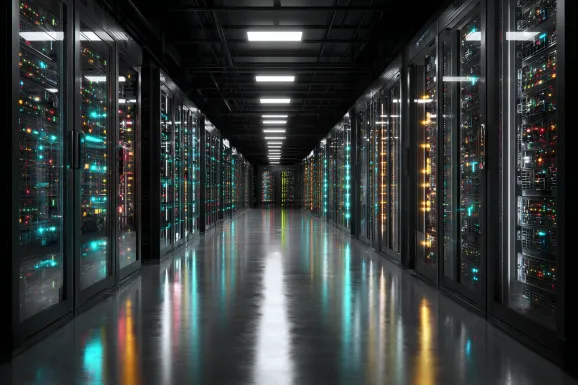
How Equinix & Solidigm See Evolving Workloads Reshaping IT
Once defined by monolithic architectures and predictable workloads, today’s enterprise data center strategies are shaped by the explosive rise of AI, the realities of hybrid multicloud, and the mounting pressure of regulatory and efficiency demands. I recently spoke with Glenn Dekhayser, global principal technologist at Equinix, and Scott Shadley, leadership marketing director at Solidigm, who shared their perspectives on how enterprises are adapting, and what it will take to succeed in the years ahead.
The conversation began with an important insight on data center infrastructure from Glenn, who noted that AI has “10x’d” hybrid multicloud architectures. As he explained, organizations are grappling with where to deploy AI workloads—cloud, GPU-as-a-service, on-premises, or edge. As those workloads move to production, they’re driving a fundamental shift toward dense power solutions and liquid cooling as enterprises seek to control costs and performance.
But the real transformation is in how organizations think about data itself, with “data-centric” strategy, which while complex in execution, comes down to a simple idea. “Whatever you’re doing, creating value starts with your data,” said Glenn. For enterprises trying to extract new value streams out of data, that means now workloads come to that data, rather than the reverse. Enterprises are creating entire data marts to reflect the change that data no longer has one-to-one relationships with applications, and instead, multiple applications access shared datasets.
This centralized data approach addresses the reality that while workloads are relatively easy to deploy and orchestrate, datasets carry constraints: they’re slow to move, require governance, and face compliance and sovereignty requirements. In response to these challenges, Glenn said he counsels customers to create an “authoritative core,” one copy of active datasets on equipment you control in locations you can access.
This core, of course, must be balanced with the ability to project data where it needs to be for optimal governance, compliance, cost, and performance. That could be in public clouds, at the edge, or in the core data center. Many enterprises, however, “Are starting to realize they’re not necessarily set up to take advantage of all those places,” Glenn said. “And if their data architecture...[isn’t] ready to accommodate this mobility, they’re going to find themselves at a competitive disadvantage.”
As organizations work to upgrade their data architecture to avoid such a disadvantage, data center infrastructure technology advancements are keeping pace. Scott explained how storage technology in particular is evolving to meet the needs of new data center strategies. Large capacity drives help enterprises keep data close and store more while using less power, while performance drives enable fast work with the data at hand, so storage doesn’t become a bottleneck. As he summarized, “A modern architecture of flash tiering, flash plus hard drives, is becoming even more and more valuable.”
When asked about the one question enterprise data center managers should consider that they weren’t thinking about five years ago, both experts converged on a theme: architectural flexibility for unknown future requirements. Scott emphasized not just focusing on capital expenses, but considering operational expenses and building systems with five-year operational efficiency in mind. Glenn emphasized the unknown, saying he often asks organizations how they are “architected for change” in a world where the next transformational service provider could emerge from completely unexpected origins.
The conversation culminated in an analogy: if the best time to plant a tree was 50 years ago, the second-best time is now. For enterprises sitting on large datasets in public cloud environments, the cost and complexity of data mobility only increase with time. For organizations that aren’t yet “architected for change,” the time to remedy that is now, not in one to two years when their data lake will be even larger, and therefore more difficult and more expensive to move.
The TechArena Take
The enterprise data center conversation has evolved from optimizing known workloads to architecting for unknowable futures. Equinix and Solidigm’s insights reveal that success increasingly depends on maintaining data sovereignty while preserving access to innovation. Organizations that establish authoritative data cores with agile connectivity to diverse service ecosystems today will be positioned to capitalize on tomorrow’s transformational opportunities, whatever form they may take.
CelLink PowerPlane: Flat Power for AI Server Racks
Innovative power delivery unlocks a shift in data-center design. CelLink's PowerPlane routes thousands of amps in a flat, flexible circuit—cutting cabling and accelerating AI factory builds.

Ventiva Brings Innovative Solid-State Cooling to the AI Data Center
CEO Carl Schlachte joins TechArena at OCP Summit to share how Ventiva’s solid-state cooling—proven in dense laptops—scales to servers, cutting noise, complexity and power while speeding deployment.