
Welcome to
the Forum
Engage innovators and practioners on the edge of technology advancement.

.jpg)



img.jpg)




.webp)
The Connectivity Broker for the AI Era: AlphaWave Semi
High speed connectivity is an often-overlooked element of building a sound strategy for AI training and inference at scale. AI supercomputers, built on the architectural foundations of high-performance computing, rely on masses of interconnected servers functioning as one logical system and sharing work across nodes towards a common objective. NVIDIA saw this key technology as a strategic element of their strategy when purchasing Mellanox and integrating InfiniBand into their silicon portfolio. But where does that leave other silicon logic players and customers that want another solution outside of NVIDIA’s InfiniBand solutions? Enter Alphawave Semi, a silicon leader known for connectivity solutions from high-performance IP to custom silicon and chiplet delivery. Alphawave has engaged with the TechArena in the past to discuss their broader portfolio, but I was delighted to talk to their CTO, Tony Chan Carusone, at the AI HW and Edge Summit in Santa Clara last week to discuss their strategy and what they’re seeing in the market as AI adoption broadens across cloud service providers and into the enterprise.
There are a few key trends to look at when considering AI infrastructure adoption. The first is that AI is calling for customers to consider alternative architectures and in doing so adopt a CPU + Accelerator strategy for compute capability. Customers are also becoming savvier at considering custom solutions with adoption extending more broadly than the historic confines of the world’s largest cloud players. Finally, chiplet architectures are shifting from something that large silicon providers deliver as proprietary to those that are enabled by an industry standard such as the Universal Chiplet Interconnect ExpressTM. All of these trends support Alphawave Semi’s business strategy and position them well for growth. This started with Alphawave’s leadership in connectivity IP, followed by their acquisition of OpenFive which completed last year. This acquisition of custom silicon capabilities and interface IP has transformed the company into a vertically integrated semiconductor supplier, and nearly doubled Alphawave Semi’s connectivity IP portfolio across 5nm, 4nm and 3nm solutions at the time with key technology squarely focused at AI requirements.
Alphawave Semi adds to this with their “spec-to-silicon” engineering prowess to deliver application-optimized chiplet-enabled custom silicon configurations for customers. Blending up to 112Gb SerDes, PCIe Gen6.0, CXL3.0, HBM 3.0, and power-performance-area optimized Arm and RISC-V processor subsystems as examples, the company can deliver the leading-edge SOCs to their hyperscaler and data infrastructure customers, that are needed to keep pace with the surge in data-intensive applications like generative AI. Moreover, their deep industry experience, key partnerships and ecosystem collaborations provide confidence in moving from ideation to custom solution delivery with speed.
Where things get really interesting to me is with the advent of open chiplet configurations as this accelerates Alphawave IP into heterogeneous solutions. Tony Carusone noted that Alphawave Semi has positioned itself well for this broader industry trend being on the foundations of industry standards setting and building technology prowess with things like advanced 2.5D packaging that will enable Alphawave Semi to work with other industry leaders as a connectivity chiplet supplier.
When one considers the strong demand for alternative AI silicon in the market, an independent supplier like Alphawave Semi becomes even more interesting as they collaborate with multiple vendors to deliver core connectivity capabilities in the most advanced process nodes. Moreover, their customers can be assured that their custom chip and chiplet solutions remain proprietary. As Tony stated in our conversation, “Just the ability, to leverage our industry leading connectivity IP and silicon offerings across the full spectrum of solutions allows us the flexibility to work with some of the biggest players in AI and meet them wherever they're at to help them solve problems in whatever way makes most sense for their specific AI workloads and applications.” In my view, this summarizes why Alphawave Semi is perfectly positioned to take advantage of the massive growth in AI infrastructure deployments expected over the next several years. Watch this space for more updates regarding Alphawave, connectivity, and the demands for more silicon capability to fully unleash the power of AI.

Lemurian Labs: A Robin Hood for AI Access
One thing you notice when you talk to Jay Dawani is that when he sees a challenge that’s important enough, he actually takes it on himself to solve it. This was made clear when Jay delivered the how to for coding AI algorithms based on a foundation of high school math to democratize access to AI developer skillsets, and it’s clear again with Lemurian’s strategy to redefine the mathematical foundations of AI and deliver more performant and efficient computing solutions.
With all the coverage on AI in 2023, one would need to be hiding from technology to not understand the size and urgency for demand of AI infrastructure. Today, however, AI training capabilities are locked within the largest of cloud providers due to limitations of access to the compute scale required to fuel training and the developer prowess to code AI effectively. The need for an alternative architecture is drawing the investor community to lean forward into AI silicon startups like Lemurian and customers to lean forward into consideration of alternative solutions.
Lemurian’s approach is rooted in silicon innovation but starts arguably even more foundationally in new math for AI. In our interview Jay described previous math models as great for silicon but not necessarily ideal for developers calling out INT8 as a prime example of an approach that challenged developer effectiveness.
Lemurian’s approach is rooted in logarithmic innovation. Jay explained, “We went back to a really old idea. Log number systems. It's the holy grail of number systems that if you can make a purely log link format work, and it's a 250 year old math problem. We came up with a way of actually making addition in a log format work, and we've developed multiple types, all of them, two bits to 64 bits, to stack up against floating point. So pound for pound or bit for bit, this thing has better precision, dynamic range and signal to noise ratio. This thing wins all day long.”
If you can re-map the number system that silicon uses to calculate, you can arguably achieve a Moore’s Law like increase in performance, something that AI sorely needs to break through with the compute efficiency required. In Jay’s presentation at the conference, he argued that the combination of accelerator silicon innovation, software improvement and number system advancement could yield as high as a 20X performance leap which explains why his sessions at the conference drew standing room crowds. He backed that up further showcasing eye opening simulations of 11,357 inferences a second for BERT Large and 119,278 inferences a second for ResNet50 based on a single node configuration. To put this in perspective, if these numbers hold they’ll beat NVIDIA’s A100 today which is what is widely deployed in the market.
So what is TechArena’s take? There are absolutely AI inferencing challenges at scale that require acceleration. Facebook’s workloads come to mind requiring nimble acceleration to meet latency requirements from users. While CPUs will remain the standard for inferencing performance efficiency, acceleration will continue to gain inroads for workloads that make sense opening a door for vendors like Lemurian. If Lemurian’s number system gains traction with developers the opportunity for the company will scale significantly, and this is where we’ll be watching most acutely as this exciting area of the industry progresses. For now, I love that Jay and team are challenging the status quo and stating emphatically that a tool as powerful as AI requires new ideas for democratic delivery. I’ll be watching what comes next from this exciting startup.


Connectivity for the AI Era with Alphawave Semi’s Tony Chan Carusone
TechArena host Allyson Klein chats with Alphawave Semi’s CTO Tony Chan Carusone regarding the unique opportunity for connectivity innovation to fuel the era of AI and why Alphawave is perfectly poised for IP, chiplet and custom solution delivery.
Ushering in a New Era of AI Silicon with Tenstorrent’s David Bennett
TechArena host Allyson Klein chats with Tenstorrent’s David Bennett about the company’s vision for RISC-V + accelerator solutions to usher in a new era of AI compute and how customers are hungry for alternatives including custom designs.
A Mathematical Revolution in AI with Lemurian Labs CEO Jay Dawani
TechArena host Allyson Klein chats with Lemurian Labs co-founder and CEO Jay Dawani about his vision for a mathematical revolution in AI and how his company plans to change the game on AI performance.

A Mutiny of AI Silicon Innovation at AI HW and Edge Summit
Last week, I was delighted to chat with Nidhi Chappell, Microsoft’s GM behind delivery of AI supercomputers, on her team’s journey in architecting the infrastructure that has unleashed Chat GPT to the world. Imagine for a minute the awesome opportunity and responsibility in delivering the compute capability to unlock generative AI for the world. Imagine first seeing Chat GPT before everyone else and knowing you’ll be sharing it with the world on the supercomputer you’re designing and deploying very soon. This is what Nidhi and her team at Microsoft have delivered. What Nidhi shared about this experience was also insightful regarding the broader moment we’re standing in right now. As she described leveraging her background in high performance computing to build AI training supercomputers, one thing she said stood out to me. Her team is utilizing hundreds of thousands of GPUs to train their generative AI solution that will likely transform every industry on the planet, re-architect how we look at work and societal constructs, and potentially reshape how governments address the great divide between those who thrive in the era of AI and those who struggle to survive. Those GPUs run in buildings that consume more power than entire towns, and are as rare to find as Willy Wonka’s golden tickets. We’re at a moment where the most powerful innovation that humans arguably have ever created is resting in the hands of one company…NVIDIA…to supply a few companies, including, of course, Microsoft, racing with Google, Amazon, and a few others, to control the power of AI engines for the world.
Yesterday’s publication of Elon Musk’s biography delivers a stark warning about the consolidation of power to one individual or company and what it means to society at large. I think even leadership within the industry stalwarts that can afford building massive AI compute engines would argue that a thriving AI industry vibrant with competition and diffuse in power is good for all of us. Nidhi talked at length about Microsoft’s own vision of responsible AI development and delivery aligned with AI serving as a co-pilot to human innovation aligning well with the company’s broader reputation for responsible use of technology. But how do we get to this vibrant future? To find out, I traveled to Santa Clara to the AI HW and Edge Summit, featuring a who’s who of AI silicon innovators. This event offers the perfect opportunity to assess the state of innovation of AI silicon. The lineup of speakers, sponsors, and attendees confirmed that the broader industry is hungry for alternatives for data center and edge AI implementation.
What is driving this hunger? GPU supply constraints have been well documented, but other influences, such as power consumption in barriers to developer engagement, are creating demand for alternative architectures. Today's data centers consume over 3% of the world’s electricity, and some forecasts predict that AI will scale compute energy demand to upwards of 20% of global consumption. GPUs are literally becoming the Hummers of the data center before our eyes. Can we afford to rely on this power-hungry architecture at a time when the world’s climate crisis is peaking? Will this reliance on massive electricity further consolidate control of AI to those who can not only afford the infrastructure cost, but the utility bill?
Organizations are also challenged in finding AI talent with true knowledge of training algorithm and framework development. How do we ensure that AI can be democratized, and does architectural choice including custom silicon and chiplet innovation aid in broadening the opportunity for AI innovation?
This week, I’ll be exploring these questions with three companies challenging the AI power dynamics, including Tenstorrent, the Jim Keller led startup delivering highly scalable RISC-V + ML accelerator solutions, Lemurian Labs, a company founded in robotics but delivering new acceleration solutions for AI from data center to edge, and Alphawave Semi, a semiconductor IP engine rooted in the connectivity and chiplet solutions required for AI innovation. Collectively, I expect they’ll provide insight on the state of broad industry delivery of compelling alternatives to GPUs. Watch this space for insights from the conference, and, as always, thanks for engaging. - Allyson
Unleashing Generative AI for the World with Microsoft’s Nidhi Chappell
Allyson Klein chat’s with Microsoft GM Nidhi Chappell about her team’s amazing journey delivering the compute power to train Chat GPT and integrate generative AI power for the world.
Exploring the Birth of the Universe with the NASA Webb Telescope
TechArena host Allyson Klein sits down with NASA’s Matt Greenhouse to discuss the Webb telescope project, a mission he has been working on for decades, and how it will shape our understanding of the birth of the universe, exoplanets, and potentially life beyond Earth.

The Future of VMware: Going Down the Rabbit Hole at VMware Explore 2023
VMware: A company with a storied history that dates back to the very definition of virtualization and a darling of enterprise IT for decades. But since its pre-pandemic heyday under the leadership of Pat Gelsinger, VMware’s future has come into question. Many consider the company’s multiple investments in unproven technologies, cloud service provider delivery of alternative hypervisors, and the departure of Pat for Intel placing the future of VMware at risk. With the acquisition of the company by Broadcom looming (and another hurdle to that acquisition passed in the past few days), what will VMware become in the coming years, and what specifically does Hock Tan and the Broadcom team see as the true value of VMware’s IP portfolio?
To learn more, I headed to Las Vegas and to the TechField Day Extra event at the Wynn hotel. There, the VMware team detailed the new NSX+ offering including NSX+ policy management, NSX+ intelligence, NSX+ network detection and response, and NSX+ ALB cloud services. NSX+ is obviously the latest iteration of VMWare’s successful NSX offering, a shining star that has grabbed a hold of solution leadership beyond the VMware core hypervisor business. NSX+ is also likely at the center of Broadcom’s interest in the company given it’s squarely in network. So what does NSX+ deliver that is new? According to the VMware team, multi-cloud security policy configuration and management with a single pane of glass view on management of distributed firewalls, gateways and IDS/IPS policies are at the center of innovation.
The VMware team demonstrated the NSX+ Policy Management capability at work allowing adherence to corporate security guidelines and enabling teams to operate seamlessly within those guidelines. The demo provided walked through a step by step of setting up subnets within the VPC, associating VNICs to those subnets, and showcasing that teams have no access beyond the VPC intended ensuring compliance to broader corporate security policies.
Another key feature that caught my attention was the NSX ALB controller cloud service enabling multi-cloud load balancing through a single controller cloud service. When asked what the difference was between this core capability and existing management schema, the VMware team clarified that this offers a SaaS management option as an alternative to traditional in house management which was termed “disconnected”. This will be available to on-prem instances today and then extending to VMware cloud and public cloud instances over time.
But VMware saved the most interesting feature, at least from my perspective, for last. They’ve integrated centralized multi-cloud analytics with NSX+ intelligence. What does this provide for administrators? It delivers a scalable and centralized data platform to not just view historical data but also amps security oversight and delivers behavioral threat analytics. VMware also talked up their use of ML to classify workloads and oversee other rudimentary data collection, and I expect they’ll expand this capability over time. Will this be used by administrators vs. unique network security tools? I could see integration with other security tools, but I’m dubious that NSX+ alone will provide the requirements that enterprises require.
So where does this leave VMware? I think the key takeaway is that core innovation is still being delivered from their engineers, and NSX+ certainly will be part of the VMware of 2024+. Given the heritage of VMware within enterprise, I expect core hypervisor use to bias to VMware moving forward within enterprise deployments. But future innovation in the broader industry squarely biases towards cloud native workload management, and the innovation conversation in my opinion has shifted from VMworld to the likes of Cloud Native Con and the CNCF community, for example. And with Broadcom’s acquisition likely to close imminently, it does make a VMware Explore 2024 a real question at least in its current definition. As always, thanks for engaging.
Inclusive Design with Project Inkblot’s Jahan Mantin
TechArena host Allyson Klein chats with Project Inkblot co-founder Jahan Mantin about what it means to be a designer and how to build inclusive design practices.
Scalable, Open-Source Authorization with Cerbos
TechArena host Allyson Klein talks with Cerbos co-founder and CEO Emre Baran of the importance of authorization solutions and why he founded Cerbos to deliver scalable code that developers can seamlessly integrate into cloud native applications.
Cloud to Edge Data Observability with Calyptia’s Eduardo Silva Pereira
TechArena host Allyson Klein chats with Calyptia co-founder and CEO Eduardo Silva Pereira regarding how his company grew from the origins of the Fluent Bit open source effort favored by the largest cloud providers to deliver a full featured commercial solution for data observability.
Technology’s Role in the Fight Against Zootonic Pathogens with WSU’s Pilar Fernandez
TechArena host Allyson Klein chats with Washington State University professor Pilar Fernandez about how her team’s battle for better information about the spread against Lyme disease and other zootonic pathogens and how technology is arming the public with better data to keep individuals safe with this growing epidemic. Dr. Fernandez and fellow scientists have tapped advanced analytics and AI to track tick populations and enable proper identification of tick species as part of a larger community effort to fight this growing disease.
Infrastructure Innovation to Fuel the Distributed Computing Landscape with Iddo Kadim
TechArena host Allyson Klein chats with TechArena’s own technology strategist, Iddo Kadim, about the growing distribution of compute environments and infrastructure requirements to fuel continued innovation.
Disruptive Security Advancement with VectorZero
TechArena host Allyson Klein chats with VectorZero CTO and co-founder Sean Grimaldi about his extensive experience fighting bad actors to protect the nation’s security and how his learning at the CIA has informed his approach to elimination of attack vectors at VectorZero.

Confidential AI with Beekeeper
TechArena host Allyson Klein chats with Beekeeper Founder Bob Rogers about how his team has broken through the challenge of training with confidential data and the broad applications this innovation enables.
Edge to Cloud (to Edge) on the Biggest Stage on Earth
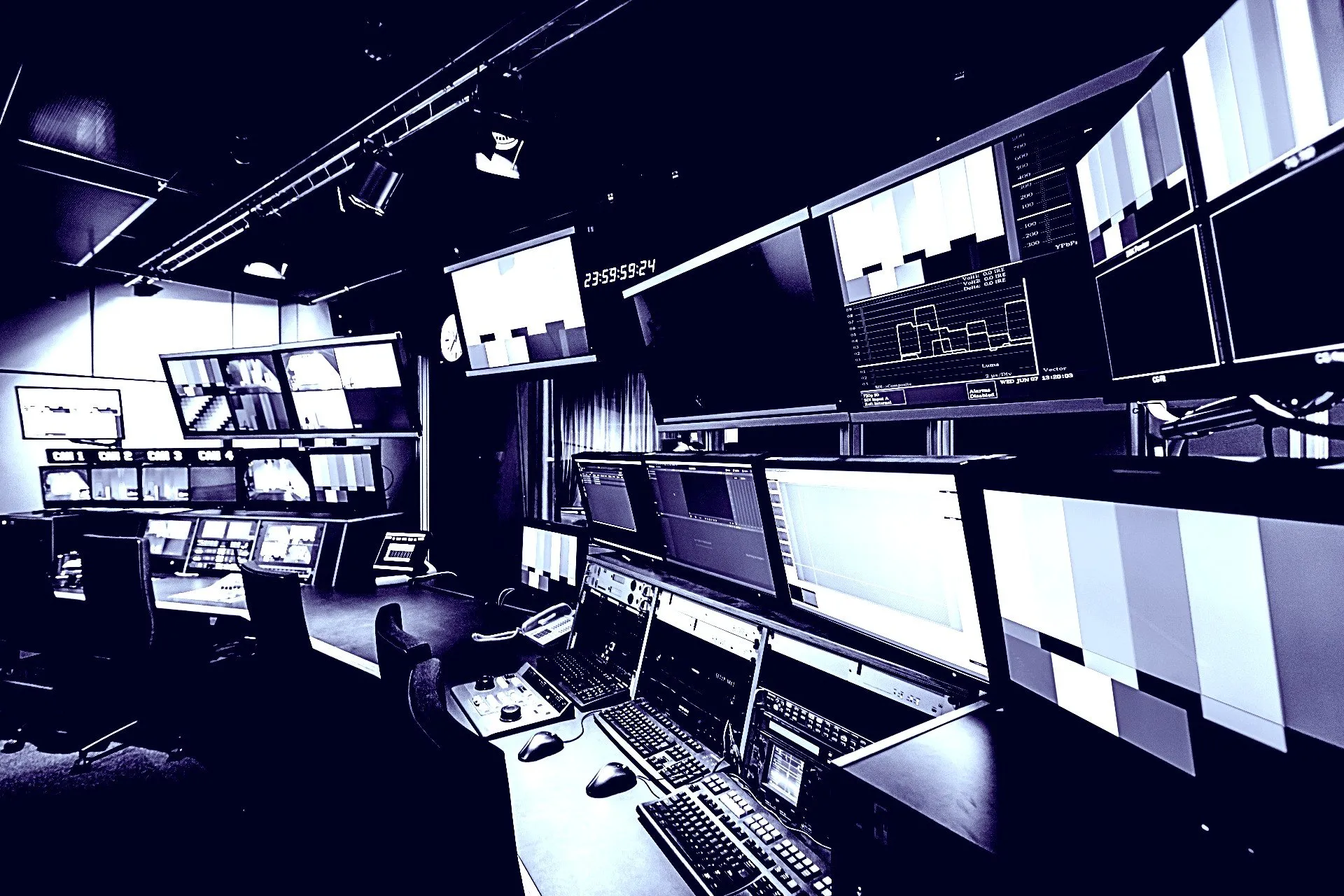
Many of us love to watch sports on TV or streaming on a device of choice. Several of Allyson’s recent conversations on Edge lately mentioned CDNs as components of a transforming edge. But her recent conversation with @Carl Moberg of Avassa, made me think of the other edge in the broadcast chain. While we, in front of our devices and served by CDNs, represent the consumption edge, there is a production edge, which is also transforming at a digital pace.
In the previous 3 years I had the immense fortune to work as part of Intel’s Olympics sponsorship team on deploying innovative technology solutions on the greatest possible stage. One of our focus areas was on enabling transformation strategies of the broadcast infrastructure. Among other things we helped bring 5G based live sports camera coverage and virtualize live production infrastructure. You can read about some of that work here: OBS CTO Sotiris Salamouris discusses 5G, Virtualized OB Vans and other innovations.
In any major sports event, there is usually a host broadcaster. The host broadcaster produces the original content – live, replay clips, highlight clips, and archive, and feeds it to a network of rights holders to distribute to their respective audiences (us). Typically, there is a production studio in the event venue, often a broadcast truck. The various camera streams are aggregated to that studio for the live production. The produced content then gets distributed out often through a central broadcast center first, which is geographically close to the event venues and then from there to global audiences by satellite, telecommunication networks, internet, etc. And then eventually, it arrives at our devices, through the rights holders and CDNs.
The distribution side of this chain joined the internet age a long time ago. It leverages IP networking and much of it has been transforming, along with the rest of the networking world, to software applications running on standard ICT equipment. For example, transcoding functions that used to be implemented in fixed function appliances are largely done now in software running on standard servers, with or without dedicated accelerators. But the production side of this chain has been transforming in that direction just in the last few years.
Video processing in real time is not for the faint of heart. It involves very large amounts of data (streams of high-resolution video frames, precious pixels that must be used), subject to very stringent timing requirements. Manipulating several such streams simultaneously in real time as the producer switches camera views, graphics are overlayed, replay clips are inserted and so forth places very high demands on the underlying infrastructure. Indeed, even today most venue production setups involve tightly integrated bespoke fixed appliance devices.
Essentially, these are embedded systems, made up of embedded subsystems, that are specially put together for the event, or event type. Different sports (e.g., athletics is different from basketball is different from car racing) and different production standards (e.g., pro league vs. DIII college league) require their own specific configuration. If you peel back the sheet metal from many of these fixed function appliance subsystems, you’ll see that they are usually implemented these days as “standard” software bundled together with a “standard” server. But they are tightly integrated and sold and operated as black box appliances.
Historically, video infrastructure used bespoke network protocols and infrastructure. But in the last decade of so, this network infrastructure has been moving to IP with the advent of standard like SMPTE 2110. This enabled the IT network infrastructure makers like Arista, Cisco, Juniper, Mellanox (now Nvidia) and the likes to offer their very high-speed networking capabilities in this market. Now, with appliances that are really software running on servers and networks that are just like Cloud/IT networks (with a few added features) the sheet-metal can start falling away…
Okay, so where does this all lead?
For some cases it could mean that only cameras need to be in the venue anymore and everything else can be in a cloud. We all read about the boom of remote production when events resumed during the COVID pandemic, but on-site staffs needed to be minimized. Typically, these are cases where live broadcast requirements can be relaxed. Or where the complexity of production is low, so only a limited number of raw feeds are needed.
Many other cases require fully functional in-venue production capability. This could be to ensure that high quality production can take place even in cases of catastrophic network failure between the venue and the broadcast center (or cloud). It could also be because of the complexity of the production scene. E.g., the number of simultaneous cameras and feeds and the corresponding cost of network to transmit them all live to wherever the production takes place. Or it could be because of the amount of on-site usage of those feeds. E.g., for in-venue audience engagement, for replay and adjudication, or to enable rights holders with their own incremental production on-site.
And that’s where the different considerations of far edge (venue), broadcast center, and cloud come into play as described in Carl’s and Allyson’s conversation.
· The production setting in the venue – usually a truck or a basement room, is likely to be quite constrained in space, in energy and cooling capabilities, in the available HW infrastructure, etc.
· The cloud might be too “far” to move all production there, as mentioned above. Not to mention the networking costs to do so in large scale events.
· The broadcast center is in goldilocks mode. It can typically account for quite a bit of scale, but it can’t be an unlimited ocean of available infrastructure. The cost overhead to accomplish that would likely be prohibitive and hard to justify.
As this transformation is taking place, I expect it will require developing some new methods and heuristics about what fits where and how to decide it. Processes and applications may be repartitioned between edge, broadcast center, now that they are “liberated form the sheet metal”. Orchestration will gain a whole new meaning as well, as the same application would need to abide by completely different rules depending on where an instance of it is deployed and meet different infrastructure configurations in those different locations.
It will take time to mature into these new methods. But the outcomes are certain to be even more sports to watch in more exciting ways, and much improved operational models for content makers.

Ampere Throws the Sustainable Gauntlet
Ampere Computing gathered data center leaders in the bay this morning to throw a gauntlet at the future of cloud computing and its strategic role in our collective sustainable future. Ampere’s CEO Renee James introduced the discussion as an “old-fashioned industry convening” on the challenge of continuing to scale performance and capacity of compute capability within a finite power and sustainability footprint. James pointed out that the industry has relied on scaling power to address requirements for more performance with data centers contributing approximately 3% of global CO2 emissions. With energy costs and therefore cost per compute rising rapidly and becoming an increasing impedance to achieving scale, James’ goal with Ampere is to deliver compute performance below the efficiency frontier. She’s embracing the technology innovation that the semiconductor industry has been known for for decades in a different fundamental direction.
James was joined by an all-star cast led by Oracle Chair Larry Ellison who discussed how his OCI innovation is investing across Nvidia, AMD and Ampere to deliver compute performance to fuel AI era compute requirements. Oracle announced earlier in the day support of Ampere instances on OCI cloud for the Oracle database as well as delivery of support for on-prem deployments. This signals a huge win for Ampere and Arm architecture for a foundational enterprise workload. Ellison stated that they made this move because “x86 architecture is coming to the end of its life.” His vision focuses on new levels of balanced computing with emphasis on increasing performance of data movement to feed CPU and GPU resources and delivering this within constrained power limits. He went further stating that Ampere allows OCI to double compute within the same power envelope.
James was also joined by Neil MacDonald, EVP and GM of HPE Compute. HPE and Ampere shook up compute offerings earlier this year at OCP Summit Prague with a joint announcement of Ampere powered HPE platforms which you can learn about on this TechArena interview. Neil positioned this infrastructure today aimed for enterprises doing full stack cloud native workloads on prem and laid out the market opportunity targeting the >40% of servers which are more than 5 years old that consume 2/3 of the compute power in data centers today. This is an interesting value prop to contemplate. I don’t see the n set between antique server infrastructure and full stack cloud native design being remotely close to 100%, but there’s no argument that the enterprise is indeed embracing cloud native designs and maintaining some of these workloads within their own infrastructure. It’s not surprising that HPE is delighted to have an architectural choice to discuss in their offerings, and time will tell if this is an industry and investor message from HPE leaders or a bona fide market move from the company.
The folks at Ampere also made a terrific decision to include Andrew Isaacs, professor of climate change and tech, from UC Berkeley, in the discussion. Followers of the TechArena will know that we’re extremely bullish on tech and specifically data center compute’s strategic role in helping to address climate change as most recently discussed in our interview with Jonathan Koomey and Ian Monroe. Andrew’s view was similar to Jonathan and Ian’s – corporate action is necessary to change our climate trajectory, and computing’s imperative to change.
My thoughts on what was laid out today? I’m delighted to see Renee and her team focus the industry on the opportunity for efficiency vector innovation, and with friends like Oracle and HPE, Ampere will gain attention from both customers and competitors. It’s the kind of industry leadership I expect from a protégé of Andy Grove, and Renee didn’t disappoint today. We’ve already seen this leadership have impact with AMD’s recent introduction of high core count EPYC processors to thwart Ampere core leadership, and I expect Intel to follow suit in due time. I also expect other cloud providers who have already embraced Ampere instances to follow Oracle’s lead and grow offerings for Ampere powered cloud native offerings. I even can buy leading enterprises dipping into Ampere powered deployments.
Ultimately, I don’t know if I completely buy Ellison’s statement that x86 is at the end nor do I want to crown Arm the fait a’ complit champion for the future quite yet. I think the future is much more complex with CPU, GPU, other accelerators and open frameworks for chiplet designs defining the compute foundation that best serves customer requirements. What this move from Ampere represents is an accelerant of open market innovation where broad industry focus will improve both compute efficiency and choice of customer offerings. And with that, customers, and all of us, ultimately win. As always, thanks for reading - Allyson

Getting Ahead of Generative AI with the CTO Advisor Keith Townsend
TechArena host Allyson Klein chats with CTO Advisor Keith Townsend about how enterprises should ready themselves for generative AI integration into their business opportunity.
Solving Climate Change with Jonathan Koomey and Ian Monroe
TechArena host Allyson Klein chats with leading climate researchers Jonathan Koomey and Ian Monroe to discuss their new book and how they're delivering a mandate to leaders to take action now.
Observability in the Era of Distributed Computing with cPacket Networks
TechArena host Allyson Klein chats with cPacket Networks CTO Ron Nevo about how observability has evolved for a multi-cloud to edge era and why his company is delivering four key components of observability solutions to customers.

[Not] the End of History
This is truly an amazing coincidence. My first blog on The Tech Arena is inspired by Allyson’s conversation with Lynn Comp.
Lynn used to be my manager at Intel some years ago. I owe Lynn a debt of gratitude. When she moved on from that role, she gave me advice (and supported me with a reference) that set me on a path to the final 7 years of my time at Intel, which were by far the most gratifying of my professional career so far.
We had many conversations on industry trends and strategy over the years. And so, hearing Lynn’s response to Allyson’s question on what’s different between the industry now and 10 years ago, I couldn’t resist the temptation to talk about “[Not] The End of History”. I hope you enjoy it, and please do let me know…
The Berlin Wall fell on November 9th, 1989. By the end of 1991 the Soviet Union had dissolved ending, a process started 3 years earlier. The cold war was over, and the US was the sole superpower left standing, thriving.
In the summery of 1989, Francis Fukuyama published his famous article “The End of History?”, which he expanded into the book “The End of History and the Last Man” published in 1992. Paraphrasing, the thesis was that the winning political and economic system has been established and that the future of competition will be “higher in the stack”. Well…
In March 2009 Intel launched its Nehalem based Xeon processor family. After fighting for several years to win back share from AMD, Nehalem was a winning product. And that’s an understatement. Among other things its timing and feature fit was perfect to win the virtualization hockey stick growth curve and ultimately established Intel’s Xeon CPU at the foundation of the cloud revolution. Within a couple of years, Intel had >95% market share in server CPUs. It seemed like “the end of history” for data center CPU wars and was all but clear who “the last man” was.
The signs were already there (just like in geopolitics of 1989) and today we see a very different reality.
- Intel’s execution faltered and AMD came back not just with competitive technology but also with credible and consistent execution.
- ARM based CPUs have finally started making headway in the datacenter space. After acquiring Anapurna Labs in 2015, Amazon launched the ARM based Graviton CPU and instances in 2018, thus legitimizing ARM as a data center architecture. Ampere has been making real headway as an ARM based datacenter CPU vendor.
- Nvidia established GPUs as an important architectural approach to accelerate various workloads and gained tremendous momentum, to say the least, with the AI boom.
- Application specific accelerators have been deployed for anything from AI (for example Google’s TPU, but of course numerous companies are developing and selling AI training accelerators), to media transcode (YouTube’s Argos), to infrastructure (IPU/DPU galore, storage specific examples, etc…).
History seemed to end again with the advent of cloud computing. “Everything” was going to “the cloud”, server and data center architecture became “the cloud”. And again, history starts again with edge, new optimization points, data affinity, etc…
So what comes next? I’m eager to see (and discuss) how “the edge” is going to impact infrastructure, architectures, technologies and products. The Edge is about diversity as opposed to uniformity, and deals in general with priorities and constraints that are quite different from the cloud.
How will the accelerator landscape evolve? I can imagine pooling use cases that make sense in some environments (perhaps cloud) but less so in others (e.g., edge). How will it resolve in the different environments between general purpose accelerators (e.g., GPU) and function specific ones?
How will innovations like CXL impact these different market segments? How will modularity impact cloud, edge, and other evolving deployment models? How will application architecture eveolve?
And how will evolving security and new workloads (I didn’t say AI much in this edition ??) impact all of the above?
So much to think about, write about, talk about and to do! History keeps marching on after all.
Phoenix Rising: The Future of CPU Innovation with AMD
TechArena host Allyson Klein chats with AMD's Lynn Comp about the changing landscape of CPU design and how AMD is poised to lead future innovation.


TechArena Edge 2023
The TechArena presents Edge 2023, Seven Strategies for Maximizing Organizational Return based on interviews with Arm, Avassa, Canonical, Cellnex, Dell, Future of Privacy Forum, Intel, MIT, Nvidia, Radware, Ribbon, Scale Computing, and Varnish Software.
A Breakthrough Sustainable Cloud Infrastructure Collaboration with Ampere and HPE
TechArena host Allyson Klein chats with Ampere CPO Jeff Wittich and HPE VP Peter Groth about their recently announced collaboration for cloud infrastructure optimized for compute sustainability.