
Subscribe to Our Newsletter
Read the latest in the world of AI, data center, and edge innovation.
.webp)
Global data center power demand is projected to rise 27% in 2026 to 132 GW, en route to roughly 290 GW by 2030, per recent industry forecasts.
In the latest edition of The Control Plane, guest Zane Ball, chief technology officer of the Open Compute Project Foundation (OCP), joined hosts Allyson Klein, CEO of TechArena, and Colin Brix, Vice President of Marketing at AMI, a Lattice company, to discuss the growth of open hardware and what Zane calls the upcoming “golden age of firmware.”
Zane spent almost 30 years at Intel, most recently leading its data center and AI engineering team, before retiring and joining OCP. OCP was founded 15 years ago after Facebook and other hyperscalers started designing their own servers and going directly to Taiwan’s ODM ecosystem for manufacturing. What began as a gathering of a few hundred people has grown into a community of more than 500 member companies collaborating across over 150 technical projects, grown to more than 10,000 attendees at OCP’s most recent global summit.
The conversation centered on why open hardware matters more, not less, as AI scales. Zane explained that AI’s tightly coupled nature, where chip design, model design, software, the data center, and the power grid all influence one another, creates real pressure toward proprietary, vertically integrated stacks. That approach pays off short term, he said, but grows costly once an operator needs to adapt to a different geography, climate, or energy profile.
As Zane put it, “Fragility is the reason proprietary solutions can be challenged.” Finding the right interface points is what allows competition and innovation to flourish both above and below them, he added.
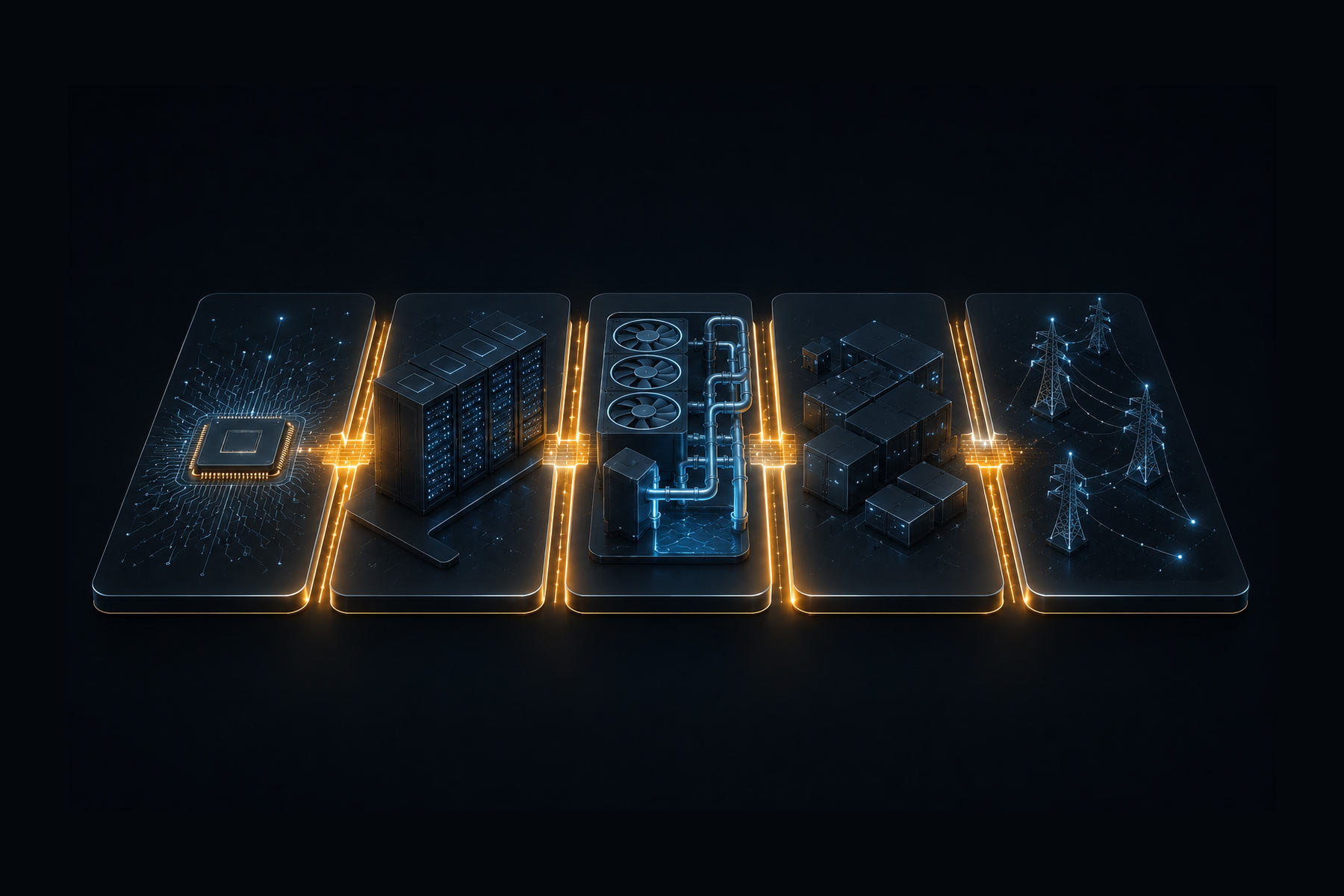
That thinking carries directly into what Zane sees as a defining shift for the industry: firmware’s rising importance. He said the industry is entering “a golden age of firmware,” driven by AI data centers that bring together battery energy storage systems, low-voltage DC power, liquid cooling units, and IT racks, all of which need to read the same telemetry and act in concert.
A major benefit of interoperable systems is improved reliability. “AI systems are not super reliable. With cloud systems, you can isolate every piece of the machine from every other piece. AI systems aren't like that. If one GPU goes down over here, it affects everything else. If you have better manageability, better firmware, and better collaboration across all these systems, guess what? You can build more reliable systems,” said Zane.
According to Zane, citing studies from the Duke University Nicholas Institute, if the power grid could curtail demand for just half a percent of the year, roughly 44 hours, close to 100 gigawatts of capacity that already exists in North America would become available today. This statistic illustrates the other big opportunity for open source. If data centers could flex their consumption during rare grid stress events, the industry could unlock enormous latent capacity without new infrastructure.
Colin brought the firmware vendor’s perspective to the discussion. AMI has spent 40 years managing the disaggregated hardware that makes platforms work, and the company is stepping out of a purely behind-the-scenes role.
“We’ve been this quiet player that just makes things work,” he said, adding that AMI wants to bring the voice of the end customer upstream, so reliability and security get designed in early rather than addressed after deployment.
Asked whether operators will start demanding open source firmware in their RFPs, Zane said many already do. Most cloud companies use open BMCs rather than proprietary manageability firmware, largely because they want visibility into the code running in their own data centers.
Not every layer needs to be open, he added. A BIOS configuring registers close to the silicon can reasonably stay proprietary, while the bigger opportunity lies in the layer above it, where firmware delivers security and manageability features across the whole data center. Taking inspiration from Robert Frost’s famous line ‘good fences make good neighbours’ which his old colleague Jim Keller often quoted, Zane said the goal is to build clear interfaces that let each layer of the stack innovate independently.
Zane’s conversation makes a clear case for open innovation in firmware. The bigger opportunity extends past the data center walls: if operators, chipmakers, and firmware vendors like AMI agree on the right open interfaces, the industry can unlock existing grid capacity, improve reliability, and avoid the fragility of fully proprietary stacks.