
Subscribe to Our Newsletter
Read the latest in the world of AI, data center, and edge innovation.
.webp)
Our next TechArena Data Insights comes live from Xcelerated Compute, where Jeniece Wnorowski and I had a chance to sit down with David Moehring, general partner at Cambium Capital and former CEO of IonQ, to unpack how quantum computing fits into the broader computing landscape, and why the real story is less about breakthrough moments and more about building entire ecosystems.
David has had a long and illustrious career working in quantum across academia, government and industry. His career began in academia, where he pursued a PhD in atomic and optical physics and quantum computing before moving into applied research at Sandia National Labs. From there, he transitioned into government, funding advanced quantum computing initiatives, and became the founding CEO of IonQ before his move to Cambium Capital.
That multidisciplinary background continues to shape how he evaluates companies today. “I found it very useful to understand the motivations of all of these different parts of the ecosystem,” he said, adding that it greatly informed how he looks at investing into quantum.
Cambium Capital is an early-stage venture capital fund that invests in advanced computer hardware, and we talked about their recent moves in investing in the total cost of ownership (TCO) of AI data centres.
Rather than chasing a single breakthrough, the firm invests across the compute ecosystem, focusing on improvements to be made in different areas. “We have companies that we’re looking at as part of our portfolio that work in power delivery, movement of data, embedded memory, and packaging across the ecosystem,” he explained, “because if you move just one of them forward, everything else is still backed up.”
This systems-level thinking extends to how Cambium evaluates startups. Technical depth is essential, but so is market readiness. “You just can’t have your one good technology and toss it over the fence and think other people are going to integrate it,” he notes. “You need to be very deeply technical in your field, but you also need to really understand where it comes in.”
When it comes to quantum computing, David is clear-eyed about both its promise and its limitations. The technology is not poised to replace classical systems; it will augment them. “It’s not that if you make quantum computers then classical computers or GPUs will go away because they really solve very different problems,” he said.
Instead, quantum systems will tackle specific classes of problems that are either infeasible or inefficient for classical architectures. This mirrors the evolution of GPUs and specialized accelerators, each designed for distinct workloads.
“There are jobs that just cannot be done by classical computing,” David explained, framing quantum as another layer in an increasingly heterogeneous compute landscape.
On the relationship between AI infrastructure and quantum computing, he envisioned both evolving in parallel, solving very different problems in the long run. That being said, he noted that classical computers will still be required to control quantum computers. Beyond that, foundational innovations in materials science and lasers are likely to benefit both domains.
Cambium’s investment strategy isn’t limited to headline-grabbing processors. The firm also has strong conviction in the new quantum investment vehicle, 55 North, where David is the Board Chairman.
“There’s still a lot of hardware development that is needed, not just for the kind of the quantum processor itself, but the ecosystem,” David said.
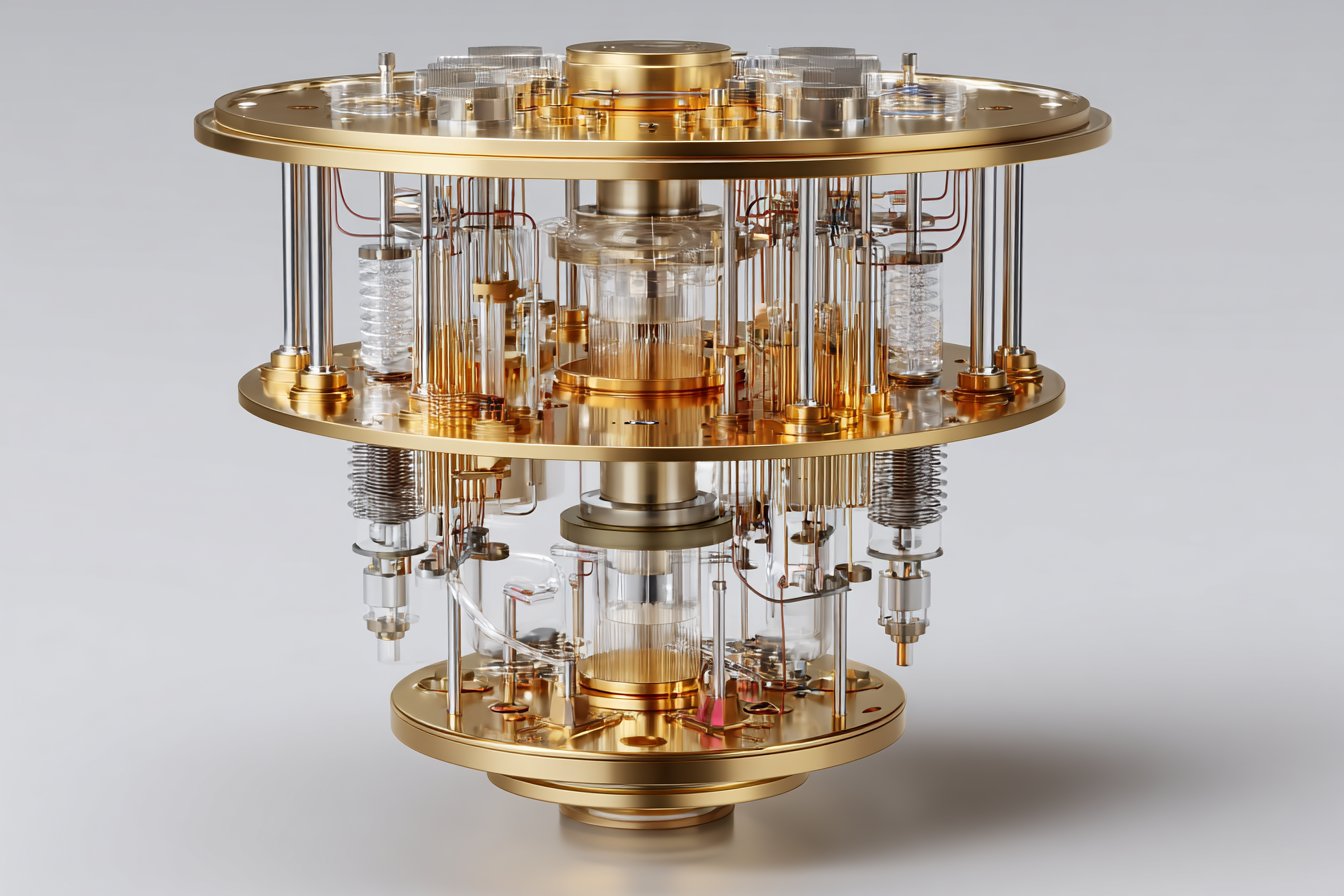
That includes everything from laser systems for atomic qubits to cryogenic infrastructure for superconducting systems, components that rarely make headlines but are essential to scaling the technology. This mirrors Cambium’s broader philosophy: meaningful progress happens when the entire stack evolves together.
Despite growing interest, quantum computing remains widely misunderstood. Even quantum physics itself can be very counterintuitive, and many physicists struggle with some of the rules. That gap between theory and practical understanding often fuels unrealistic expectations. His best advice? Talk to the experts.
Looking ahead, David points to a specific category where quantum could first demonstrate real-world value, the field of biopharmaceuticals. “We strongly believe that’s where you’re going to see first real kind of advantage from quantum,” he predicted.
At the same time, he remained cautious about overblown claims, adding that some of the news was driven more by hype than understanding.
David built on his years of experience working on quantum in different capacities to deliver a pragmatic take on where the field is headed. Our key takeaway was that along with the big-ticket processors, investments need to focus on building the underlying infrastructure needed to keep quantum compute running, something Cambium Capital is keenly focused on. Pushing one piece of the puzzle without solving other challenges would only lead to bottlenecks being moved down the line.