Unlock Critical Insights from Top Tech Practitioners >> DISCOVER OUR voiceS of innovation program
GET CRITICAL TECH INSIGHTS > DISCOVER OUR VOICES OF INNOVATION PROGRAM
X

The AI Divide in 2026: Economic Wildfire and an Information Elite

December 10, 2025

As we enter 2026, the conversation around artificial intelligence (AI) is no longer just about automation or job displacement. There’s a new AI Divide that’s all about who gets access to meaningful, reliable information in an AI-powered world.

This divide is already reshaping the workforce, threatening economic stability, and creating barriers to reliable information. Let’s explore how these changes will define 2026.
We’ll Start to See the Impact of Job Loss

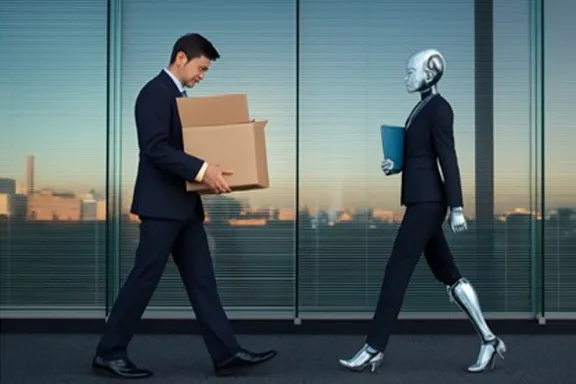
AI has long promised to handle tedious tasks, freeing up humans for more creative and strategic work. However, a divide is already evident in the workforce, where AI adoption is creating winners and losers.

Next year we’ll see a continuation of layoffs that are directly the result of the race to adopt AI. CNBC reports companies like Klarna, Duolingo, and Salesforce have stated that AI is taking over tasks formerly handled by now redundant staff. This is about cutting costs and redirecting funds to AI infrastructure.

This trend raises a critical question: is this a genuine evolution of the workforce or a new form of “AI-washing,” where companies use technology as a convenient excuse for traditional cost-cutting measures? Regardless of the motive, the consequences are real for the employees affected.

Since AI can impact workers in every sector, how many people will ultimately be affected? Yahoo Finance discussed a recent Goldman Sachs research paper that claims 6% to 7% of American workers will be displaced. They calculate that 6% would mean about 10 million jobs will be eliminated in the name of AI from the 170-million strong US work force. The scale of this transition will test our economic and social resilience in profound ways.
Will We Face the Great AI Wildfire of 2026?

The economic fallout from widespread job loss could cascade into other areas. Without careful management, the AI Divide could widen, leaving many behind.

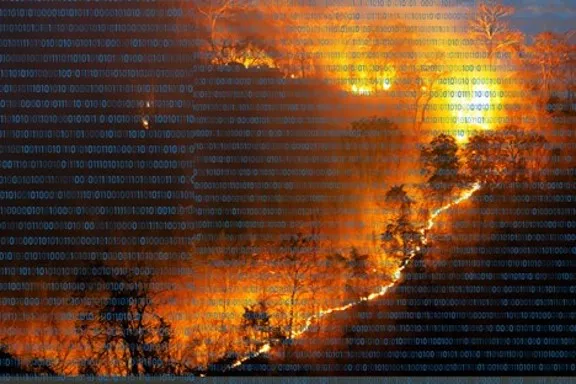
An interesting, if unsettling, analogy has emerged: comparing this potential crash to a wildfire. In this view, the disruption is a necessary, almost natural, event that will clear out old structures and allow for new growth. But there’s a fundamental flaw in this comparison.

Wildfires are often preventable. Ecological experts and Indigenous knowledge teach us that regular, controlled burns are essential for a healthy forest. Native people used “frequent, low-intensity fires” to strengthen crops, encourage wild plants to grow, achieve certain nut crops, and direct wild animals to graze in certain areas. These practices clear out underbrush and prevent the buildup of fuel that leads to catastrophic, uncontrollable blazes. Without this careful management, ecosystems are put at risk, endangering everything within them.

Like wildfires, the unchecked growth of AI could force us to accept devastating losses, leaving us to hope somehow a phoenix eventually rises from the ashes.

The New Divide: Gated Gardens of Information

Just as wildfires can devastate ecosystems, the rise of gated information threatens to create a new kind of inequality in the digital landscape.

We will begin to see a big shift in how we are able to access information. Currently, nearly everything published on the open internet is used to train AI models. As this continues, we may see a future where high-quality, real-time, and verified information becomes a premium commodity.

AI-powered public relations will dominate enterprise communications, shaping narratives with precision. In order to keep this data out of generative AI models, access to unfiltered, expert-driven data and insights will only be provided to vetted customers and promising sales prospects.

Those who are creating content will lock their data behind substantial paywalls. This will create a stark divide between those who can afford credible information and those who are left with AI-generated content of varying quality. Technical content will be sparse because the employees who created this information have been let go.

A similar but smaller shift happened after the dot-com boom. The gap in timely information led to the rise of blogging as a way to share information more freely.

In 2026, the stakes could be much higher. Companies that are brave enough to go against the grain and keep their technical content creators will have a competitive advantage.

Bridging the AI Divide

As we navigate 2026, bridging the AI Divide will require prioritizing human connection and equitable access to information.

The rise of AI doesn’t have to lead to mass unemployment and information inequality. It is important to understand what AI actually does so we can use it for the betterment of all society. That is my last prediction: AI will remain intentionally poorly defined, as tech leaders realize remediations such as grounding are misdiagnoses and we have no clear path to “artificial general intelligence.”

In the meantime, the rest of us need to turn our attention to planning some controlled burns before we’re taken over by an AI wildfire. One way to do that is to prioritize real, authentic human connection. Perhaps the communities we built and the things we taught each other using our blogs, videos, and podcasts have been training us for this moment. As technology increasingly mediates our world, never forget the power of our communities. Hopefully, we’ll get on track and that can be a prediction for 2027.

Subscribe to our newsletter.

As we enter 2026, the conversation around artificial intelligence (AI) is no longer just about automation or job displacement. There’s a new AI Divide that’s all about who gets access to meaningful, reliable information in an AI-powered world.

This divide is already reshaping the workforce, threatening economic stability, and creating barriers to reliable information. Let’s explore how these changes will define 2026.

We’ll Start to See the Impact of Job Loss

AI has long promised to handle tedious tasks, freeing up humans for more creative and strategic work. However, a divide is already evident in the workforce, where AI adoption is creating winners and losers.

Next year we’ll see a continuation of layoffs that are directly the result of the race to adopt AI. CNBC reports companies like Klarna, Duolingo, and Salesforce have stated that AI is taking over tasks formerly handled by now redundant staff. This is about cutting costs and redirecting funds to AI infrastructure.

This trend raises a critical question: is this a genuine evolution of the workforce or a new form of “AI-washing,” where companies use technology as a convenient excuse for traditional cost-cutting measures? Regardless of the motive, the consequences are real for the employees affected.

Since AI can impact workers in every sector, how many people will ultimately be affected? Yahoo Finance discussed a recent Goldman Sachs research paper that claims 6% to 7% of American workers will be displaced. They calculate that 6% would mean about 10 million jobs will be eliminated in the name of AI from the 170-million strong US work force. The scale of this transition will test our economic and social resilience in profound ways.

Will We Face the Great AI Wildfire of 2026?

The economic fallout from widespread job loss could cascade into other areas. Without careful management, the AI Divide could widen, leaving many behind.

An interesting, if unsettling, analogy has emerged: comparing this potential crash to a wildfire. In this view, the disruption is a necessary, almost natural, event that will clear out old structures and allow for new growth. But there’s a fundamental flaw in this comparison.

Wildfires are often preventable. Ecological experts and Indigenous knowledge teach us that regular, controlled burns are essential for a healthy forest. Native people used “frequent, low-intensity fires” to strengthen crops, encourage wild plants to grow, achieve certain nut crops, and direct wild animals to graze in certain areas. These practices clear out underbrush and prevent the buildup of fuel that leads to catastrophic, uncontrollable blazes. Without this careful management, ecosystems are put at risk, endangering everything within them.

Like wildfires, the unchecked growth of AI could force us to accept devastating losses, leaving us to hope somehow a phoenix eventually rises from the ashes.

The New Divide: Gated Gardens of Information

Just as wildfires can devastate ecosystems, the rise of gated information threatens to create a new kind of inequality in the digital landscape.

We will begin to see a big shift in how we are able to access information. Currently, nearly everything published on the open internet is used to train AI models. As this continues, we may see a future where high-quality, real-time, and verified information becomes a premium commodity.

AI-powered public relations will dominate enterprise communications, shaping narratives with precision. In order to keep this data out of generative AI models, access to unfiltered, expert-driven data and insights will only be provided to vetted customers and promising sales prospects.

Those who are creating content will lock their data behind substantial paywalls. This will create a stark divide between those who can afford credible information and those who are left with AI-generated content of varying quality. Technical content will be sparse because the employees who created this information have been let go.

A similar but smaller shift happened after the dot-com boom. The gap in timely information led to the rise of blogging as a way to share information more freely.

In 2026, the stakes could be much higher. Companies that are brave enough to go against the grain and keep their technical content creators will have a competitive advantage.

Bridging the AI Divide

As we navigate 2026, bridging the AI Divide will require prioritizing human connection and equitable access to information.

The rise of AI doesn’t have to lead to mass unemployment and information inequality. It is important to understand what AI actually does so we can use it for the betterment of all society. That is my last prediction: AI will remain intentionally poorly defined, as tech leaders realize remediations such as grounding are misdiagnoses and we have no clear path to “artificial general intelligence.”

In the meantime, the rest of us need to turn our attention to planning some controlled burns before we’re taken over by an AI wildfire. One way to do that is to prioritize real, authentic human connection. Perhaps the communities we built and the things we taught each other using our blogs, videos, and podcasts have been training us for this moment. As technology increasingly mediates our world, never forget the power of our communities. Hopefully, we’ll get on track and that can be a prediction for 2027.

Subscribe to our newsletter.

Transcript

Subscribe to TechArena

Subscribe