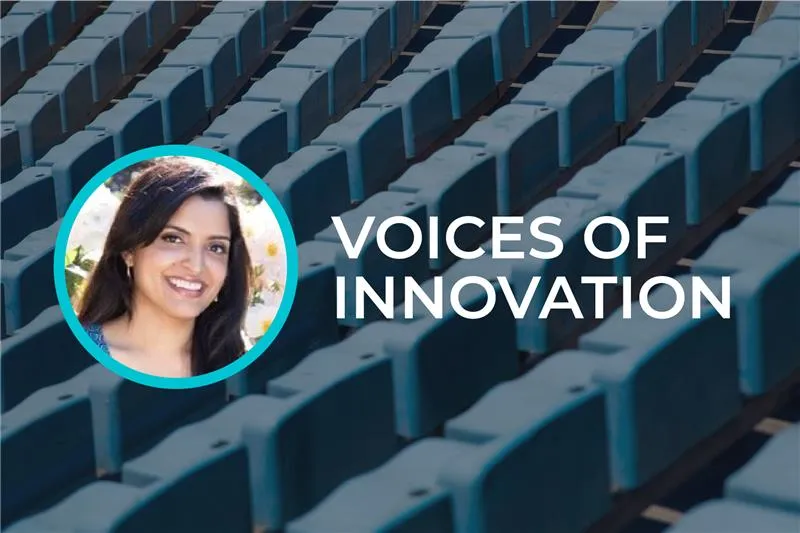
From Intel To Machani Robotics: Niv Sundaram On Human-First AI
Machani Robotics sits at an interesting crossroads in the AI landscape: part deep-tech startup, part experiment in what happens when machines are designed to actually understand how people feel. As Chief Strategy Officer and CTO, Niv Sundaram is helping steer the company’s work on companion humanoids powered by emotionally intelligent AI—systems built not just to respond, but to relate.
Niv’s perspective on innovation comes from hard-won experience. Over a 15-year career at Intel, she rose to VP & GM, helped define AI instruction sets now used in generative AI, and rebuilt cloud provider relationships that were “basically on fire” into multi-billion-dollar partnerships. In this introductory Q&A for one of TechArena’s newest voices of innovation, Niv talks about what she’s learned along the way, why the coolest innovations are often the simplest, and how emotionally aware AI could reshape everything from healthcare to mental health support.
1. Can you tell us a bit about your journey in tech?
I liked breaking things as a kid, so naturally I got a PhD in Electrical Engineering to break things more systematically. I spent 15 years at Intel rising to VP & GM, where I got to work on AI instruction sets that now power generative AI and built their Cloud Engineering organization from scratch. I turned some very unhappy cloud providers into partners generating billions in revenue, which was definitely a fun learning experience. Now I'm at Machani Robotics as Chief Strategy Officer and CTO, building companion humanoids with emotionally intelligent AI. Turns out after years of optimizing machines, I wanted to build ones that actually understand humans. We are going for Vision energy, not Ultron.
2. Looking back at your career path, what's been the most unexpected turn that ended up shaping who you are today?
Taking on Intel's Cloud Engineering when our relationships with major cloud providers were basically on fire. I thought I'd be solving technical problems, but it turned out to be about rebuilding trust and creating an entirely new type of skill set for the team. Also, the biggest lesson on “the customer is the point of the business” is something I continue to carry forward. Both these important life lessons have helped me a lot in my current role, where understanding human emotion isn't a nice-to-have, it's the product, and also in building something that the customer really wants vs. a science project.
3. How do you define "innovation" in today's rapidly evolving tech landscape? Has your definition changed over the years?
Early on, I thought innovation was about faster, smaller, better specs. Now I think it's about whether something actually helps people live better lives. If your innovation doesn't improve human wellbeing in a meaningful way, you're just making expensive toys.
4. What's one emerging technology or trend that you believe is flying under the radar but will have significant impact in the next two to three years?
Emotionally intelligent AI that can actually sense and respond to how you're feeling in real time. Everyone's obsessed with generative AI making text and images, but AI that understands when you're anxious, lonely, or struggling? That's going to transform healthcare, senior care, education, and mental health support. The companies building this responsibly now will define how humans and AI coexist.
5. When you're evaluating new ideas or technologies, what's your framework for separating genuine innovation from hype?
Three questions: Does it solve a real problem? Can it scale without falling apart? Does it actually help people? Most “innovations” fail at least one of these tests.
6. What's the biggest misconception you encounter about innovation in the tech industry?
Cool innovations don't have to be complex. It is super important to keep things simple. We are in a major hype cycle with AI, and it was cloud before. Our industry loves dramatic disruption, but sometimes the best innovation is making existing things work way better. Not everything needs to be a multiverse-level event.
7. How do you see the relationship between AI advancement and human creativity evolving? Are they competitors or collaborators?
Collaborators or helpers, but only if we’re intentional about it. AI is great at pattern recognition and scale. Humans have lived experience, emotion, and moral imagination. At our startup, we're building AI companions to support people, not replace human connection, and to celebrate what makes us uniquely human. AI doesn’t replace creativity—it expands the canvas. Machines will generate variations, ideas, and structure; humans will focus on meaning, narrative, and emotional resonance. The future is co-creative. AI is the brush, not the artist.
8. If you could solve one major challenge facing the tech industry today, what would it be and why?
Deeper understanding of AI so we don't go into these overly dramatic conclusions that AI will replace us. Every new technology gets the “this will destroy humanity” treatment. AI is not Thanos. It’s a tool. Let’s use it wisely!
9. What's a book, podcast, or idea that fundamentally changed how you think about technology or business?
Nothing beats experience but a book I would always recommend to understand our industry is Chip War, by Chris Miller. It's a brilliant history lesson about Silicon Valley and it is mandatory reading for anyone that wants to join tech.
10. When you're facing a particularly complex problem, what's your go-to method for finding clarity?
I whiteboard it and also talk to myself. That helps to zoom out, and clarity comes from making the abstract into reality. Having a pensieve would be useful too.
11. Outside of technology, what hobby or interest gives you the most inspiration for your professional work?
Creating comics celebrating women in technology. It's storytelling, art, and advocacy rolled together, and it is always a good reminder that it's on all of us to open doors for everyone.
12. What excites you most about joining the TechArena community, and what do you hope our audience will take away from your insights?
I love the work that Allyson and your team are doing and connecting with people who care about where tech is actually heading, not just what’s trending. Here’s hoping that we all feel empowered to set impossible goals and achieve big dreams!
13. If you could have dinner with any innovator from history, who would it be and what would you ask them?
I’d choose Marie Curie and Ada Lovelace—two women who didn’t just contribute to their fields, but created entirely new ones. The original Avengers of science, if you will.
Madam Curie discovered polonium and radium and pioneered the science of radioactivity, opening doors that transformed physics, medicine, and our understanding of the universe. She made these breakthroughs while working in conditions that would break most people—improvised labs, limited support, and a world that constantly questioned her place in it. I’d ask her how she kept her sense of purpose alive when the path ahead was uncharted and the world around her wasn’t ready for her brilliance. Her courage wasn’t just scientific; it was profoundly human.
Ada Lovelace, our first computer programmer, looked at early mechanical computation and saw something no one else did: a machine capable of creating art, music, and ideas. Long before computers existed, she imagined a world where logic and creativity would merge—a vision that feels uncannily aligned with today’s emotionally intelligent AI. I’d ask her what she would think about machines learning to understand emotion, not just mathematics. I imagine she’d see it as a natural evolution of the symbiosis she predicted.
Both Curie and Lovelace stood at the very beginning of revolutions that reshaped humanity. They remind me that innovation isn’t just about invention—f it’s about having the imagination to see beyond the possible and the courage to keep going even when no one else can see what you see.
Their stories remind us that the future is built by people who dare to believe in it first.
Machani Robotics sits at an interesting crossroads in the AI landscape: part deep-tech startup, part experiment in what happens when machines are designed to actually understand how people feel. As Chief Strategy Officer and CTO, Niv Sundaram is helping steer the company’s work on companion humanoids powered by emotionally intelligent AI—systems built not just to respond, but to relate.
Niv’s perspective on innovation comes from hard-won experience. Over a 15-year career at Intel, she rose to VP & GM, helped define AI instruction sets now used in generative AI, and rebuilt cloud provider relationships that were “basically on fire” into multi-billion-dollar partnerships. In this introductory Q&A for one of TechArena’s newest voices of innovation, Niv talks about what she’s learned along the way, why the coolest innovations are often the simplest, and how emotionally aware AI could reshape everything from healthcare to mental health support.
1. Can you tell us a bit about your journey in tech?
I liked breaking things as a kid, so naturally I got a PhD in Electrical Engineering to break things more systematically. I spent 15 years at Intel rising to VP & GM, where I got to work on AI instruction sets that now power generative AI and built their Cloud Engineering organization from scratch. I turned some very unhappy cloud providers into partners generating billions in revenue, which was definitely a fun learning experience. Now I'm at Machani Robotics as Chief Strategy Officer and CTO, building companion humanoids with emotionally intelligent AI. Turns out after years of optimizing machines, I wanted to build ones that actually understand humans. We are going for Vision energy, not Ultron.
2. Looking back at your career path, what's been the most unexpected turn that ended up shaping who you are today?
Taking on Intel's Cloud Engineering when our relationships with major cloud providers were basically on fire. I thought I'd be solving technical problems, but it turned out to be about rebuilding trust and creating an entirely new type of skill set for the team. Also, the biggest lesson on “the customer is the point of the business” is something I continue to carry forward. Both these important life lessons have helped me a lot in my current role, where understanding human emotion isn't a nice-to-have, it's the product, and also in building something that the customer really wants vs. a science project.
3. How do you define "innovation" in today's rapidly evolving tech landscape? Has your definition changed over the years?
Early on, I thought innovation was about faster, smaller, better specs. Now I think it's about whether something actually helps people live better lives. If your innovation doesn't improve human wellbeing in a meaningful way, you're just making expensive toys.
4. What's one emerging technology or trend that you believe is flying under the radar but will have significant impact in the next two to three years?
Emotionally intelligent AI that can actually sense and respond to how you're feeling in real time. Everyone's obsessed with generative AI making text and images, but AI that understands when you're anxious, lonely, or struggling? That's going to transform healthcare, senior care, education, and mental health support. The companies building this responsibly now will define how humans and AI coexist.
5. When you're evaluating new ideas or technologies, what's your framework for separating genuine innovation from hype?
Three questions: Does it solve a real problem? Can it scale without falling apart? Does it actually help people? Most “innovations” fail at least one of these tests.
6. What's the biggest misconception you encounter about innovation in the tech industry?
Cool innovations don't have to be complex. It is super important to keep things simple. We are in a major hype cycle with AI, and it was cloud before. Our industry loves dramatic disruption, but sometimes the best innovation is making existing things work way better. Not everything needs to be a multiverse-level event.
7. How do you see the relationship between AI advancement and human creativity evolving? Are they competitors or collaborators?
Collaborators or helpers, but only if we’re intentional about it. AI is great at pattern recognition and scale. Humans have lived experience, emotion, and moral imagination. At our startup, we're building AI companions to support people, not replace human connection, and to celebrate what makes us uniquely human. AI doesn’t replace creativity—it expands the canvas. Machines will generate variations, ideas, and structure; humans will focus on meaning, narrative, and emotional resonance. The future is co-creative. AI is the brush, not the artist.
8. If you could solve one major challenge facing the tech industry today, what would it be and why?
Deeper understanding of AI so we don't go into these overly dramatic conclusions that AI will replace us. Every new technology gets the “this will destroy humanity” treatment. AI is not Thanos. It’s a tool. Let’s use it wisely!
9. What's a book, podcast, or idea that fundamentally changed how you think about technology or business?
Nothing beats experience but a book I would always recommend to understand our industry is Chip War, by Chris Miller. It's a brilliant history lesson about Silicon Valley and it is mandatory reading for anyone that wants to join tech.
10. When you're facing a particularly complex problem, what's your go-to method for finding clarity?
I whiteboard it and also talk to myself. That helps to zoom out, and clarity comes from making the abstract into reality. Having a pensieve would be useful too.
11. Outside of technology, what hobby or interest gives you the most inspiration for your professional work?
Creating comics celebrating women in technology. It's storytelling, art, and advocacy rolled together, and it is always a good reminder that it's on all of us to open doors for everyone.
12. What excites you most about joining the TechArena community, and what do you hope our audience will take away from your insights?
I love the work that Allyson and your team are doing and connecting with people who care about where tech is actually heading, not just what’s trending. Here’s hoping that we all feel empowered to set impossible goals and achieve big dreams!
13. If you could have dinner with any innovator from history, who would it be and what would you ask them?
I’d choose Marie Curie and Ada Lovelace—two women who didn’t just contribute to their fields, but created entirely new ones. The original Avengers of science, if you will.
Madam Curie discovered polonium and radium and pioneered the science of radioactivity, opening doors that transformed physics, medicine, and our understanding of the universe. She made these breakthroughs while working in conditions that would break most people—improvised labs, limited support, and a world that constantly questioned her place in it. I’d ask her how she kept her sense of purpose alive when the path ahead was uncharted and the world around her wasn’t ready for her brilliance. Her courage wasn’t just scientific; it was profoundly human.
Ada Lovelace, our first computer programmer, looked at early mechanical computation and saw something no one else did: a machine capable of creating art, music, and ideas. Long before computers existed, she imagined a world where logic and creativity would merge—a vision that feels uncannily aligned with today’s emotionally intelligent AI. I’d ask her what she would think about machines learning to understand emotion, not just mathematics. I imagine she’d see it as a natural evolution of the symbiosis she predicted.
Both Curie and Lovelace stood at the very beginning of revolutions that reshaped humanity. They remind me that innovation isn’t just about invention—f it’s about having the imagination to see beyond the possible and the courage to keep going even when no one else can see what you see.
Their stories remind us that the future is built by people who dare to believe in it first.